

A clear tracking process turns scattered cleaning complaints into useful records that can guide follow-up, scope changes, and better service decisions.
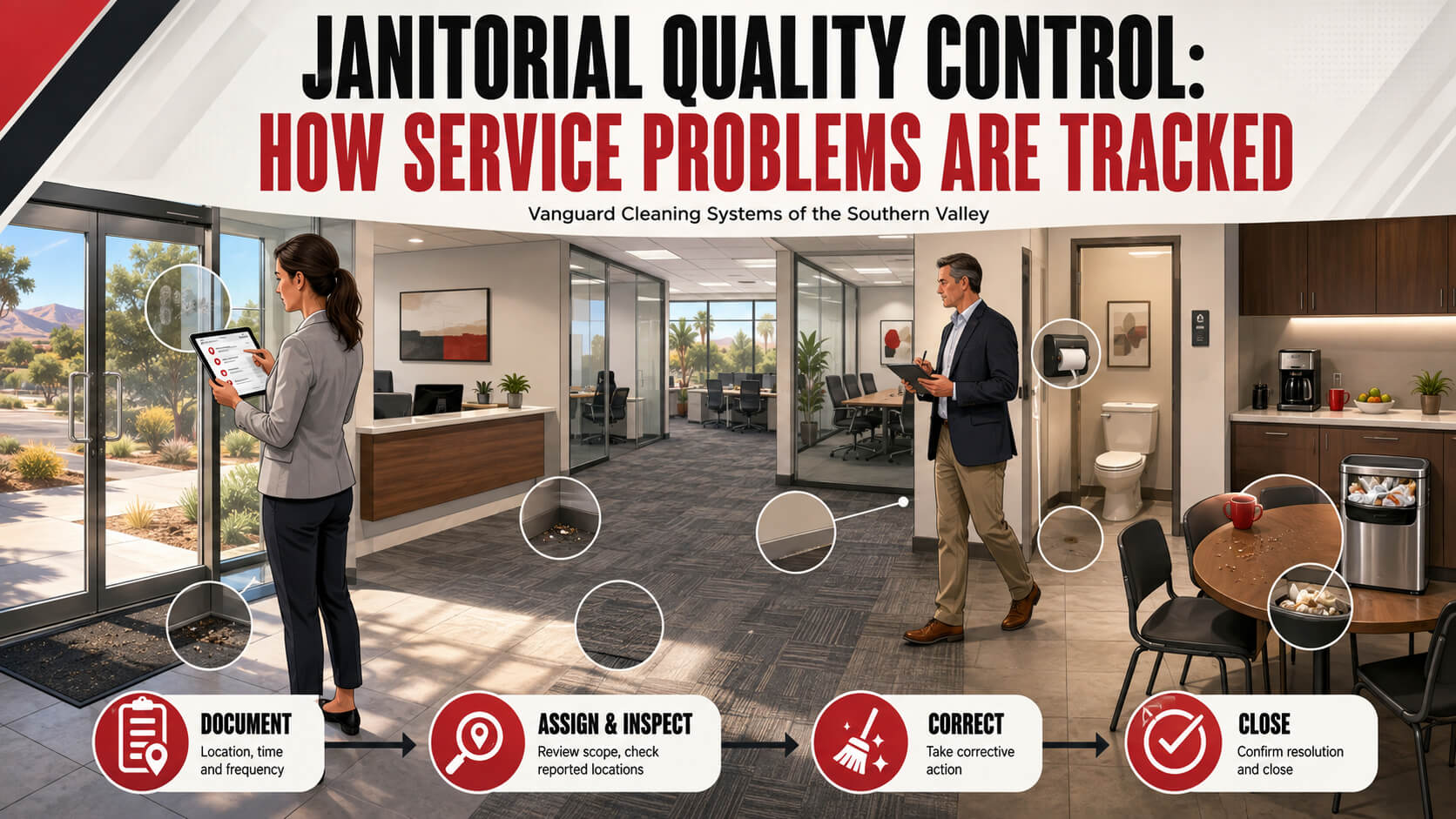
A Missed Task Should Leave a Clear Trail
A restroom runs low on paper supplies. Dust appears along the same baseboard every Thursday. The front glass looks fine in the morning but shows fingerprints by midafternoon. Each concern may seem small on its own, yet a pattern can point to a larger problem with timing, frequency, task ownership, or the written service scope.
Janitorial quality control gives those concerns a consistent path from report to resolution. The process starts with a clear description of the expected work. It then uses inspections, issue logs, photos, walkthroughs, and follow-up checks to show what happened and what was done.
Good records help everyone work from the same facts. They reduce the guesswork that comes with vague comments such as “the office doesn’t look clean.” They also show whether an issue was a one-time miss, a repeat concern, or a sign that building use has changed.
The goal is simple: make service problems specific enough to solve and easy enough to review later.
Quick Answer
Janitorial quality control is a documented process for comparing completed work with an agreed service scope. A practical system records the location, date, time, concern, expected result, supporting photo when useful, person assigned, action taken, and closure date. Regular walkthroughs and checklist reviews help reveal repeat issues. If the same concern keeps returning, the facility and service provider can review task frequency, timing, access, staffing, equipment, or the scope itself.
What Is Janitorial Quality Control?
Janitorial quality control is the process used to check whether contracted cleaning tasks match the written scope and the agreed result. It connects expectations, inspections, reporting, correction, and follow-up.
The written scope is the starting point. It may identify rooms, surfaces, tasks, service days, periodic work, exclusions, access requirements, and who supplies consumable items. Quality checks compare actual conditions with those details.
Appearance is part of the review, but the process needs more than a general impression. A carpet can look acceptable from the doorway while debris remains under a desk edge. A restroom may have a clean sink but an empty paper dispenser. A waste container may be serviced each evening even though it fills by lunch. Each condition calls for a precise record.
Quality control also creates a shared history. One person may report a restroom problem on Monday, while another notices the same issue on Friday. Without a log, those reports can look unrelated. With a log, the repeat location and timing become visible.
For facilities reviewing commercial janitorial services, the quality-control process should fit the actual service scope. A small office with limited visitor traffic may need a simple checklist and occasional walkthrough. A larger building with multiple restrooms, shifts, secure rooms, and food areas may need more detailed reporting by zone and time.
How Janitorial Quality Control Works
A useful quality-control process follows a closed loop. Each part creates information needed for the next step.
1. Define the expected work
The service agreement should state what is included, where it is performed, and how often it occurs. Terms such as “clean restrooms” leave room for different interpretations. A task list can be more precise by naming fixtures, floors, waste containers, mirrors, partitions, dispensers, and supply checks.
The expected result also matters. “Mop floor” describes an action. “Floor is free of loose debris, visible spots, and residue after service” gives the reviewer a clearer condition to check.
Useful scope details may include:
- Area or room name
- Task to be completed
- Service frequency
- Expected condition after service
- Approved service window
- Access or security instructions
- Periodic work handled on a separate schedule
- Items supplied by the facility
- Tasks outside the current agreement
These details make later conversations more productive. The log can point back to a specific commitment instead of relying on memory.
2. Inspect against a checklist
A janitorial inspection checklist turns the scope into a repeatable review. It may be arranged by floor, room, zone, or task type. The layout should match how the building is used and how inspections are performed.
Short checklists often work better than forms filled with broad or repeated questions. A restroom section might cover floor condition, waste, mirrors, fixtures, dispensers, odor source checks, and visible buildup. An entry section might cover glass, mats, corners, tracked-in soil, and nearby waste containers.
The checklist should use clear acceptance criteria. “Good” and “poor” can mean different things to different reviewers. Descriptions tied to visible conditions make results easier to compare.
For example:
- Entry glass: no visible fingerprints or streaks under normal lighting
- Waste: containers serviced as listed in the scope, with no overflow at inspection
- Carpet: no visible loose debris in open areas, edges, or accessible corners
- Restroom supplies: listed dispensers stocked at the time of service completion
- Breakroom counter: free of crumbs, coffee rings, and loose residue
The checklist is a tool, not a substitute for judgment. Building traffic, weather, work shifts, events, and the time between service and inspection can affect what the reviewer sees.
3. Record each concern in an issue log
An issue log captures service problems in a consistent format. It can be a shared spreadsheet, work-order system, mobile form, email template, or another agreed method. The tool matters less than the quality of the information entered.
Each record should answer practical questions:
- Where is the concern?
- What condition was observed?
- When was it observed?
- When was that area last scheduled for service?
- What result does the scope require?
- Is a photo useful?
- Who received the report?
- What action was assigned?
- When was the action completed?
- Was the result checked?
A statement such as “the floors are bad” gives little direction. “Coffee spill residue outside Conference Room B, observed Tuesday at 9:20 a.m.” gives the service contact a location, condition, and time.
Photos can help when lighting, residue, floor finish, or a missed corner is hard to describe. They should show enough of the surrounding area to establish location. A close-up without context may be difficult to match to a room.
4. Send the report through one clear channel
Service requests can disappear when they are spread across hallway conversations, personal texts, emails to several people, and handwritten notes. An agreed reporting channel gives each concern a consistent destination.
The facility should know who receives routine concerns and who handles urgent access, safety, or building-operation issues. The service provider should know which facility contact can answer scope questions, approve added work, or provide access.
One main channel also protects the record. If a concern comes up during a verbal conversation, a short written follow-up can place it in the log. That creates a timestamp and reduces confusion over what was requested.
5. Assign and document the response
Once the report is received, it needs an owner. The person reviewing it may assign a return visit, check the area, speak with the service team, adjust a route, replace equipment, or ask the facility for more detail.
The action taken should be added to the record. “Handled” gives little information. “Area checked at 2:10 p.m.; residue removed; nearby floor reviewed; photo added” creates a usable history.
Some concerns require a quick correction. Others need more study. A waste container that fills early every day may need another service point or a larger container. Repeated soil near an entrance could relate to mat coverage, outdoor conditions, door use, or the time of day the area is serviced.
6. Verify closure
Closing an item means more than marking it complete. Someone should confirm that the expected result was restored or that the next action is clear.
Verification may involve:
- A follow-up photo
- A return inspection
- Confirmation from the reporting contact
- A note that added work was approved and scheduled
- A scope-review meeting for a repeat concern
The record should show the closure date and the person who confirmed it. If the issue remains open, the next step and responsible person should be listed.
7. Review patterns over time
An individual complaint tells you what happened once. A set of records can show where, when, and how often the same condition appears.
A monthly or quarterly review may group concerns by:
- Building area
- Day or shift
- Task type
- Time observed
- Service frequency
- Cause category
- Time to response
- Repeat occurrence after closure
The purpose is to find useful patterns. If most complaints involve one restroom after a shift change, the timing may deserve review. If edge debris appears in several carpeted areas, the route, equipment, or checklist may need attention. If concerns rise during rainy or dusty periods, entry service may need a seasonal adjustment.
What a Janitorial Inspection Checklist Should Include
A checklist should reflect the building rather than copy a generic form. The following categories provide a practical starting point.
Area identification
Use the room name, floor, suite, zone, or another label that people can find. “Second-floor east restroom” is more useful than “restroom.” If the building uses room numbers, include them.
Task and expected condition
Tie each inspection item to the scope. State the visible result in plain language. Keep the wording short enough for quick use on a phone or printed form.
Service frequency
List whether the task is scheduled each service visit, on selected days, weekly, monthly, or as separate periodic work. This prevents a weekly detail task from being judged as though it were due every night.
Inspection date and time
Time adds context. An area inspected immediately after service should be viewed differently from one inspected after a full day of use.
Condition or rating
Simple ratings can help with trend review. Pass, needs attention, and outside scope may be enough. If a number scale is used, define what each score means.
Notes and photos
Leave room for a short description. Photos should support the note rather than replace it.
Follow-up fields
Include who received the item, what was assigned, the due date if one applies, the action taken, and verification of closure.
The checklist can also direct attention to commercial cleaning quality standards that matter during a service review, such as scope clarity, consistent task completion, communication, and follow-up.
Environmental Factors That Affect Inspection Results
Cleaning conditions change with the building. An inspection record becomes more useful when it includes the factors that may have shaped the result.
Foot traffic and building hours
An entrance used by twenty people will age differently through the day than one used by hundreds. Extended hours can also shorten the quiet window available for service. Record unusual meetings, deliveries, training sessions, or public events when they affect traffic.
Dry soil, wind, and rain
Central Valley and Southern California facilities can face dry outdoor soil for long periods. Wind can move fine dust toward entrances. Rain creates a different mix of moisture and tracked-in residue. Mats, door layout, landscaping, parking surfaces, and entry frequency all affect what reaches the floor.
These conditions do not erase a service concern. They provide context for deciding whether the current task frequency and entry setup match actual use.
Restroom use
Restroom conditions depend on the number of occupants, visitors, shifts, fixtures, and supply capacity. A dispenser that is full after evening service may run low before the next visit if daytime use increases. The log should record the time of the shortage so the pattern can be reviewed.
Food and drink areas
Breakrooms, coffee stations, vending areas, and meeting rooms can change quickly. Crumbs and spills may appear minutes after a scheduled visit. Time-stamped reports help separate a service miss from new use, while still showing whether the schedule meets the building’s needs.
Floor type and condition
Carpet, concrete, tile, resilient flooring, and finished floors show wear and soil in different ways. Lighting can make streaks or finish variation more visible at certain times. Older damage may also be mistaken for a current cleaning concern. Notes should distinguish loose soil, spots, residue, wear, scratches, and finish condition when possible.
Access limits
Locked offices, active conference rooms, security zones, and occupied work areas can interrupt a planned route. Access exceptions should be recorded. If the same room is unavailable often, the facility and service provider may need a new service window or access procedure.
Waste volume
Waste levels can rise after catered meetings, shipping days, office moves, or seasonal work. A dated log helps show whether overflow was unusual or part of a repeat pattern.
How Issue Logs Improve Workplace Service Reviews
Issue logs turn memory into evidence. During a service review, the facility can look at actual locations, dates, response actions, and repeat rates. The conversation becomes more specific.
Suppose four people mention restroom supplies over six weeks. A log may show that every report came from the same area between 2:00 and 4:00 p.m. That pattern suggests a different question than four complaints spread across several restrooms immediately after service.
Logs also help separate several possible causes:
- A scheduled task was missed
- The expected result was unclear
- The room was inaccessible
- New activity occurred after service
- Building use has increased
- The task frequency no longer matches demand
- A repair or replacement is needed
- A periodic task was mistaken for routine work
The record does not decide the cause by itself. It gives the people reviewing the service better information.
For local facilities, service conditions can vary widely. Buildings using janitorial services in Bakersfield may track dry soil, warehouse traffic, or long operating hours. Facilities reviewing janitorial services in Fresno may face similar entry and floor concerns, along with differences in occupancy, layout, and seasonal activity. The tracking method should stay consistent while the inspection details fit each site.
How to Track Recurring Cleaning Problems
Recurring issues deserve their own review. Reopening the same item again and again can hide the pattern.
Start by giving repeat concerns a category. Common categories include restroom supplies, floor spots, edge debris, dust, glass marks, waste, breakroom residue, and access. Keep the categories broad enough to sort, then use the notes for detail.
Next, compare location and timing. A concern tied to one room may have a local cause. The same problem across many rooms may point to a route, tool, training, or scope issue.
Review what happened after each correction. If the concern returned the next day, the response may have treated the visible condition without addressing the source. If it returned several weeks later during heavy traffic, frequency may be the more useful question.
A recurring-issue review can ask:
- Is the task clearly listed in the scope?
- Is the expected result defined?
- Does the service team have reliable access?
- Is the task scheduled at the right time?
- Has occupancy or traffic changed?
- Does the equipment fit the surface and area?
- Does the concern involve damage or a repair?
- Was the last correction verified?
- Does the checklist direct attention to this location?
Quick walkthroughs often favor open, well-lit spaces. Edges, corners, undersides, low surfaces, and rooms outside the usual route can receive less attention. A deeper review of areas missed during quick inspections can help expand the checklist when repeat concerns cluster in less visible spots.
When a Service Problem Calls for a Scope Review
Some concerns show a gap between promised work and completed work. Others show that the building now needs something different from the original agreement.
A scope review may be useful when:
- Occupancy has increased
- New shifts or longer hours have been added
- A room has changed use
- Restroom or breakroom demand has grown
- Waste volume has changed
- New flooring or furniture has been installed
- Secure access rules have changed
- Daytime concerns keep appearing between service visits
- Periodic floor care no longer matches traffic and wear
- The same issue returns after several documented corrections
Bring the scope, inspection records, and issue log to the review. Look at the tasks, frequencies, service windows, exclusions, and access notes that relate to the concern.
The outcome may be a clearer checklist, a route change, a different contact process, added service, a repair request, or an update to the written agreement. Document the decision so future inspections use the new expectation.
People Also Ask About Janitorial Quality Control
How do you monitor a cleaning company?
Start with the written scope, then inspect completed work against a checklist based on that scope. Log concerns by location, date, time, and expected result. Track the response and verify closure. Review repeat issues on a set schedule to see whether the problem involves task completion, access, timing, building use, or service frequency.
What should be on a janitorial inspection checklist?
A janitorial inspection checklist should include the building area, specific task, expected condition, required frequency, inspection date and time, rating, notes, photos when useful, assigned follow-up, action taken, and closure verification. The checklist should match the facility’s rooms, surfaces, traffic, and service agreement.
How should cleaning complaints be documented?
Record the exact location, observed condition, date, time, and the related scope requirement. Add a photo when it helps show the concern. Include who received the report, what response was assigned, when it was completed, and who confirmed closure.
How often should janitorial inspections be completed?
Inspection timing should fit the building’s size, risk, traffic, service frequency, and history of concerns. A facility may use routine spot checks, scheduled walkthroughs, and added follow-up for repeat issues. The chosen schedule should be written down and applied consistently enough to reveal trends.
What is the difference between an inspection and a facility walkthrough?
An inspection usually checks defined items and records results on a form. A facility walkthrough is often a broader review involving the facility contact and service representative. Walkthroughs are useful for discussing recurring concerns, changing building needs, access limits, and possible scope updates.
What information helps resolve a janitorial problem faster?
The most useful report includes a precise location, a plain description, the time observed, and a photo when needed. It should also identify the expected result or related scope task. That information helps the service contact find the area and choose the right response.
Can complaint data show whether cleaning frequency should change?
Yes. Time-stamped complaint records can show whether concerns appear in the same area at similar times. That pattern can support a review of traffic, service timing, supply capacity, and frequency. The records should be considered with the written scope and actual building use.
Frequently Asked Questions
Who should manage the janitorial issue log?
Choose one main facility contact and one service contact. Other people can report concerns, but the agreed contacts should maintain the record, assign follow-up, and confirm closure.
Should every cleaning concern include a photo?
No. Use photos when they clarify a location, visible condition, or repeat pattern. A clear written note may be enough for a simple supply or waste concern.
Should employees report issues directly to individual cleaners?
Routine requests should follow the agreed reporting channel. Direct comments can be misunderstood or left undocumented. A central process helps protect the record and keeps task changes with the proper contacts.
What if the reported task is outside the cleaning scope?
Mark it as outside scope and explain the next step. The facility may handle it internally, request separate work, or discuss adding it to the agreement.
How long should issue records be kept?
Keep them long enough to support service reviews, trend checks, and contract decisions. The exact period should fit the facility’s internal record policy and the service agreement.
What makes a janitorial quality score useful?
A score is useful when each rating has a clear meaning and reviewers apply it consistently. Notes still matter because a number alone does not show the location, cause, or response.
Can an issue be closed if added work is still pending?
The original report can be moved to a planned-work status if the immediate condition is stable and the next action is documented. Keep the related work visible until it is completed and checked.
What should happen after a repeat issue is found?
Review the earlier records, confirm the scope, inspect the location, and compare the timing of each occurrence. Then assign an action aimed at the likely cause and set a follow-up check.
Turn Service Concerns Into a Usable Record
Start with a simple issue log. For each concern, record the area, time, condition, frequency, expected result, action taken, and closure. After several weeks, review the entries for repeated rooms, tasks, and times of day.
Bring those patterns to the next service discussion. A documented history can show where the current process works and where the scope, schedule, access plan, or checklist needs attention.
Vanguard Cleaning Systems of the Southern Valley can help review facility conditions and cleaning needs while preserving the distinction between the regional business and the independently owned janitorial franchise businesses that may provide service. Request a facility walkthrough to compare recurring concerns with the current scope and building use.
References
Asadi, E., Costa, J. J., & Silva, M. (2011). Indoor air quality audit implementation in a hotel building in Portugal. Building and Environment, 46(8), 1617–1623. https://doi.org/10.1016/j.buildenv.2011.01.027
Cannon, J. L., Park, G. W., Barclay, L., Vega, E., Vinjé, J., & Lopman, B. (2022). Hygienic monitoring in long-term care facilities using ATP, crAssphage, and human noroviruses to direct environmental surface cleaning. American Journal of Infection Control, 50(3), 289–294. https://doi.org/10.1016/j.ajic.2021.11.014
Dutta, S., Gunay, H. B., & Bucking, S. (2020). A method for extracting performance metrics using work-order data. Science and Technology for the Built Environment, 26(3), 414–425. https://doi.org/10.1080/23744731.2019.1693208
Flores-Miyamoto, A., Reij, M. W., & Velthuis, A. G. J. (2014). Do farm audits improve milk quality? Journal of Dairy Science, 97(1), 1–9. https://doi.org/10.3168/jds.2012-6228
Syazwan, A. I., Rafee, B. M., Juahir, H., Azman, A. Z. F., Nizar, A. M. P., Izwyn, Z., Syahidatussyakirah, S., Muhaimin, A. A., & Anita, A. R. (2012). Analysis of indoor air pollutants checklist using environmetric technique for health risk assessment of sick building complaint in nonindustrial workplace. Drug, Healthcare and Patient Safety, 4, 107–126. https://doi.org/10.2147/DHPS.S33400
Zalejska-Jonsson, A., & Muyingo, H. (2019). Building inspection in multi-dwelling housing and the perception of building quality. Construction Economics and Building, 19(2), 144–159. https://doi.org/10.5130/AJCEB.v19i2.6679
