
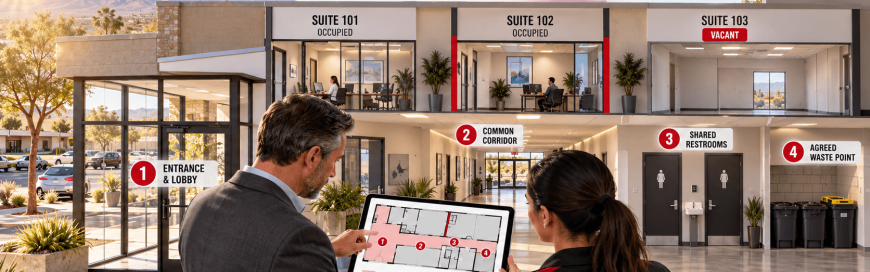
Shared-area cleaning works better when the agreement shows exactly where each assignment begins and ends.
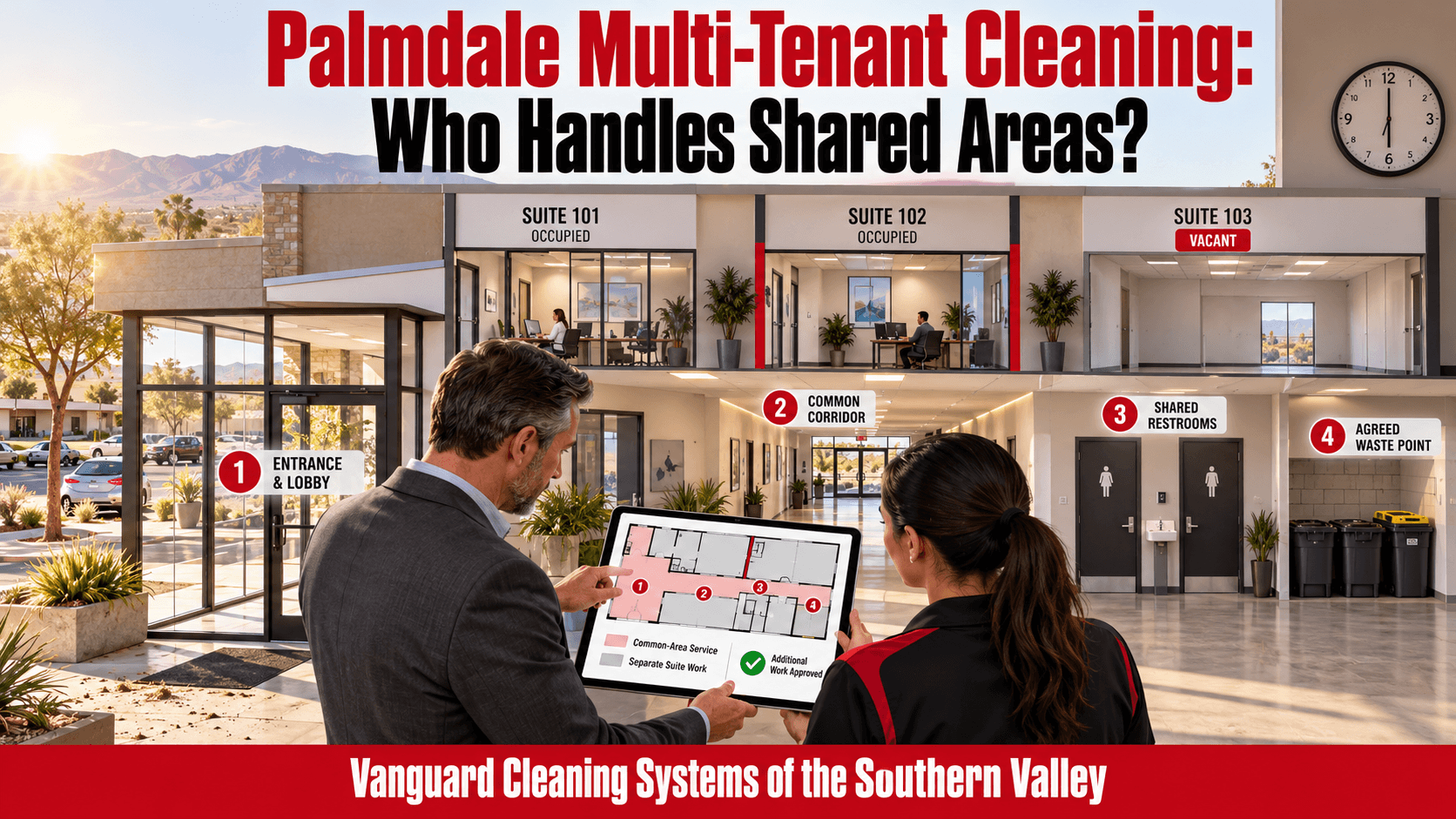
A suite door can divide two cleaning agreements
A shared corridor may receive evening service while the offices behind its doors follow separate schedules. Someone may empty the lobby bins while bags from a tenant suite wait beside a locked collection room. A newly occupied suite can bring more visitors through the entrance and keep shared restrooms busy later in the evening. Each change needs a clear handoff between the building and the businesses using it. In a Palmdale multi-tenant building, the service map should connect those handoffs to the actual rooms. Mark shared entrances, corridors, restrooms, tenant suites, and waste points. Then confirm the tasks, access, and approval contact for each area against the building's written agreements.
Quick answer: Who handles shared areas in a multi-tenant building?
The building's written arrangements determine who organizes cleaning for shared areas and tenant suites. One arrangement may place entrances, corridors, shared restrooms, and common waste points in a building-wide janitorial scope, while suites have separate service. Another may include both shared and private areas in one agreement. Use a marked floor plan and a responsibility table to record the actual assignment. Name the person who approves added work, specify the boundary at each suite door, and give all occupants a clear way to report shared-area problems.
What is multi-tenant shared-area cleaning?
Multi-tenant shared-area cleaning is routine janitorial work in spaces used by more than one tenant, as defined in the service agreement. It may include a shared entrance, lobby, corridors, restrooms, and agreed waste collection points. Private areas sit within an individual tenant's assigned space. A suite can have its own entrance, restroom, kitchen, or waste containers, each with a separate cleaning assignment. The multi-tenant building cleaning scope should match those boundaries. Keep the service map with the current task list so a change in tenancy can be carried into the schedule.
Record who arranges service and who performs it
For each area, identify the contact who organizes the work and the business assigned to perform it. Include the contact who authorizes spending when those roles differ. Keep cost allocation in its own field. A map showing who cleans a corridor cannot, by itself, establish how a charge is divided among tenants. Have the authorized building contact reconcile that question with the applicable agreements.
Assign the shared and private areas room by room
Walk the occupied building with its current floor plan. Note room names, suite numbers, locked doors, floor changes, and the locations where waste moves between assignments. The table below gives examples to discuss. Replace every sample assignment with the arrangement confirmed for the property.
| Area | Possible service assignment | Boundary to confirm | Issue contact |
|---|---|---|---|
| Shared entrance and lobby | Included in the building-wide scope | Exterior approach, mats, glass, door surfaces, and interior floor | Named building contact |
| Shared corridors | Included in the building-wide scope | Suite thresholds, recesses, floor transitions, and alcoves | Named building contact |
| Shared restrooms | Included in the building-wide scope | Cleaning, supply purchasing, refills, repairs, and access hours | Building contact for service; assigned maintenance contact for faults |
| Tenant suites | Separate tenant service or an expressly included building-wide assignment | Inside of suite doors, private rooms, waste, and restricted items | Authorized tenant contact and assigned service provider |
| Common waste point | Collection-area care included where specified | Suite-to-collection transport, liners, overflow, and waste-hauler interface | Building contact and assigned collection contact |
| Vacant suite | Separate written vacancy or turnover assignment | Inspection visits, routine cleaning, showing preparation, and project cleanup | Authorized building contact |
Mark the threshold at each suite door
Identify who cleans the corridor-side floor, the threshold, and the floor inside the suite. Add the door faces and hardware to the task list where included. A recessed entrance can leave a strip of flooring between two service routes. Mark that recess on the plan and assign it explicitly, especially when the floor material changes at the doorway.
List private restrooms separately
A restroom inside a suite can follow a different agreement from one accessed through the common corridor. Include each room by its actual identifier. Confirm supplies and maintenance reporting for both. The person cleaning a shared restroom may have no authorized access to the private facility next door.
Follow waste through every handoff
Identify who removes waste from suite containers, who carries it through the shared corridor, and who services the common collection point. Record the approved destination and access method. Set a response for leaking bags or loose waste found along that route. Bulky items, confidential material, and unusual waste need their own approved arrangements when they are outside routine service.
Annotated sample floor plan
Illustrative plan only: This diagram shows an invented single-floor layout. It is not to scale and does not represent an actual Palmdale property. Use the current building plan to confirm rooms, doors, routes, and service boundaries.
What the map annotations mean
- 1, lobby: Confirm the point where exterior approach cleaning meets the interior entrance task.
- 2, corridor: Include the shared floor and agreed recesses; define the boundary at every suite door.
- 3, restrooms: Record service hours, supplies, and the maintenance reporting contact.
- 4A and 4B, occupied suites: Suite service requires its own confirmed scope and access, including when one provider serves several areas.
- 5, vacant suite: Record the approved visit schedule and the conditions that trigger added work.
- 6, waste point: Assign transport from suites, collection-area cleaning, and follow-up on overflow separately.
In this sample, suite waste reaches point 6 through the shared corridor. Confirm an actual property's waste route on site, including collection access that the diagram does not show. Building agreements can change these assignments. A building-wide package may include suite interiors, while another property may have a tenant arrange cleaning for a designated entrance or restroom. Update both the map and task list when the confirmed arrangement differs.
How the responsibility map becomes a working schedule
Give each mapped zone a service window and named contact. Include access instructions in the controlled service record so authorized personnel can use them without distributing security details to every occupant.
- Match the map to written agreements. Have the building's authorized contact resolve unclear or overlapping assignments.
- List the tasks by zone. Include surfaces, supplies, waste, and periodic work that belong in the scope.
- Confirm operating hours. Account for the last occupied suite and any weekend access.
- Test entry and routes. Check keys, approved access, storage, and movement between zones.
- Assign reporting and approval. Record who receives an issue and who can authorize work outside the current scope.
- Set the review date. Revisit the plan after occupancy or service changes.
Keep occupied routes usable during cleaning
Plan floor work for suitable access windows and allow for drying. Where work is done in sections, confirm the route that remains available and the controls needed around the work area. Shared corridors can remain in use after some suites close. Check the building's actual occupancy before beginning work that affects access.
Record access failures at the affected zone
Identify the room and time when a key fails or a suite remains occupied. Notify the agreed contact and arrange a replacement window. Keep a delayed suite task separate from completed corridor work. The record should show the portion of service still open.
Sample boundary wording for the service record
Example wording to adapt: “The shared-corridor assignment includes the floor recess outside Suite A and the threshold identified as D-A. Work inside Suite A begins beyond that threshold under the suite scope. Door faces and hardware are assigned in the surface checklist. Locked access or an occupied doorway is reported to the named contact for a revised service window.” Add the actual finish materials and included methods during the walkthrough. A doorway with carpet meeting hard flooring may need different tools on either side. Confirm where those tools and supplies can be stored. Use comparable wording at the main entrance and waste collection point. Keep the boundary description short enough to use during a visit, with a reference to the task list for the full scope.
How vacancies change the agreement
Give a vacant suite a status and effective date in the service record. Confirm which visits continue and who can approve access for inspections or showings.
Set a vacancy scope
A vacancy plan may include agreed floor care, visible soil checks, and reporting of leaks or other conditions. Specify the frequency and the parts of the room that are accessible. Update waste and supply arrangements where use has stopped. Confirm any change in recurring service or charges through the approved process.
Separate turnover work from routine visits
Move-out debris, abandoned furniture, carpet work, and preparation after repairs can require a separate scope. Have the authorized contact identify what can be removed and arrange the appropriate service. If construction is underway, confirm when the space is released for the agreed cleaning task. Record unfinished work or access restrictions before setting the next visit.
What changes when a new tenant moves in?
Review the shared-area plan before the new occupancy begins. Ask for expected hours, visitor patterns, delivery access, and the rooms the new tenant will use.
- Confirm suite number, boundaries, and the approved access contact.
- Record the effective start date for recurring suite service.
- Check the effect on shared restrooms and supply demand.
- Arrange the handling of move-in packaging and bulky material.
- Confirm the waste destination and collection schedule.
- Share the process for reporting shared-area problems.
Keep move-in work and recurring service as separate entries. The first week may involve packaging and access changes that won't continue once the suite is settled. Review the completed service record after that first week. Use observed conditions to adjust any window or task that no longer fits.
Extended hours can change shared-area demand
A tenant that stays open later may continue using the lobby, corridor, and shared restrooms after the original service window. Review those areas together when operating hours change.
Confirm the hours covered by the scope
Record the included service days and the period covered by daytime checks. Name the contact for an issue reported after that period. If added coverage is proposed, specify its hours, tasks, and approval before it starts. Weekend service and event cleanup need the same clarity.
Check supplies and access after the main closing time
A later business can change how quickly restroom supplies are used. Confirm whether the refill schedule covers the added demand and who has access to stored supplies. Review security arrangements when shared doors stay open longer. Keep access credentials and alarm instructions within the authorized service process.
Approve added work through a named contact
A request from an occupant needs to reach the person authorized to change the relevant scope. Make that route clear to all tenants and the service provider. A useful request record includes:
- Exact zone and requested task.
- Reason for the request and desired completion time.
- Access conditions and affected occupants.
- Whether the task is covered by existing service.
- Proposed price or agreed rate when extra charges apply.
- Authorized approval, completion record, and invoice reference.
Confirm a one-time task's end date so it doesn't become an assumed recurring assignment. For an approved recurring change, revise the map, schedule, and price record together.
Define an urgent-response allowance in advance
Record who receives reports of active leaks, broken glass, or other urgent conditions. The building should establish the immediate response process and any preauthorized work limits. Unknown materials, building faults, and incidents outside routine cleaning require the assigned response. Record the location and notify the appropriate contact promptly.
Report issues between tenants without guessing the cause
Use a shared issue channel for common areas. Record the observed condition and location, keeping the report focused on what needs attention.
Include details that help someone find the problem
“Water on the corridor floor outside Suite B at 3:10 p.m.” gives a location and time. Add any action taken and the person notified. A nearby suite number identifies the location. Leave the cause open until the authorized contact has checked it.
Assign follow-up across service boundaries
If a condition affects both a suite and the corridor, record the two work areas and their contacts. An active source may need maintenance while cleaning addresses the affected floor under approved procedures. Keep the issue open until the remaining action has an owner. Include the next check time when the condition can change before the repair is completed.
Close the report with the observed result
Record the completed task and any restriction that remains. Share the status with the reporting contact through the agreed method. Recurring reports at the same boundary can point to an unclear assignment or a service window that needs review. Bring those entries to the next scope discussion.
Sample issue handoff across a suite boundary
Invented example: A checker finds moisture at D-B and on part of corridor 2. The report identifies both locations and notes that the source has not been confirmed.
| Record | Sample entry |
|---|---|
| Observed condition | Moisture at Suite B threshold and adjacent shared floor |
| Immediate action | Site procedure followed to protect affected access; building contact notified |
| Shared-area task | Assigned provider checks and addresses the corridor within the approved scope |
| Suite follow-up | Authorized tenant contact arranges access and checks the interior condition |
| Maintenance follow-up | Building contact assigns investigation if a leak or defect is suspected |
| Closure | Record completed work, remaining restrictions, and the next check |
This record can hold several actions without assigning blame. Each contact can update their own task while the overall issue remains visible until the remaining work has been addressed.
Palmdale conditions to check during the walkthrough
Inspect entrances for windblown material and tracked soil under the conditions present at the property. Palmdale's local setting makes exterior-to-interior routes a useful part of the walkthrough.
Entrance exposure and floor transitions
Confirm who maintains the exterior approach, who services mats, and where interior floor work begins. Review recurring soil at a threshold with both assignments visible. On wet days, check moisture and mat condition at active doors. Report damaged flooring or thresholds through the maintenance process.
Different tenant activities
Frequent visitors, deliveries, and businesses with evening hours affect shared-room use. Compare those patterns with the current cleaning route. Any specialized work inside a tenant suite needs a separate scope review. Shared-area service should have clear instructions about entry into restricted rooms and handling unusual materials.
Have a practitioner review the responsibility map
Ask a practitioner experienced in multi-tenant cleaning to walk the proposed map with the authorized building contact. Check suite thresholds, waste routes, supply access, and the time available for each task. Have the building contact explain where the property's agreements change the sample assignments. Record those changes in the service documents before the map is used. Research on cleaning-worker slips and trips supports attention to access and work conditions. It cannot establish the cleaning boundaries or cost assignments for an individual property.
Keep a dated review record with the map
Record the review date, the plan version, and the people who checked the assignments. List unresolved questions with an owner and a due date so they can be settled before the affected service begins. Retain the revised map with the scope it supports. When a suite changes hands, give the next authorized contact the current reporting instructions and confirm which earlier access permissions have ended. A brief walkthrough at that point helps catch changes in furniture, locked rooms, waste points, or opening hours that the old plan no longer shows.
People also ask about multi-tenant cleaning
Who cleans common areas in a multi-tenant building?
The written arrangements identify who organizes and performs the work. Record entrances, corridors, shared restrooms, and waste points in a building-specific responsibility map.
Does shared-area cleaning include tenant suites?
Suite interiors are included when the confirmed scope names them. Record the suite, tasks, access, and service window.
Who handles waste from tenant offices?
Assign suite collection, transport, and common collection-area care separately. Confirm the approved route and destination.
Can one provider clean shared areas and suites?
Yes, when the assignments are agreed. Keep each area's tasks, approval contacts, and charges clear in the service records.
Frequently asked questions
What happens when a suite becomes vacant?
Set an effective vacancy date and confirm the work that continues. Approve turnover or showing preparation separately where needed.
Who approves extra cleaning requested by a tenant?
The person authorized for the affected agreement approves the request. Record scope, access, timing, and any added charge.
How should an issue outside a suite be reported?
Use the agreed shared-area channel. Include the precise location, time, observed condition, and any immediate action.
When should the responsibility map be updated?
Update it when occupancy, room use, operating hours, access, or the service agreement changes. Keep a dated copy with the current scope.
Bring the floor plan to a Palmdale service walkthrough
Use the current plan and occupancy list when discussing Palmdale janitorial services. Mark the shared areas and suite boundaries, then confirm access and approval contacts. Review the proposed commercial cleaning scope with the independently owned janitorial franchise business providing service. Include any vacancy assignments and extended-hour coverage in the written plan. Contact Vanguard Cleaning Systems of the Southern Valley to discuss service planning for a multi-tenant building in Palmdale. Cleaning services are performed by independently owned and operated janitorial franchise businesses.
References
- Bitzas, S., Ma, S., Pesanelli, K., & Zaia, A. M. (2022). Risk factors and impacts of slips, trips, and falls in janitorial populations: A literature review. Applied Ergonomics, 102, Article 103745. https://doi.org/10.1016/j.apergo.2022.103745
- City of Palmdale. (n.d.). City statistics. https://www.cityofpalmdaleca.gov/274/City-Statistics
- Health and Safety Executive. (n.d.). Cleaning. https://www.hse.gov.uk/slips/cleaning.htm
- U.S. General Services Administration. (2026, August 17). Overtime utilities and above standard services. https://www.gsa.gov/real-estate/reimbursable-services-program/frequently-asked-questions/overtime-utilities-and-above-standard-services
