

A renovated office needs a clear cleanup handoff before its regular janitorial schedule can work as intended.
The Office Is Finished, but the Cleaning Plan Isn’t
The new flooring is installed. The painters have packed up. Furniture is moving back into the renovated rooms. Yet dust appears on a nearby desk each morning, the entry route carries debris, and no one is sure who will clean the vents or remove the last protective floor covering.
This is a common point of confusion in an office renovation. The construction team may consider its work complete while the regular cleaning team expects to return to an office ready for normal service. Between those two expectations are rooms that need a final check, materials that need to be removed, and surfaces that may require a different cleaning method.
The problem can reach beyond the remodeled room. Contractors may use a shared hallway, restroom, elevator, or loading entrance. People continue working nearby. Dust control, access, and cleaning responsibilities need to cover those connected areas as well.
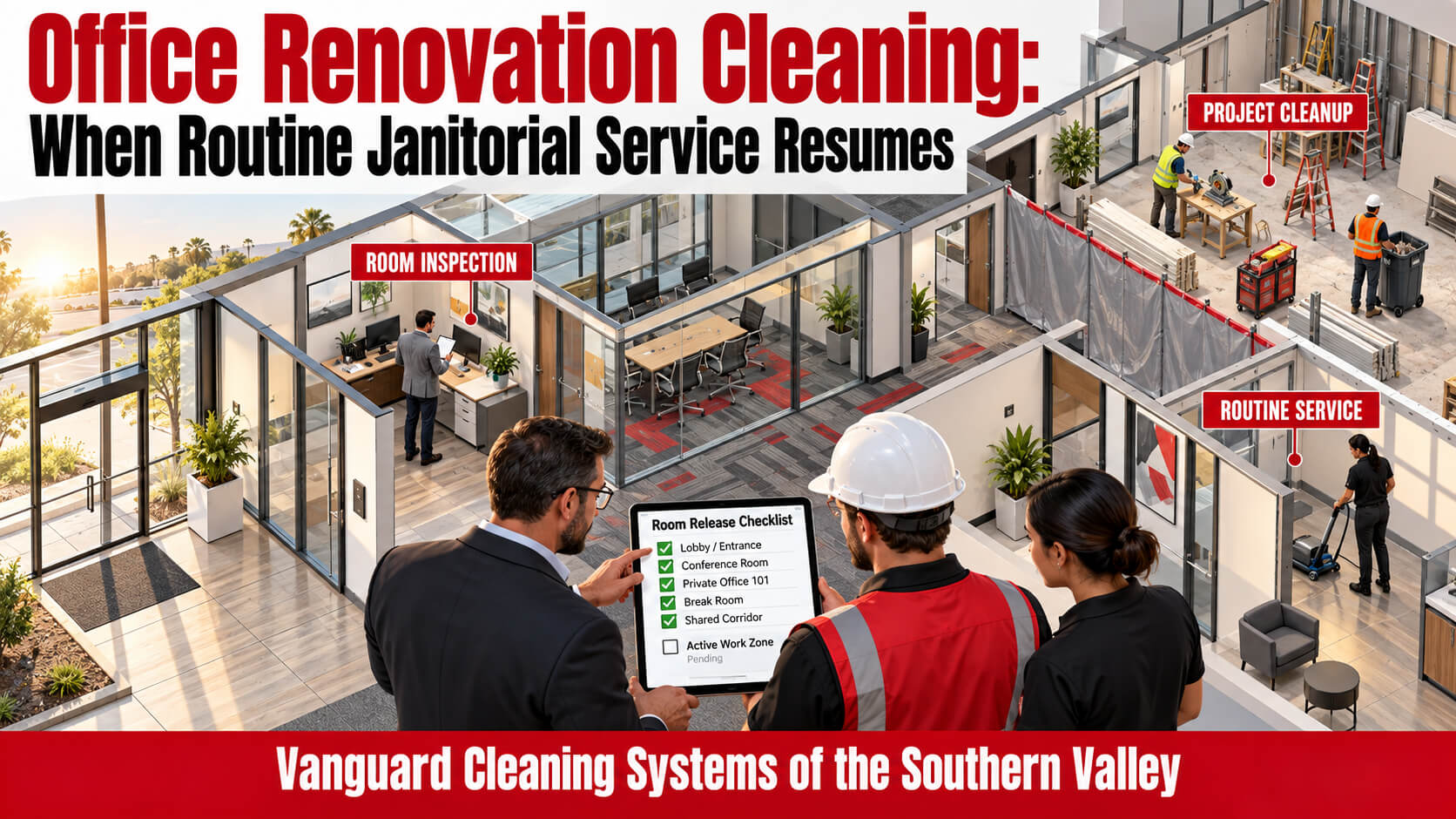
A written handoff keeps the transition clear. It identifies who controls the work area, who completes project cleanup, which rooms are ready for use, and when the regular cleaning scope takes effect again.
Quick Answer: When Can Routine Janitorial Service Resume?
Routine janitorial service can resume in an office renovation area after construction activity has ended there, the responsible project team has removed debris and completed its agreed cleanup, the area has been inspected and released for normal use, and the janitorial provider has a clear list of rooms, surfaces, access rules, and recurring tasks.
Some rooms can return to routine service before the full project is finished. Release each room or zone in writing. If work continues next door, the plan should also explain how that area will stay separated and how shared routes will be maintained.
A final wipe of a desk cannot take the place of controlling dust during active construction. Heavy debris removal, work involving an identified hazard, and any required specialist procedures belong with the qualified parties assigned to those tasks.
What Is Office Renovation Cleaning?
Office renovation cleaning is the planned cleanup and inspection that follows changes to an existing workplace. The work may involve a single office, a suite of rooms, a lobby, or a building that remains partly occupied throughout the project.
It can include removal of ordinary construction debris, cleaning of accessible finished surfaces, attention to floors and entry routes, and a check of rooms before people return. The exact tasks depend on the project, the materials disturbed, the surfaces installed, and the responsibilities written into the construction and cleaning agreements.
Routine janitorial service has a different starting point. Its recurring scope may cover restrooms, breakrooms, waste, floors, entrances, glass, and other agreed areas after the office returns to normal use. A regular visit is planned around that established workload.
During renovation, the amount and type of material can change each day. Cutting, sanding, drilling, moving debris, and opening temporary barriers may leave conditions that exceed the ordinary scope. The project plan should assign those conditions before they become a dispute at the first regular cleaning visit.
The distinction matters even when the same company is asked to provide additional cleaning. Added project work should have its own task list, timing, access plan, and approval. That gives everyone a way to tell when the one-time work is complete and when the recurring schedule begins.
How the Cleaning Handoff Works
1. Identify the project zones and shared routes
Begin with a simple floor plan. Mark the rooms being renovated, occupied rooms nearby, contractor entry, material storage, waste removal routes, shared restrooms, and any hallway or elevator used by both contractors and office occupants.
Include places where doors or barriers open during the day. A work room may be contained most of the time, yet debris can reach an adjoining corridor when materials are moved. The route to a dumpster may pass through a finished lobby. Those areas need named responsibilities.
For a small project, the plan can be a marked-up floor plan and a brief written schedule. Larger work may need a room-by-room release list. Keep the document available to the building contact, contractor, and cleaning contact so changes reach the people doing the work.
2. Assign cleanup during active work
Decide who removes packaging, cutoffs, demolition material, and dust generated by each phase. State who maintains the contractor route during the workday and who checks adjoining occupied areas if conditions change.
The contractor should explain how dust-generating tasks will be controlled at the source. Cleaning in adjacent rooms may still be needed, but repeated dust on an occupied desk is a sign to review the work activity and separation plan. More frequent wiping alone may leave the cause in place.
Ask for a contact who can address an opened barrier, a spill, or debris outside the work area during business hours. Give that person a way to reach the facility contact quickly. An evening janitorial visit cannot respond to a condition developing at midday.
3. Define the final project cleanup
“Leave the site clean” is too broad for a handoff. The project documents should name the rooms and surfaces included in final cleanup, the party doing the work, and the condition required before inspection.
Depending on the project, the list may cover remaining materials, floors, fixtures, accessible horizontal surfaces, doors, interior glass, cabinet exteriors, and the shared paths used by the work crew. Identify any work requiring a specialist, special equipment, or approval. Building systems should be reviewed by the professionals responsible for them.
Schedule final cleanup after the dusty work in that zone has ended. If another trade returns to drill, sand, or cut materials, the affected area may need another check before release.
4. Inspect and release rooms
A joint walkthrough should compare the finished area with the handoff list. Look from the doorway, then inspect the places people will use: floor edges, shelves, counters, furniture locations, and the route into the room. Record work that remains open and who will complete it.
Release rooms by name or zone. “Suite ready” may conceal a conference room with unfinished work or a corridor still used for deliveries. A short release note can state the room, date, remaining restrictions, and the point when recurring janitorial tasks resume.
5. Update the recurring cleaning scope
Renovation may change how the office is used. A new breakroom adds surfaces and waste. More conference space may raise traffic. New carpet, tile, or resilient flooring may call for a different routine floor-care method and periodic plan.
Review the recurring commercial cleaning services scope before the first normal visit. Add or remove rooms, confirm task frequencies, identify any new exclusions, and agree on a service window that fits the revised layout.
Put approved changes in writing. The cleaning team should receive an accurate room list and access instructions, while the facility has a clear record of the work included after reopening.
What Should the Renovation Cleaning Checklist Include?
A useful checklist follows the path from active work to room release. It should separate project cleanup from the first regular janitorial visit. The person checking a room can then identify an unfinished project task without placing it on the recurring service list by mistake.
Before the final cleanup
- Confirm that dust-generating work has ended in the zone being cleaned.
- Identify any trade scheduled to return and the work it will perform.
- Remove equipment, unused materials, packaging, and debris assigned to the project team.
- Check that temporary barriers and contractor routes are still managed while nearby work continues.
- Confirm who will address building-system concerns, including any inspection needed after construction.
During the room inspection
- Check finished floors, edges, corners, and transitions for visible project residue.
- Look at accessible counters, shelves, ledges, doors, interior glass, and fixtures included in the project scope.
- Inspect adjoining hallways, elevators, entrances, and other routes used for materials.
- Record marks, damage, unfinished work, or residue that requires a return visit.
- Check that waste and remaining project materials have reached their assigned removal point.
Before routine service resumes
- List the rooms released for normal use and their release dates.
- Give the cleaning contact an updated floor plan, room names, and access rules.
- Confirm the tasks and frequencies for each new or changed area.
- Identify who supplies liners, restroom products, and other consumable items.
- Agree on how to report residue or unfinished project work found after reopening.
Take photos of specific open items when they help show location and condition. Keep the checklist tied to the written project scope. A photo of a dusty shelf is more useful when the room, date, responsible party, and next action are recorded beside it.
Environmental Factors That Affect the Cleanup
What materials were disturbed?
A paint refresh, carpet replacement, and wall demolition create different work. Ask the project team what activities occurred, what materials were disturbed, and whether it identified any conditions that require a separate procedure.
Work involving concrete, masonry, or other materials that can produce respirable crystalline silica calls for appropriate controls during the work. Suspected asbestos, lead, mold, or another identified hazard requires the qualified parties and procedures applicable to that condition. Routine office cleaners should receive a clear handoff after that work has been managed.
A facility does not need to infer the dust type from its appearance. The project team should provide the relevant information and identify who is responsible for testing, controlled work, and clearance where those steps apply.
Is the building still occupied?
Occupied offices bring people close to the work. A hallway may serve employees in the morning and contractors moving material in the afternoon. The schedule should identify when those shared routes are used, how they are maintained, and who responds when debris leaves the work area.
Tell occupants which rooms are closed, where to report a concern, and whom to contact about an unexpected change. A notice should reflect the actual schedule. When work shifts to a new zone, update the people and service contacts affected by that move.
How is air moving through the building?
Construction can affect spaces beyond the visible work zone. Open doors, gaps in barriers, and building ventilation can move material into adjacent areas. The project team and appropriate building-system professionals should assess how the work area is separated and how ventilation is managed.
If dust keeps returning after surfaces are cleaned, investigate where it is coming from. Note the room, time, nearby work, and whether a door or barrier was opened. That information helps the responsible team address the source.
What surfaces were installed?
New floors and finishes may have care instructions that differ from the old ones. Obtain the manufacturer’s guidance and any project-specific instructions before setting the recurring method. Record restrictions on products, moisture, equipment, or the timing of first use when the installer provides them.
Protective films and temporary floor coverings also need an owner. Decide who removes them, when removal is safe for the finish, and who cleans the surface afterward. Leaving that decision until the first regular visit can delay the room’s return to normal use.
Will work continue nearby?
A released office beside an active project zone may need extra attention to its entrance or shared corridor. Name those temporary tasks and the period they apply. Review them again when the next phase ends.
Temporary cleaning should have a clear end point. Otherwise, an added hallway check may quietly become an expectation even after the contractor route closes and the building returns to normal traffic.
Keep Construction Cleanup Separate from Routine Service
Construction cleanup and routine janitorial work can meet at the same doorway. Their responsibilities need to be clear on each side of it.
The project team should address the material and conditions produced by its work under the agreed project plan. The regular janitorial scope covers the recurring needs of rooms released for normal use. A separately approved service can bridge a gap when the facility wants added help with suitable tasks.
Write down who owns each of these decisions:
- Removing demolition material, packaging, and unused project supplies
- Maintaining the contractor entrance and material route
- Cleaning finished surfaces before the room-release inspection
- Addressing specialized materials or identified hazards
- Inspecting and releasing each completed room
- Starting recurring restroom, waste, floor, and breakroom tasks
- Approving added cleaning while construction continues nearby
That list prevents a common problem: a room is called complete, then the first recurring visit is expected to remove construction residue that was never included in its scope. If an added cleanup is needed, describe the work and approve it before assigning it.
The separation also protects the inspection process. A routine checklist designed for desks, bins, floors, and restrooms will not fully describe a project area with stored materials, unfinished trim, and active trade work. Inspect the project against its own handoff list first.
Plan the First Week After Reopening
The first week shows whether the handoff held up under normal use. People move furniture, open cabinets, unpack supplies, and walk through rooms in ways that may reveal residue or unfinished work missed during the final inspection.
Make it easy to report the exact location. “Dust on the top shelf in Room 204 after boxes were unpacked Tuesday” gives the project team a useful place to check. A general report that the whole office is dusty may take longer to trace.
Use one shared list for post-handoff concerns. Give each item a room, date, observation, assigned party, and follow-up result. Some items may belong to the project closeout list. Others may be normal cleaning needs created by the renewed use of the office.
Check the entry route and shared corridors at different times of day. Delivery activity, furniture moves, and remaining contractor traffic can change conditions quickly. Note whether any temporary checks are still needed and when they can end.
At the end of the week, compare what happened with the new recurring scope. Did a newly opened room produce more waste than expected? Are the restrooms seeing more traffic? Does the floor method fit the installed surface? Make a written adjustment when the change will continue.
The existing janitorial quality-control process can track concerns after service resumes. Keep the project closeout record linked to any issue that began during construction so the correct party can follow it through.
Workplace Relevance: Look Beyond the Renovated Room
A renovated conference room changes more than its own cleaning checklist. More meetings can affect nearby restrooms, the coffee station, waste containers, and the path from the entrance. New workstations may add occupants to a floor that previously had a lighter schedule.
Walk the adjoining areas after people return. Look at how they use the space, where they set down food and drinks, and which doors now receive more traffic. Compare those observations with the service plan written before construction.
In Bakersfield, Fresno, and other Southern Valley workplaces, outdoor soil can add to the material moving through an entrance during a project. Deliveries and contractor trips may use a path designed for ordinary office traffic. The plan should identify the route and the period when it needs extra attention rather than assuming a permanent change across the whole building.
Local service pages can help a facility review its ongoing options for janitorial services in Bakersfield or janitorial services in Fresno. The written scope still needs to start with the rooms, surfaces, hours, and traffic at the individual site.
Pay particular attention to edges and spaces newly exposed by moving furniture. An office can look ready from the doorway while residue remains along baseboards, beneath cabinets, or beside an appliance. A closer check of these hidden cleaning gaps is useful during room release.
People Also Ask
Who is responsible for cleaning after an office renovation?
The project and service agreements should assign each task. The construction team commonly has responsibility for debris and conditions created by its work, while routine janitorial service resumes for released rooms under the recurring cleaning scope. Any added cleanup should be defined and approved.
Can office cleaning continue during a renovation?
Yes, in areas that remain open and can be serviced under the agreed access and work plan. The facility, contractor, and cleaning contact should identify occupied rooms, shared routes, barriers, changing work zones, and the person responsible for conditions caused by active construction.
How do you know a renovated room is ready for cleaning?
Confirm that the project work and agreed project cleanup are complete in that room, inspect it against a handoff list, record open items, and release it for normal use. Then give the janitorial contact the updated tasks, surface instructions, and access details.
Should a regular janitorial team remove construction dust?
Do not assume it is part of the regular scope. Identify the source, material, amount, and work required. The responsible project team should manage its cleanup and any specialized requirements. Suitable added cleaning can be assigned separately with a clear scope and approval.
Does new flooring change the cleaning schedule?
It may change the method, equipment, products, or periodic work. Review the installer’s and manufacturer’s instructions, then update the recurring floor-care tasks. The right frequency also depends on traffic and how quickly soil reaches the new surface.
Frequently Asked Questions
Should the whole office reopen at once?
Rooms can be released in stages when the project plan allows it. Record which zones are ready, which remain closed, and how active work next door will be managed.
What if dust reappears after final cleanup?
Record where and when it appears. Check for nearby work, opened barriers, shared routes, or a remaining project item. Assign the concern to the party responsible for its source and verify the result.
Who should inspect the final cleanup?
The facility contact and project representative should inspect against the agreed handoff list. Include the cleaning contact when the result affects the start of recurring service or the new room scope.
Can the janitorial schedule change temporarily?
Yes. A temporary check of a shared hallway, entrance, or restroom may fit an occupied renovation. Put its tasks, schedule, approval, and end date in writing.
What belongs in the room-release note?
List the room or zone, date, inspection result, open items, access limits, responsible contacts, and the date routine cleaning begins. Attach an updated task list when the room has changed.
What if a specialized cleanup need is discovered?
Pause the ordinary handoff for the affected area. Have the qualified project and facility contacts determine the needed procedure and who is authorized to perform it. Release the area to routine service after that work is completed and documented.
Make the Handoff Part of the Renovation Plan
Before the project closes, review the rooms being released, the shared routes still in use, and the cleanup each party has agreed to complete. Walk through the finished areas and record any open work. Then compare the renewed office with the recurring janitorial scope so new rooms, floors, waste points, and service times have clear assignments.
Vanguard Cleaning Systems of the Southern Valley can help review ongoing facility cleaning needs and connect businesses with independently owned janitorial franchise businesses. Request a facility walkthrough to discuss the rooms returning to use, the cleanup handoff, and the routine scope that should follow. Each Vanguard Cleaning Systems business is independently owned and operated.
References
Clark-Burton, N., & Afanuh, S. E. (2020). Maintaining acceptable indoor environmental quality (IEQ) during construction and renovation projects (NIOSH Publication No. 2020-110). National Institute for Occupational Safety and Health. https://doi.org/10.26616/NIOSHPUB2020110
Halvorsen, J. Ø., Graff, P., Gjengedal, E. L. F., & Ervik, T. K. (2025). Measurements of dust and respirable crystalline silica during indoor demolition and renovation. Annals of Work Exposures and Health, 69(1), 48–58. https://doi.org/10.1093/annweh/wxae082
Occupational Safety and Health Administration. (n.d.). Silica, crystalline: Construction. https://www.osha.gov/silica-crystalline/construction
