
A school restroom cleaning schedule needs to follow the bell schedule, with time to handle problems before the next rush.
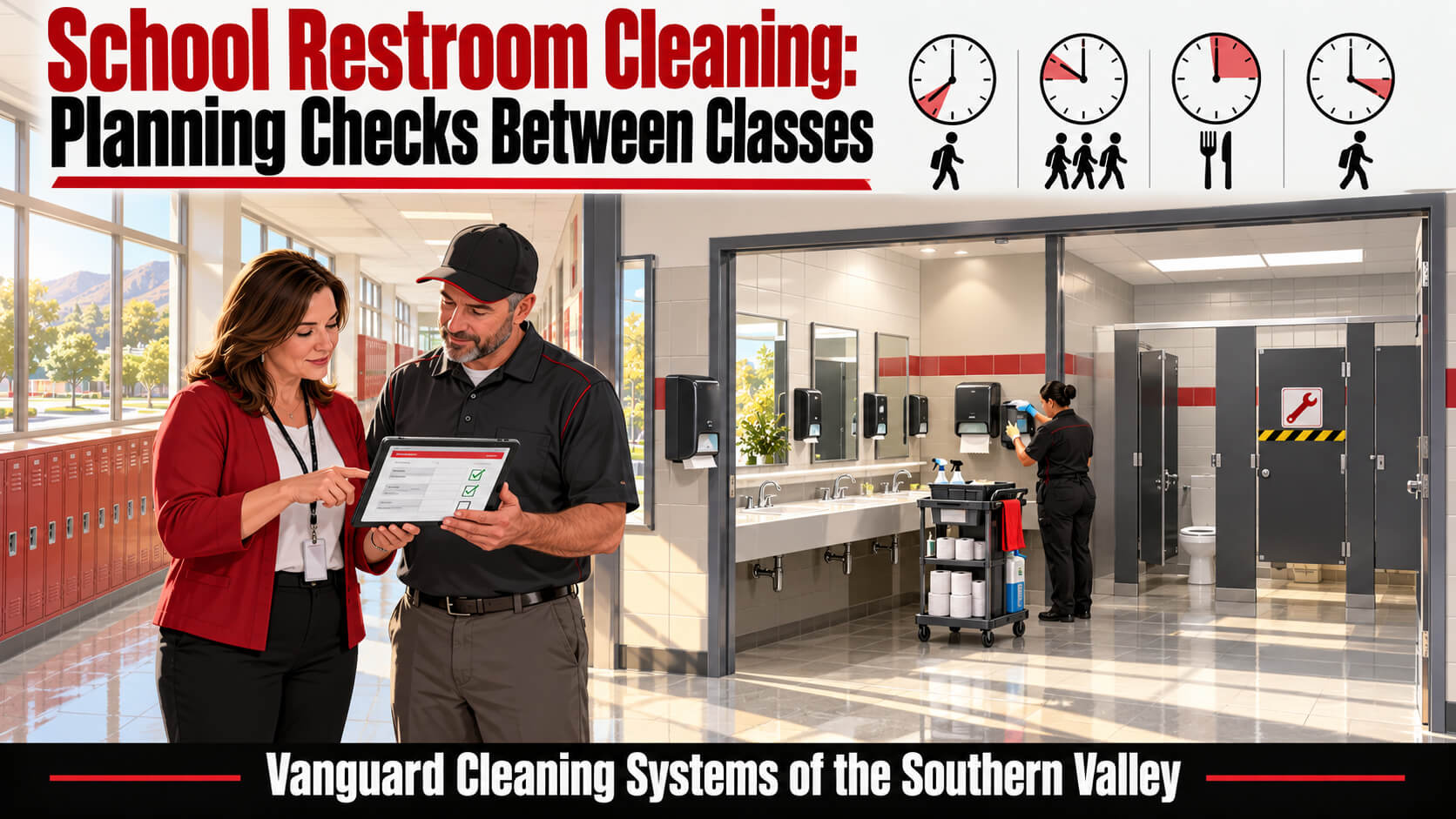
A stocked restroom at opening can run short before lunch
The first wave of arrivals can leave paper on the floor or use up a nearly empty soap cartridge. Later, several classes may reach the same restroom within minutes. A leaking faucet can leave a wet patch long before the next scheduled cleaning. When checks follow these patterns, someone has a clear reason to visit each room and a place to record what needs attention.
A useful plan connects each check to the school day. It assigns a person to the route, allows time for small tasks, and names a backup when that person is handling another call. The plan also gives unresolved problems a place in the next shift's work.
Adaptable planning sample: The schedule, checklist, and inspection log below are examples for local review. Set the actual times and duties around campus conditions, district procedures, available staffing, and applicable requirements.
Quick answer: How should school restroom checks be scheduled?
Plan an opening check before arrival, a follow-up after the arrival rush, checks around busy passing periods, and supply checks before lunch. Revisit heavily used restrooms between lunch groups when access allows, then check after lunch and near dismissal. Include after-school use in the route. Assign full cleaning its own service window and respond to reported hazards as soon as they are received.
Each visit should record the actual time, supplies, visible soil, floor condition, and any fixture that cannot be used. Give every unresolved issue an assigned owner and a follow-up time.
What is a school restroom cleaning schedule?
A school restroom cleaning schedule is a written plan showing when each restroom is checked or cleaned, who is responsible, and how problems are reported. It accounts for the hours the space remains in use, including events and programs after classes end.
A school restroom cleaning checklist names the conditions to inspect during a visit. The inspection log records the findings and what happened afterward.
Keep these documents together so a substitute can find the route, understand the checklist, and record work without having to reconstruct the day from verbal instructions.
Give each type of visit its own task list
| Type of work | Purpose | Typical tasks | Completion record |
|---|---|---|---|
| Routine check | Confirm current conditions during use | Check supplies, look for soil or water, identify unavailable fixtures | Time, findings, checker, action taken |
| Daytime touch-up | Correct a condition within the assigned scope | Refill a dispenser, remove loose paper safely, clean a small area using approved procedures | Task completed and condition rechecked |
| Full cleaning | Complete the agreed restroom cleaning scope | Clean fixtures and assigned surfaces, remove waste, clean floors, replenish supplies | Separate cleaning checklist and release check |
| Maintenance response | Resolve a fault or damaged component | Repair leaks, address drainage faults, fix latches or failed dispensers | Work-order number, repair status, return-to-use approval |
A routine check may lead to several actions. For example, the checker can replenish paper towels while a broken dispenser is sent for repair. Record both actions so the repair stays visible after supplies have been restored.
How it works: Build the route around the school day
Start with a campus map and the current bell schedule. Identify each restroom with a room number or a clear name that matches its door. Include separate buildings, portable classrooms, gym areas, and spaces used by after-school programs.
Walk the proposed route during a normal school day. Travel between buildings, access arrangements, and the time spent collecting supplies all affect whether the route can be completed before the next busy period.
Sample school restroom cleaning schedule
Illustrative times only: This example assumes an 8:00 a.m. start and 3:00 p.m. dismissal. Replace the times with the campus schedule. Additional checks may be needed between the listed windows.
| School-day window | Example timing | Focus of the visit | What to record |
|---|---|---|---|
| Before arrival | 7:15–7:40 a.m. | Confirm supplies, safe floor conditions, usable fixtures, and completion of the prior cleaning | Opening status and any unresolved repair |
| After arrival | 8:05–8:20 a.m. | Inspect restrooms serving entrances and breakfast areas | Supply use, tracked soil, litter, wet spots |
| Busy morning passing period | Shortly after the selected bell | Check the rooms with the heaviest traffic when students have cleared | Actual visit time and conditions found |
| Before first lunch | 10:45–11:00 a.m. | Replenish supplies ahead of demand and check handwashing stations | Refills, dispenser faults, fixture availability |
| Between lunch groups | During a safe access window | Inspect heavily used rooms and complete needed touch-ups | Findings, action, and any delayed visit |
| After final lunch | 12:45–1:05 p.m. | Recheck floors, waste levels, supplies, and reported problems | Conditions restored and issues still open |
| Afternoon passing period | After the locally selected busy period | Revisit rooms with known afternoon demand | Repeat shortages or developing faults |
| Before dismissal | 2:30–2:45 p.m. | Confirm usability through the end of classes | Hazards, supplies, remaining repair needs |
| After dismissal | Once rooms are available | Complete full cleaning in released areas | Cleaning completion and reopening check |
| After-school programs or events | Before, during, and after use as needed | Service the restrooms that remain open | Coverage, refills, and final handoff |
Arrival checks should account for early access
Breakfast service, early drop-off, and morning activities can bring students into a building before the first bell. Set the opening check before that access begins.
An opening visit also provides a chance to catch overnight changes. A stall may still be unavailable from the previous day, or a dispenser may have failed after its last refill. Check the actual condition before marking the restroom ready.
Passing-period checks need a workable access window
Choose check windows based on use at each building. Some restrooms need attention after every heavily used passing period; others have a different pattern. Start with observed demand and adjust as the log develops.
Follow campus procedures for entry, occupancy checks, privacy, and temporary access control. Record a delayed visit and arrange another check when access is safe. A blank entry leaves the next person guessing whether the room was visited.
Lunch coverage should follow each lunch group
Replenish supplies before the first group arrives. Where lunch is staggered, arrange follow-ups around the busiest groups and allow for the distance between rooms.
One person may be unable to finish a route before the next group enters. Test that timing during the walkthrough, then change the order or arrange additional coverage where needed.
Dismissal may leave several restrooms in use
Confirm which buildings stay open for athletics, clubs, childcare, or evening events. Those rooms need coverage through their actual period of use.
Where a building can be released after dismissal, the full cleaning can begin. Record any access change so the next shift knows which rooms are ready for work and which still serve students.
School restroom cleaning checklist for daytime checks
Use the same inspection sequence on each visit. A familiar route through the room makes omissions easier to notice and helps a backup complete the check.
Check supplies at the point of use
- Confirm toilet paper is available in every usable stall.
- Test soap dispensers to verify that they deliver soap.
- Check paper towels or confirm that installed hand dryers work.
- Inspect menstrual product supplies where provided or required by campus procedures.
- Refill low supplies according to the site's approved methods.
- Record a shortage that available stock cannot resolve.
Supplies must be usable. A full cartridge inside a jammed dispenser still needs attention. Include the dispenser number or location in the entry so the next person can find it quickly.
Look for visible soil and waste
- Note visible soil on toilets, urinals, sinks, and surrounding surfaces.
- Check for loose paper and litter along walking routes.
- Inspect waste containers before they become overfilled.
- Record marks or damage that need a separate task.
- Report unusual material under the school's incident procedures.
Use plain descriptions. “Paper towels scattered beside the west sink” gives the next person a location and a task. Add the extent of the problem when it affects how the area can be used.
Inspect floors and walking routes
- Look for water near sinks, toilets, entrances, and drains.
- Check for residue or debris that could affect footing.
- Keep routes clear of carts and stored supplies.
- Note loose flooring, sharp edges, or damaged transitions.
- Check that temporary barriers preserve safe access elsewhere.
For a wet area, protect access and notify the appropriate contact under school procedures. Record where the water was found and whether its source is known. A recurring wet patch needs follow-up on the cause.
Confirm fixtures and privacy features are usable
- Look for leaking or continuously running fixtures.
- Check for slow drainage or signs of an overflow.
- Identify stalls with broken latches or damaged partitions.
- Report a failed faucet, dryer, dispenser, or light.
- Record any condition that limits use of an accessible fixture or route.
Avoid testing a toilet that appears likely to overflow. Report the condition and follow the site's procedure for restricting use while help is arranged.
How to record shortages, soil, wet floors, and broken fixtures
Give each issue its own entry when it needs a different response. Include the room, exact location, time found, and condition. Then add the immediate action, person notified, and next step.
| Finding | Useful entry | Immediate response to record | Follow-up |
|---|---|---|---|
| Supply shortage | “East restroom, stall 2: toilet paper empty at 10:52 a.m.” | Refilled, or school contact notified if stock is unavailable | Confirm paper is usable; arrange stock replacement |
| Visible soil | “North restroom: visible soil on sink counter at 12:12 p.m.” | Area handled under approved cleaning procedure | Recheck condition before closing entry |
| Wet floor | “Gym restroom: water beside sink 1, source unknown” | Access protected and designated contact notified | Investigate source and verify safe floor condition |
| Unavailable fixture | “Building B, stall 3: latch broken” | Stall restricted under school procedure; repair request submitted | Record repair and authorized return to use |
Use status labels everyone understands
Define a small set of labels in the log instructions:
- Open: Further action is needed.
- Assigned: A named person has accepted the next task.
- Restricted: A fixture or area has a temporary use limit.
- Resolved: The corrective work and required check are complete.
A room can remain open while one stall is restricted. Keep room availability in a separate field so the issue status does not obscure which facilities remain usable.
Make urgent reports through the agreed contact method
A written log helps preserve the record. For an active leak, overflow, or other urgent condition, use the school's immediate reporting method as well.
Include a backup contact when the first person cannot respond. If an unresolved problem remains at a shift change, record who accepted the handoff and when the next check is due.
Sample school restroom inspection log
Adaptable sample: These entries are invented to show how the form works. They do not describe a school or completed service. Use a separate sheet or digital form for each restroom if that makes the route easier to manage.
School: __________ Restroom ID: __________ Date: __________
Assigned checker: __________ Backup: __________
School contact and reporting method: __________
Maintenance contact: __________ Approved alternate restroom: __________
| Planned window | Actual time / initials | Supplies | Soil / floor / fixtures | Action and contact | Status / next check |
|---|---|---|---|---|---|
| Before arrival | 7:25 / AB | Stocked; dispensers working | Floor dry; fixtures usable | Opening check complete | No issue found; next check after arrival |
| After arrival | 8:12 / AB | Adequate | Loose paper beside entrance | Paper removed safely | Resolved at 8:15 |
| Before lunch | 10:52 / CD | Stall 2 paper empty | No other issue found | Paper refilled; delivery checked | Resolved at 10:56 |
| Between lunch groups | 12:08 / CD | Adequate | Water at sink 1; leak observed | Access protected; school contact notified; work order 0001 | Restricted; assigned to maintenance; recheck 12:20 |
| Repair follow-up | 12:20 / CD | Adequate | Repair pending; affected area restricted | Backup coverage accepted by EF | Open; recheck 12:40 |
| Before dismissal | ____ | ____ | ____ | ____ | ____ |
| Full cleaning | ____ | ____ | Separate cleaning record: ____ | ____ | ____ |
Add these fields to the bottom of the form:
- Open work orders and assigned contacts: __________
- Supplies to order or move from approved storage: __________
- Fixtures or areas remaining restricted: __________
- Next shift's required follow-up and time: __________
- Handoff accepted by and time: __________
- Full cleaning completed by and time: __________
- Final condition check completed by and time: __________
Keep the log free of student names, health details, or other private information. Follow school policy for any photos used to document a repair, including privacy rules for restroom interiors.
Separate routine checks from full cleaning
Give full cleaning enough time for the assigned scope and safe access. The daytime route should show when rooms become available and where the completion record is kept.
A full-cleaning checklist may include:
- Toilets and urinals cleaned using approved procedures.
- Sinks, counters, and mirrors cleaned.
- Assigned touchpoints and stall surfaces addressed.
- Waste removed and containers serviced.
- Floors cleaned with products and equipment suited to the surface.
- Supplies replenished and dispensers checked.
- Remaining faults carried into the maintenance record.
Follow district protocols and product labels for surface treatment, protective equipment, ventilation, and reopening. Bodily fluids, suspected sewage, sharps, and illness-related incidents need the school's specific response procedure and appropriately trained personnel.
Keep cleaning products secure from student access. Use the approved tools for each area, with restroom tools managed to avoid carrying soil to other spaces.
For work covered by an outside service agreement, the restroom cleaning scope should identify the included surfaces and service windows. Record who provides consumables and who handles daytime calls.
When a restroom problem needs maintenance escalation
Name the maintenance contact before the route begins. Also identify who can decide on temporary restrictions and alternate access when a fault affects restroom use.
Active leaks and overflows
Report the exact fixture and whether water is still spreading. Follow campus procedures to protect the affected area and arrange immediate response. Note the report time and any change in conditions while help is pending.
Failed dispensers and handwashing stations
Explain what failed when it was checked. A dispenser may be empty, jammed, or damaged, and each condition can need a different action. Record the available handwashing options and notify the school contact when access is affected.
Broken latches or damaged fixtures
Identify the stall or fixture clearly. Include the temporary action, the repair request, and the person responsible for confirming that it can return to use.
Persistent odors or repeated wet spots
Record the location and when the condition returns. These details help direct an investigation into plumbing, ventilation, drainage, or another source. Carry the issue forward until the cause and next action have been addressed.
Environmental factors that change the schedule
Adjust each route to the building. Two restrooms with similar floor areas can have very different demand.
Traffic and the number of usable fixtures
A room near the cafeteria may serve several lunch groups. An unavailable stall can increase use of the remaining fixtures or move traffic elsewhere. Review neighboring restrooms whenever a closure changes normal access.
Student age and assistance needs
Younger grades may use restrooms in groups. Some students need more time or assistance, which affects the safe window for a check. Coordinate access with the school while preserving privacy and suitable facilities.
Weather and outdoor routes
Rain can bring moisture through exterior doors. Dry soil from play areas can also reach floors during recess. On affected days, add attention to entrances and the paths between sinks and doors.
Dispenser capacity and stock locations
A small dispenser can need more frequent replenishment. A distant supply room adds travel to each refill. Check both factors when repeated shortages appear in the log, and follow approved storage rules when arranging local stock.
Events and changing building use
Assemblies, testing, sports, and evening programs can change which restrooms receive the most use. Share schedule changes with whoever owns the route so coverage follows the rooms that remain open.
Make the plan workable during a real shift
Time a trial route from the first room to the last, including travel and needed touch-ups. Compare the finish time with the next busy period. Adjust the route where the available window is too short.
Agree on backup coverage for absences and urgent calls. The backup needs access to supplies, current restrictions, and the same reporting method used by the regular checker.
Review the first week's entries with someone who knows the buildings. Look for rooms that run short before a scheduled visit, delayed checks, and repairs that remain open across shifts. Change the relevant part of the plan and check the result during the following week.
Research on school toilets has documented concerns about supplies, privacy, and conditions that affect children's willingness to use them. These studies support attention to usable facilities. They do not establish a universal inspection interval or prove that a particular bell-based route prevents illness.
The broader effects of dirty toilets in schools and importance of clean toilets in schools provide context for this work. Keep the daily inspection record focused on observations that can guide the next action.
People also ask about school restroom cleaning schedules
How often should school restrooms be checked?
Set check times around actual use, including arrival, busy passing periods, lunch, and dismissal. Add visits when conditions or reports require them. Review local requirements and district procedures when setting the final interval.
What belongs on a school restroom cleaning checklist?
Include supplies, visible soil, waste, floor conditions, fixture function, and privacy features. The record should identify when the check occurred, who completed it, and how unresolved issues will be handled.
Should restrooms be checked between every class?
Heavy-use restrooms may need checks after each busy passing period. Determine coverage through a walkthrough and the inspection record, allowing for safe entry and the time needed to complete the route.
When should full restroom cleaning take place?
Schedule it when the room is available for the agreed work, often after dismissal or after programs finish. Allow for product instructions and a final condition check before reopening. Daytime conditions may require additional cleaning.
Frequently asked questions
Who owns the inspection log?
Assign a school contact to review entries and follow up on open issues. Each checker records their own visit and actions, while the assigned repair contact updates maintenance status.
What happens when the scheduled checker is absent?
Activate the named backup and record the assignment. Confirm that the backup has room access, supplies, and current information about restrictions or pending work.
How should a missed check be recorded?
Record the delay or missed visit, its reason, and the arranged follow-up. Use the actual inspection time when the check is completed.
Can a digital form replace a paper log?
Yes. It should preserve the same findings and follow-up fields, remain accessible to the assigned personnel, and have a backup method for outages.
Can an outside janitorial agreement include daytime checks?
Yes, when the agreement includes that coverage. Confirm the service hours, task boundaries, consumables, and reporting contacts with the independently owned janitorial franchise business providing the service.
Arrange a walkthrough using the campus schedule
Bring the bell schedule, restroom map, and current issue log to a service walkthrough. Mark the rooms that stay open after dismissal and identify where daytime coverage is needed.
For janitorial services in Bakersfield, contact Vanguard Cleaning Systems of the Southern Valley to discuss a scope with an independently owned janitorial franchise business. Include the proposed check windows and maintenance handoff in that discussion.
Cleaning services are performed by independently owned and operated janitorial franchise businesses.
References
Centers for Disease Control and Prevention. (2024, October 25). About hand hygiene in schools and early care and education settings. https://www.cdc.gov/clean-hands/prevention/about-hand-hygiene-in-schools-and-early-care-and-education-settings.html
Reeves, L. M., Priest, P. C., & Poore, M. R. (2012). School toilets: Facilitating hand hygiene? A review of primary school hygiene facilities in a developed country. Journal of Public Health, 34(4), 483–488. https://doi.org/10.1093/pubmed/fds028
Shkalim Zemer, V., Cohen, H. A., Richenberg, Y., Gerstein, M., Atias, I., Gur, S., Laks, Y., Levinsky, Y., Dvir, O., Brown, I., Cohen, M., & Ben Meir, D. (2023). Personal hygiene, environmental conditions, and toilet use of children in primary schools: A cohort study. Journal of Pediatric Urology, 19(6), 721–727. https://doi.org/10.1016/j.jpurol.2023.06.004
United States Environmental Protection Agency. (2026, September 15). Using chemicals and cleaning supplies at school. https://www.epa.gov/schools/using-chemicals-and-cleaning-supplies-school
