

A locked office needs a clear record of the work that remains and an agreed plan for the next chance to clean it.
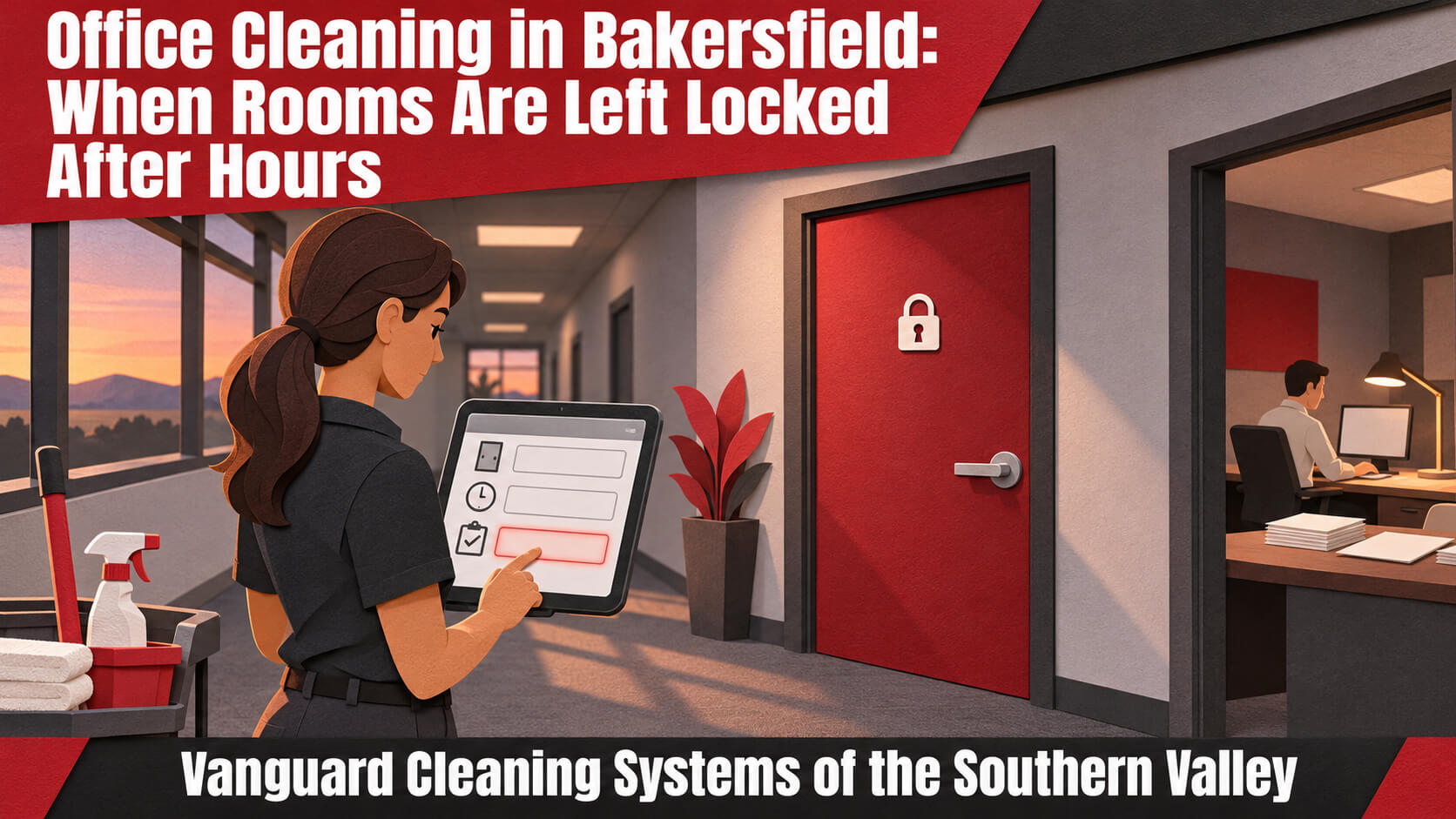
The Door Is Locked, and Tomorrow’s Workday Is Coming
An office can be on the evening cleaning schedule while its door stays locked through the entire visit. Somewhere else in the building, a late meeting may keep a conference room occupied, or delivery boxes may cover the floor that needs vacuuming. By morning, someone notices yesterday’s waste or dust on a desk and asks why the room was missed. The answer is easier to establish when the service record shows the access problem and what happened afterward.
For office cleaning in Bakersfield, room access belongs in the written service plan. A key that opens the main entrance may leave several interior doors inaccessible. Changes in work hours can also put a room’s usual cleaning time in the middle of a call or meeting.
Agreeing on a procedure gives everyone a usable response when those conditions arise. The record should identify the unfinished work, while the follow-up explains when it can be addressed under the service agreement.
Quick Answer
When an office is locked during cleaning, follow the approved access instructions and record any scheduled tasks that remain unfinished. Notify the designated contact through the agreed channel. A later attempt during the same visit depends on permission, room availability, and time. A separate return visit requires agreement on access, timing, scope, and any applicable charge.
What Is a Locked Office Cleaning Procedure?
A locked office cleaning procedure is a written set of instructions for handling rooms that cannot be entered during scheduled service. It identifies permitted entry methods, the contact who can resolve access problems, and how unfinished tasks are recorded.
The same procedure can address occupied offices and blocked work areas. Those conditions need their own descriptions because the next action will differ. An office awaiting a working key requires a different response from a desk awaiting removal of paperwork.
The procedure should fit the building’s security rules and the cleaning agreement. It should also be available to the independent janitorial franchise business performing the work, with sensitive access details kept in the approved secure system.
A useful room instruction might state that entry requires an assigned credential, cleaning is scheduled after a certain time, and access concerns go to a named contact. Keep the instruction current when doors, room uses, or authorized contacts change.
How the Procedure Works During a Cleaning Visit
Check the room’s approved access instructions
Before attempting entry, check whether the room is included in that evening’s scope and whether it has a restricted service window. A door being closed does not establish whether the room is available for cleaning.
Use only the entry method approved for that room. If an assigned key or credential fails, record the failure and follow the site’s contact procedure. Leave the door secure while the issue is being resolved.
Borrowing another person’s badge or following someone through a controlled doorway can bypass the building’s access rules. Any change in how entry is granted needs approval through the designated process.
Identify the tasks affected
A room-level note can leave too much unanswered. If an office cannot be entered, list the scheduled tasks that remain, such as waste removal or carpet vacuuming.
Where access is partial, record the work completed separately from the work deferred. A conference room might be available for waste collection while the table remains covered with meeting materials. That distinction helps the next person understand what still needs attention.
Use the task names from the written scope whenever possible. Consistent wording makes the exception easier to compare with the service checklist later.
Make an entry in the exception log
Record the date, attempted service time, room identifier, and observed access issue. Add the affected task before moving on to another area.
Keep the wording factual. “Assigned credential did not open Office 204 at 7:40 p.m.” gives the contact something specific to investigate. A statement about someone forgetting to provide access introduces a cause that has yet to be confirmed.
If the reporting system offers a status field, select one that leaves the work visibly open. The site can use terms such as “awaiting access” or “partially completed,” provided everyone understands their meaning.
Send the agreed notification
Use the channel established for service exceptions. Include the room identifier and the unfinished task, then state what decision or access change is needed.
Notification timing should match the issue. Routine access reports can follow the agreed reporting schedule. An apparent leak or unsafe condition calls for the building’s urgent reporting process.
Record when the message was sent and to whom. If an acknowledgment is required, keep that step separate so the log shows whether the message has been received.
Confirm the next action
The next action may be another attempt later in the same visit, service on the next scheduled date, or a separately approved return. Establish which option applies before marking the issue resolved.
When work is completed, add the completion time and identify the task addressed. If the agreed outcome changes, preserve the original entry and record the new decision alongside it.
How to Handle Common Access Problems
The entire office is locked
Follow the room’s approved entry instructions. If entry remains unavailable, record the scheduled work that could not be performed and notify the designated contact.
Keep any key or badge details out of the general exception log. A reference to the access issue is enough for service tracking; credential troubleshooting can take place through the building’s secure process.
Before another attempt, confirm that access has been restored. A reply saying that someone is checking the key does not establish that the door can now be opened.
Someone is still working inside
Use the agreed approach for occupied rooms. The occupant may permit certain tasks, request a later attempt, or need the room left undisturbed.
Record any task deferred because of occupancy. If only quiet work is permitted, identify what was completed and what remains. Vacuuming around a call, for example, needs a service window the building has agreed to.
A request to return in ten minutes also needs to fit the remaining visit. Record the actual second attempt when it occurs, along with the result.
Papers or personal items cover a desk
The written scope should explain how exposed desk surfaces are handled and which items may be moved. Where paperwork remains in place, follow the agreed boundary for cleaning around it.
An entry can identify the affected surface without describing the documents. “Desk wiping deferred because the surface was covered” supplies the service detail needed for follow-up.
If this happens repeatedly, agree on a time for clearing the desk before a future visit. Someone authorized to handle the contents should arrange that step.
Boxes block part of the floor
Check whether the approved work can be performed safely in the accessible area. Record the floor section that remains blocked and any task completed elsewhere in the room.
Moving stored materials may fall outside the cleaning scope or require someone familiar with their contents. Ask the designated contact to arrange clearance where needed.
Any apparent hazard should follow the site’s safety reporting process. A cleaning exception records the service impact, while the person responsible for the obstruction arranges its removal.
A room requires an escort
Confirm the escort arrangement before the visit, including the time and contact method. The person providing access needs to be available throughout any period required by the building’s rules.
If the escort is unavailable, record the attempted service and notify the agreed contact. Leave the affected tasks open until another arrangement is confirmed.
Access fails at the main entrance
A failed building credential can affect the entire visit. Use the designated after-hours contact promptly and record the arrival time, the access failure, and the outcome.
The agreement should explain the waiting period and what happens if entry cannot be arranged. Those details help both businesses decide how to handle the lost service window and any proposed return.
Conditions That Affect Office Cleaning in Bakersfield
Work hours and meeting schedules
Cleaning access changes when people work late or rooms stay booked into the evening. Confirm when each space becomes available, especially where the service window is short.
A meeting calendar can help with planning, but the building still needs a way to communicate overruns. Someone using a conference room after its expected release time should know how that affects the scheduled work.
Dust and soil near entrances
During dry or windy periods, loose outdoor soil can reach entry mats and nearby floors. The amount depends on the entrance, surrounding surfaces, foot traffic, and how deliveries move through the building.
If a room on that route stays inaccessible for several visits, record the dates and assess its condition when entry becomes available. The work needed then should be checked against the existing scope before extra service is arranged.
Food waste and room use
A private office used for lunch may need different follow-up from a room that has been empty all day. The log should identify whether scheduled waste removal was deferred so the designated contact can assess the situation.
Where an accessible collection point would help, agree on its location and timing in advance. Keep the route clear and follow the building’s rules for waste handling.
Furniture, equipment, and storage
Changes inside a room can reduce the space available for cleaning even when the door opens normally. Deliveries may cover a floor section, while added equipment can limit access beneath a desk.
Walk through those changes with the independent janitorial franchise business owner. Identify which surfaces remain within scope and what the building needs to move before the next service date.
Building controls and shared premises
Alarm settings, badge schedules, and tenant boundaries can all affect room access. A credential may stop working before the cleaning visit ends, or permission may apply to only one suite.
Confirm the authorized service period for each area. When a building changes its access controls, check the cleaning instructions before the next scheduled visit.
A Blank Exception Log for Missed Office Cleaning
Use this blank template as a starting point for site review. It contains no customer information or live access details. The building contact and the independent janitorial franchise business owner should agree on its fields and reporting rules before use.
| Service date and attempted time | Room or area | Scheduled task left unfinished | Access issue observed | Notification sent to, method, and time | Agreed follow-up and person responsible | Completion or other agreed outcome, date, and time |
|---|---|---|---|---|---|---|
| __________________ | __________________ | __________________ | __________________ | __________________ | __________________ | __________________ |
| __________________ | __________________ | __________________ | __________________ | __________________ | __________________ | __________________ |
| __________________ | __________________ | __________________ | __________________ | __________________ | __________________ | __________________ |
Use one row for each exception that needs its own follow-up. Several tasks affected by the same locked door can share an entry if each task is clearly listed.
For partially completed rooms, add a short note describing the work finished. The remaining work should stay visible until it is completed or another outcome is agreed.
An open entry needs a named person responsible for the next action. Someone may need to arrange entry, clear a surface, or confirm a return visit. Record the due date where one has been agreed.
Keep the wording specific
Describe what was observed at the time of the visit. Useful entries identify a failed credential, a room still in use, or a surface covered by materials.
Avoid guessing why access failed. The building contact can investigate the cause and add a confirmed update later.
Protect private information
Use approved room identifiers and limit access to the log. Passwords and alarm codes belong in the building’s secure system. Personal details about occupants generally add little to a cleaning exception.
Photos need permission under the site’s rules. A written description is often enough to show an access problem. Where an image is allowed, keep documents, screens, and private information outside the frame.
Preserve the follow-up history
Add updates without erasing the original observation. A useful record shows the initial issue, the decision made, and the eventual outcome.
When deciding how to document cleaning service problems, connect access exceptions to the same process used for other service concerns. That gives repeat issues a shared place for review.
Planning Return Visits and the Next Service Date
A later attempt during the same visit
Returning to a room later that evening may work if access becomes available within the approved service window. The remaining route and scheduled departure time will affect that decision.
Agree on how the room’s availability will be communicated. Record the second attempt even if entry still fails, since that detail helps explain what happened during the visit.
Service on the next scheduled date
The next routine visit may be suitable when the task can wait and access will be ready. Confirm the date and identify the work being carried forward.
Check the room’s use before making that choice. Food waste or a reported spill may require earlier attention from an authorized person under the site’s procedures.
A separate return visit
A separate trip needs an agreed time and a dependable way to enter. Confirm the affected tasks and who will authorize any additional charge before arranging the visit.
The service agreement should govern how these requests are handled. Avoid assuming that every deferred task includes an automatic return, since terms vary by agreement.
When access continues to fail
Repeated entries for the same room call for a review of the underlying arrangement. Check whether the assigned credential works during the full service period and whether the room is usually occupied at that time.
Choose a specific change, then check the result at the next visit. If the room needs a different schedule, update the written instructions so the new arrangement is available to everyone who uses them.
Check Open Exceptions Before the Workday Starts
An overnight report is useful only when someone knows to check it. Agree on who reviews open entries before the affected rooms return to use and how that person will confirm the next action.
For each open exception, check whether the task is still outstanding and whether access is ready. If a room must be used before cleaning can occur, the designated contact should decide how to handle its condition under the building’s procedures.
Keep the response in the same record when possible. A separate phone conversation may resolve the immediate question, but its outcome still needs to reach the person arranging follow-up.
Put Room Access Into the Written Cleaning Scope
A room-by-room walkthrough can reveal access limits before they interrupt service. For each included area, agree on when it is available and how authorized entry works.
The access portion of the scope should address:
- Rooms included on each service date.
- Tasks scheduled for those rooms.
- Approved entry methods and any escort requirements.
- Areas excluded from routine access.
- Rules for occupied rooms and covered surfaces.
- The designated contact and an approved backup.
- How exceptions are reported and acknowledged.
- Conditions for a second attempt or separate return visit.
- How completed follow-up is recorded.
Test access arrangements with the building’s authorized contact before relying on them. Include interior doors where permissions differ from the main entrance.
When comparing Bakersfield janitorial services, ask how room availability and unfinished tasks are addressed in the proposed agreement. A clear answer should explain the reporting process and the decisions needed when access fails.
People Also Ask
What happens when an office is locked during cleaning?
The independent janitorial franchise business follows the approved access instructions, records the affected scheduled tasks, and notifies the designated contact. Any later service follows the agreed procedure and available service window.
How should missed cleaning tasks be documented?
Record the room, service date, attempted time, unfinished task, and observed reason work could not proceed. Add the notification details and agreed follow-up. Preserve the entry until completion or another outcome is recorded.
Can an occupied office still be cleaned?
Certain tasks may be possible if the site’s rules and the occupant permit them. Record what was completed and any work deferred. Noise, privacy, and safe movement affect which tasks can proceed.
Does a locked room mean the whole office was missed?
The exception should identify the area affected. Work in accessible rooms can be recorded as completed, with unfinished tasks listed separately for the locked room.
Who is responsible for providing access?
The written agreement should identify who arranges access and who can approve changes. The independent janitorial franchise business uses the permissions granted for the service. The designated building contact handles decisions about room availability and entry.
Frequently Asked Questions
Should offices be left unlocked overnight for cleaning?
Use the building’s approved security procedure. Arrange authorized entry during the cleaning window and follow the required steps for securing the room afterward.
Is a photo required for every access exception?
Photo requirements depend on the agreed reporting process and site privacy rules. A written entry can document the attempted service and access issue.
Can paperwork be moved so a desk can be cleaned?
Follow the written scope and the site’s permission rules. If paperwork must remain in place, record any surface that could not be cleaned and arrange clearance before a later visit.
Is a return visit included in the monthly price?
That depends on the service agreement. Confirm the timing, authorized work, and any charge before scheduling a separate trip.
What if the room keeps getting missed?
Review the access history with the designated contact and the independent janitorial franchise business owner. Agree on a change to the access arrangement or service time, then check whether it resolves the problem.
Review Room Access Before the Next Scheduled Visit
Bring the current room list and any open exceptions to the next service discussion. Check which areas need new access instructions and confirm who will arrange each change.
Vanguard Cleaning Systems of the Southern Valley can be contacted to review room access requirements as part of a discussion about office cleaning needs. Cleaning services are performed by independently owned janitorial franchise businesses, with site arrangements established through the applicable service agreement.
Each Vanguard Cleaning Systems® business is independently owned and operated.
References
California Department of Industrial Relations. (n.d.-a). General requirements, Cal. Code Regs. tit. 8, § 3362. https://www.dir.ca.gov/title8/3362.html
California Department of Industrial Relations. (n.d.-b). Working area, Cal. Code Regs. tit. 8, § 3273. https://www.dir.ca.gov/title8/3273.html
Joint Task Force. (2020). Security and privacy controls for information systems and organizations (NIST Special Publication 800-53, Revision 5; includes updates as of December 10, 2020). National Institute of Standards and Technology. https://doi.org/10.6028/NIST.SP.800-53r5
