

A clear report helps damage concerns and found belongings reach the right person with the facts intact.
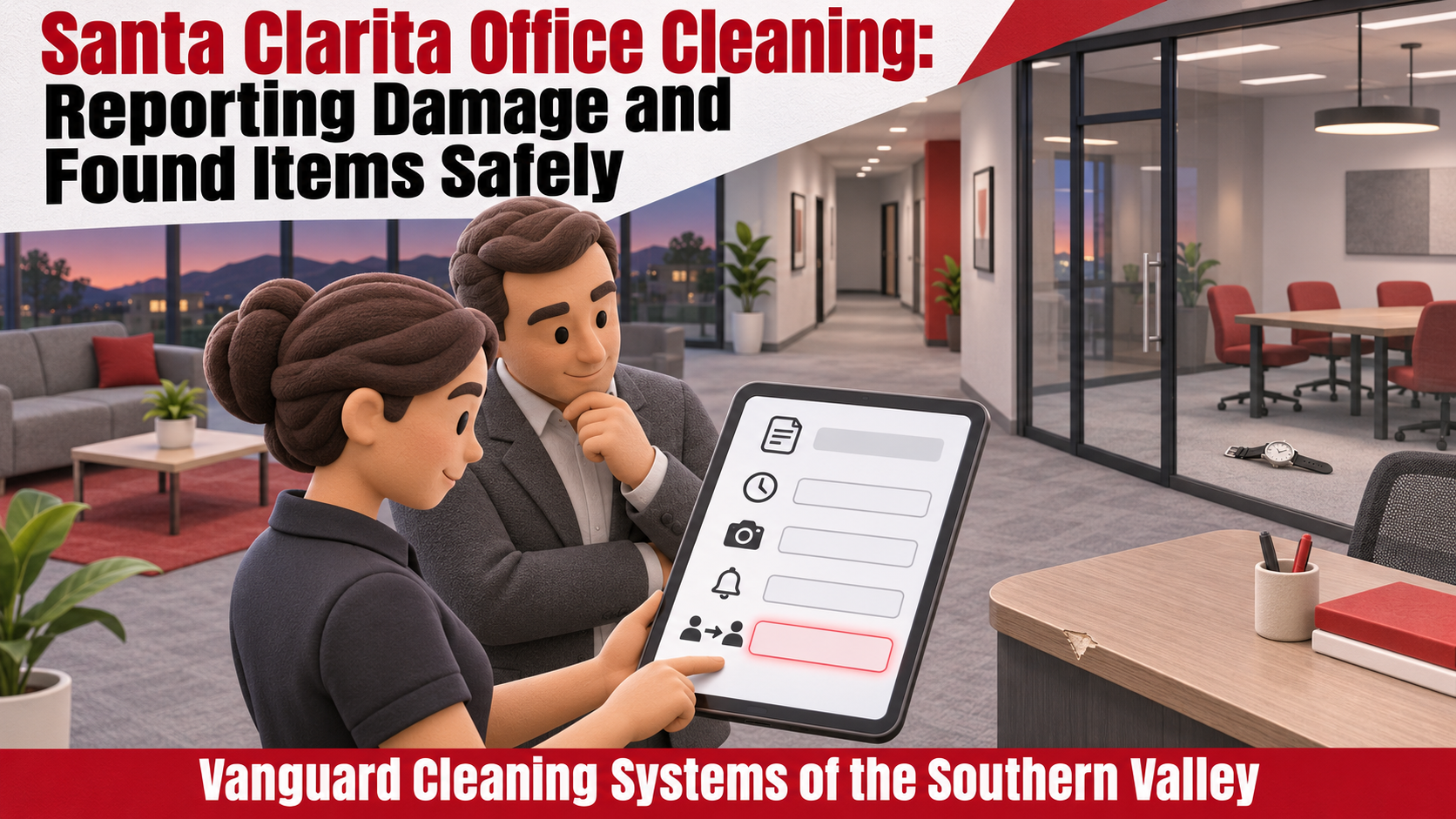
A Cracked Edge or a Watch on the Floor Needs a Clear Response
A chipped desk edge becomes visible when a waste container is moved. A watch lies beneath a conference table after everyone has left. Elsewhere, someone notices a loose cabinet handle before starting work in the room. Each observation needs a response that preserves useful details and gets the issue to someone authorized to act.
For office cleaning in Santa Clarita, those arrangements belong in the service discussion before the first evening visit. The person cleaning needs to know how to report a concern and who can receive found property. A backup contact matters when the usual contact has gone home.
The record should describe what was observed, including any event the person directly witnessed. Follow-up can then address the condition, arrange a handoff, or refer the matter for further review.
Quick Answer
When damage is noticed during cleaning, pause affected work if needed for safety, record factual observations, and notify the designated contact. Describe any event directly witnessed and identify prior records when available. For found valuables, follow the approved property procedure, protect private details, and document any authorized handoff. Legal responsibility, insurance coverage, and applicable found-property obligations require separate review by the appropriate parties.
What Is a Cleaning Incident and Found-Property Procedure?
A cleaning incident procedure sets out how concerns discovered during service are reported and followed up. It identifies the contact route, the information needed, and who can decide what happens next.
A janitorial lost property procedure addresses belongings that appear lost or need safekeeping. It should explain who may handle an item, where authorized storage is available, and how each transfer is recorded.
These procedures can share a reporting form, although the follow-up will depend on the situation. Damage may need assessment by a repair business. Found property may need an authorized recipient and a check of the requirements that apply to it.
Keep the procedure available to the independent janitorial franchise business performing the service. Sensitive contact or storage details should remain in the approved system used by the building and service provider.
How Reporting Works During a Cleaning Visit
Check whether the area can be approached safely
Look at the immediate condition before continuing the affected task. Broken glass, an unstable fixture, or liquid near electrical equipment can require a different response from a small surface mark.
Follow the site’s safety and emergency procedures. Where there is immediate danger, move away and contact the appropriate emergency services from a safe location. Keep others away where this can be done safely.
Record any work paused because of the condition. Ordinary cleaning should resume in the affected area only when the appropriate person has confirmed the next step under the site’s procedures.
Record the first observation promptly
Enter the date, time, and exact location. Describe the condition in words someone else can use to find it, such as the edge of a named desk or the cabinet beside a fixed doorway.
Add what was happening when the issue was noticed. If moving a waste container exposed a previously hidden chip, record that sequence without guessing when the chip occurred.
Where someone directly witnessed an event, include that account. A report should state that a cart struck a cabinet if that is what the person saw. Their own involvement belongs in the account as well.
Send the report through the agreed channel
Notify the designated contact using the method established for the type of issue. The procedure should distinguish routine messages from concerns requiring a prompt response.
Record the recipient and time sent. If the first contact is unavailable, use the approved backup route and preserve the original notification attempt.
A message sent and an acknowledgment received are separate entries. Keep that distinction visible so the person handling follow-up knows whether the concern has reached someone able to act.
Confirm instructions and record the outcome
Document instructions received, including who gave them and when. Identify any limits on cleaning the affected area or moving the item.
When the next action has been completed, add the result. A repair appointment being requested leaves a different status from a repair confirmed as complete.
Distinguish Existing Records From Newly Observed Damage
Damage documented before the visit
Use the reference number or approved photograph from the earlier record. Check whether the current observation matches that location and description.
If the condition appears different, add a dated observation explaining the visible change. Preserve the earlier entry so the review can compare both records.
An old report of a chipped desk does not explain every later mark on that desk. Keep the description specific enough to show which edge or surface was observed.
Damage first noticed during the visit
Use wording such as “first observed during this visit” when the time of occurrence is unknown. Record what made the condition visible and whether work had begun in that area.
The time a mark was noticed may differ from the time it happened. Leave that question open when there is no direct observation or reliable earlier record to resolve it.
If another person supplies information, identify it as their account and record when it was received. Their statement can be reviewed alongside the physical observations.
An event directly witnessed during work
Describe the sequence in plain language. Include the object involved, its movement, any contact observed, and the condition seen afterward.
Report actions taken immediately after the event. Those details might include stopping equipment, notifying a contact, or leaving an item in place while awaiting instructions.
Keep later findings as dated additions. If a repair assessment identifies damage beyond what was initially visible, link that finding to the original report.
Handling Unattended Valuables and Found Property
Items left on an occupied workspace
A phone on a desk or a bag beside a chair may be intentionally placed there. Follow the site’s instructions for personal belongings and clean only the accessible surfaces permitted by the scope.
Where an item prevents a scheduled task, record the affected surface and notify the agreed contact if required. Leave movement or safekeeping decisions to the person authorized under the procedure.
A routine visit does not require collecting every unattended object. Establish which circumstances call for a found-property report before service begins.
Property found beneath furniture or in a shared area
Record the exact location and discovery time. A short description of the item’s exterior is usually enough for the initial report.
Contact the designated recipient and follow the approved handling instructions. If a safe item is moved under those instructions, record its original position, the reason for moving it, and its destination.
Keep any temporary storage reference restricted to people who need it. Someone checking the general cleaning log should be able to follow the report without seeing where valuables are held.
Wallets, cash, and jewelry
Use the site’s specific procedure for valuables. Keep the item together and avoid unnecessary handling while an authorized recipient is arranged.
A wallet’s contents should remain private. Identity checks, any authorized inventory, and decisions about release belong with the designated person following the applicable requirements.
If the procedure requires a witnessed count or sealed container, record who performed that step and the reference used. Avoid estimates about value when the person reporting has no basis for them.
Phones, keys, access badges, and storage devices
Describe the exterior without attempting to access private information. A found phone can be reported without opening its messages or searching its contacts.
Report access badges and keys promptly through the building’s security process. Keep badge numbers and other access details out of broadly shared messages.
A found USB drive should go through the approved security or IT handoff. Connecting it to a computer to identify its owner can expose the system to malicious software.
Items that appear hazardous or suspicious
Use the building’s safety or emergency procedure when an item presents an apparent hazard. Leave suspicious objects undisturbed, move away, and notify the appropriate authorities from a safe location.
Record the location and actions taken once it is safe to do so. Follow instructions from the people responding to the concern.
Document Every Authorized Property Handoff
A handoff record identifies who transferred an item and who received it. Include the time and enough description to connect the transfer to the original discovery.
Use the site’s approved acknowledgment method. A signature or recorded confirmation can show receipt, while a storage reference can identify an authorized temporary destination.
If the intended recipient is unavailable, follow the backup procedure. Avoid leaving the item at an unattended desk simply because that is where someone usually works.
Record later transfers as additional entries. The original discovery and each change in custody should remain traceable through the same report number.
An internal handoff does not establish that every legal requirement for found property has been met. The designated contact needs to confirm any further obligations with the appropriate local authority or legal adviser.
Blank Incident-Report Template
Adapt this blank form to the building’s procedures before use. Complete the fields that apply and mark the others as not applicable. Keep sensitive attachments in the approved reporting system.
| Report field | Information to enter | Entry |
|---|---|---|
| Report reference | Unique ID, site, and date the report was created | __________________ |
| Discovery | Date, time, room, and fixed location reference | __________________ |
| Person reporting | Name or approved identifier and business | __________________ |
| Factual observation | Visible condition or item description; approximate size where useful | __________________ |
| Source of information | Direct observation, earlier record, or another person’s account | __________________ |
| Sequence and prior records | Work underway, any event witnessed, and relevant earlier report IDs | __________________ |
| Immediate response | Work paused, safety action, or other step taken and by whom | __________________ |
| Approved photographs | Permission record, original filenames, time taken, and approved storage reference | __________________ |
| Notification | Recipient, method, time sent, acknowledgment, and backup attempts | __________________ |
| Instructions received | Person authorizing the next step, time, and exact instruction | __________________ |
| Property handoff | Item reference, person transferring, authorized recipient, time, and receipt acknowledgment | __________________ |
| Follow-up and status | Next action, person responsible, due date, and recorded outcome | __________________ |
Keep the initial observation intact when adding updates. If an entry needs correction, identify the change and when it was made.
A short initial report can be followed by additional information. Urgent notification should proceed through the appropriate route while routine paperwork is completed afterward.
Photographs Should Preserve Detail and Protect Privacy
Confirm permission and an approved device
Check the site’s photography rules before taking an image. Some rooms restrict camera use, and permission to enter for cleaning may have separate limits on photographs.
Use the approved device and storage method. If photography is prohibited, record the observation in writing and ask the designated contact how the condition should be documented.
Show the relevant condition
Where photographs are permitted, take a wider view that identifies the location and a closer image showing the concern. Keep nearby papers, computer screens, and people outside the frame when they are unrelated.
Photograph an item where it was found when safe and permitted. Avoid recreating its original position after it has been moved.
Preserve the original image
Keep original photographs in the approved record. Put explanatory arrows or labels on a clearly identified copy if the reporting system allows them.
Restrict distribution to the people handling the issue. Permission to use a photograph for maintenance records needs separate review before it is used in public marketing content.
Workplace Conditions That Change the Reporting Process
After-hours access and changing contacts
An evening visit may take place after the usual building contact has left. Establish the backup contact and expected response route before a concern occurs.
Review those details when schedules change. A contact list is useful only when the listed person can receive the message during the service window.
Shared offices and tenant boundaries
A shared lobby can contain property belonging to several businesses or their visitors. Record where the item was found without assuming that the nearest tenant owns it.
The building’s procedure should identify who receives reports from common areas. Cleaning access to one suite does not establish permission to enter another suite to look for an owner.
Lighting and obstructed surfaces
Low lighting, reflections, and covered surfaces affect what can be observed. Record any viewing limits when describing a mark or damaged edge.
When comparing approved photographs, note changes in lighting or viewpoint. A later image may show more detail without establishing when the condition first occurred.
Furniture movement and work limits
The written scope should identify which items may be moved during cleaning. If a fragile object or unstable fitting affects access, pause the affected task and seek instructions.
Record the work left unfinished and connect it to the incident reference. That keeps the service checklist consistent with what happened in the room.
Reporting, Legal Responsibility, and Insurance Review
An incident report preserves an account of the observation and response. Decisions about legal responsibility require the relevant facts and review by the parties authorized to make them.
Insurance coverage also depends on the applicable policy and claim review. Keep any insurer correspondence or claim reference with the authorized parties handling that process.
The person reporting should include their own actions and any event directly witnessed. Questions about payment or repairs can then follow the agreed review process without changing the factual account.
Found-property requirements may continue beyond the building’s internal procedure. Confirm the applicable rules before setting a retention period, releasing an item, or disposing of unclaimed property.
Review the Procedure Before Service Begins
Agree on the reporting route with the independent janitorial franchise business owner and the building’s designated contact. Walk through how a routine concern would reach the recipient during the actual cleaning hours.
- Confirm the primary contact and backup route.
- Identify concerns requiring immediate safety or security notification.
- Set photography permissions and approved storage methods.
- Define who can receive found property.
- Agree on how handoffs are acknowledged.
- Identify who checks further legal or insurance requirements.
- Choose a follow-up process for open reports.
Include incident references in the existing process for service reporting and follow-up. Limit access to sensitive details while keeping the next action visible to the people responsible.
Write a Notification Someone Can Act On
A useful initial message gives the recipient the report reference and the location, followed by the observation. State whether affected work has paused and identify the decision needed.
For damage, the message can follow this format: “Report [ID], [room], observed at [time]: [factual description]. [Action taken]. Please confirm [requested instruction]. Photos are in [approved record], if permitted.” Include a directly witnessed event in the description when one occurred.
A found-property message should describe the item without exposing private identifying details. Refer the recipient to the restricted record for any information needed to arrange secure receipt.
Confirm verbal instructions in the report as soon as practical. If a message was misunderstood, add the corrected instruction and its time so later follow-up uses the right direction.
Check Open Reports Before the Visit Ends
Review unresolved entries before leaving the site. Confirm the status of any item awaiting collection and identify tasks still paused because of damage or access limits.
If the next person handling the issue will arrive later, make the handoff explicit. Record who has accepted the next action and how the person will access the approved report.
A report can remain open while property has already been handed to an authorized recipient. Keep those statuses separate so the record shows what has happened and what still needs attention.
Check that temporary arrangements match the instructions received. For example, a room awaiting an authorized inspection may need to remain out of service under the building’s procedure. Record the arrangement and who approved it.
At the next visit, use the existing report reference when checking the condition. Ask for the current instruction if the earlier restriction remains unresolved. Add a dated update so another person can follow the change without reconstructing several separate conversations.
People Also Ask
What should happen when damage is noticed during cleaning?
Record the location, discovery time, and factual observations. Pause affected work where safety or further damage is a concern, then notify the designated contact. Include any event directly witnessed and follow the approved instructions for further action.
How should found valuables be handled?
Follow the site’s approved property procedure, protect private details, and notify the designated recipient. Document any authorized movement or handoff. The person handling follow-up should confirm applicable found-property requirements.
How should pre-existing damage be recorded?
Reference an earlier report or approved photograph when available. If the time of damage is unknown, describe it as first observed during the current visit and preserve the question for review.
Does reporting damage establish who is responsible?
A report provides information for review. Legal responsibility and insurance decisions require separate assessment by the appropriate parties.
Frequently Asked Questions
Should a phone be opened to identify its owner?
Use the approved security or property handoff. Keep private information protected and leave identification steps to the authorized recipient.
What if the designated contact does not answer?
Use the agreed backup route and record each attempt. For immediate danger, follow emergency procedures without waiting for a routine reply.
Can work continue in the rest of the building?
Follow the site’s instructions and safety assessment. Record any affected tasks that remain unfinished and confirm which areas are available for service.
When should a report be closed?
Record closure when the agreed follow-up has been completed and acknowledged. Identify any related repair, security, or insurance matter that remains open elsewhere.
Set the Reporting Route for Your Santa Clarita Office
Bring the current contact list and reporting form to the next service discussion. Confirm who can authorize each next step and how an after-hours handoff will be recorded.
When reviewing Santa Clarita janitorial services, include damage concerns and found-property handling in the written arrangements. Contact Vanguard Cleaning Systems of the Southern Valley to discuss reporting requirements. Cleaning services are performed by independently owned janitorial franchise businesses under the applicable service agreement.
Each Vanguard Cleaning Systems® business is independently owned and operated.
References
California Department of Industrial Relations. (n.d.). Injury and illness prevention program, Cal. Code Regs. tit. 8, § 3203. https://www.dir.ca.gov/title8/3203.html
Joint Task Force. (2020). Security and privacy controls for information systems and organizations (NIST Special Publication 800-53, Revision 5; includes updates as of December 10, 2020). National Institute of Standards and Technology. https://doi.org/10.6028/NIST.SP.800-53r5
Occupational Safety and Health Administration. (n.d.). Incident investigation: Overview. U.S. Department of Labor. https://www.osha.gov/incident-investigation
Orange County Sheriff’s Department. (n.d.). FAQs. https://www.ocsheriff.gov/about-ocsheriff/faqs
United States Computer Emergency Readiness Team. (2008, November 4). Using caution with USB drives (Critical Infrastructure Information Notice CIIN-08-309-01). https://www.fbiic.gov/public/2008/nov/CIIN-08-309-01-Using%5B1%5D.pdf
