
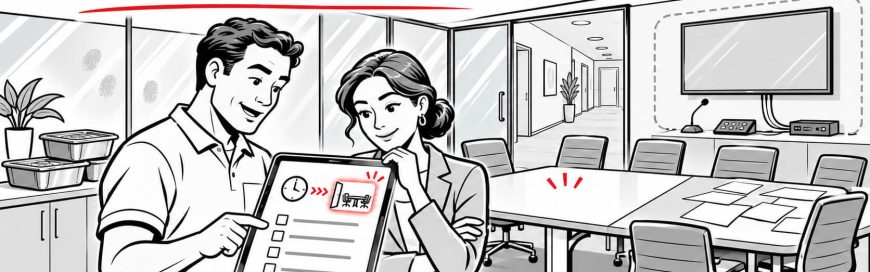
A conference room reset works best when the next booking leaves enough time for the agreed tasks and a clear handoff.
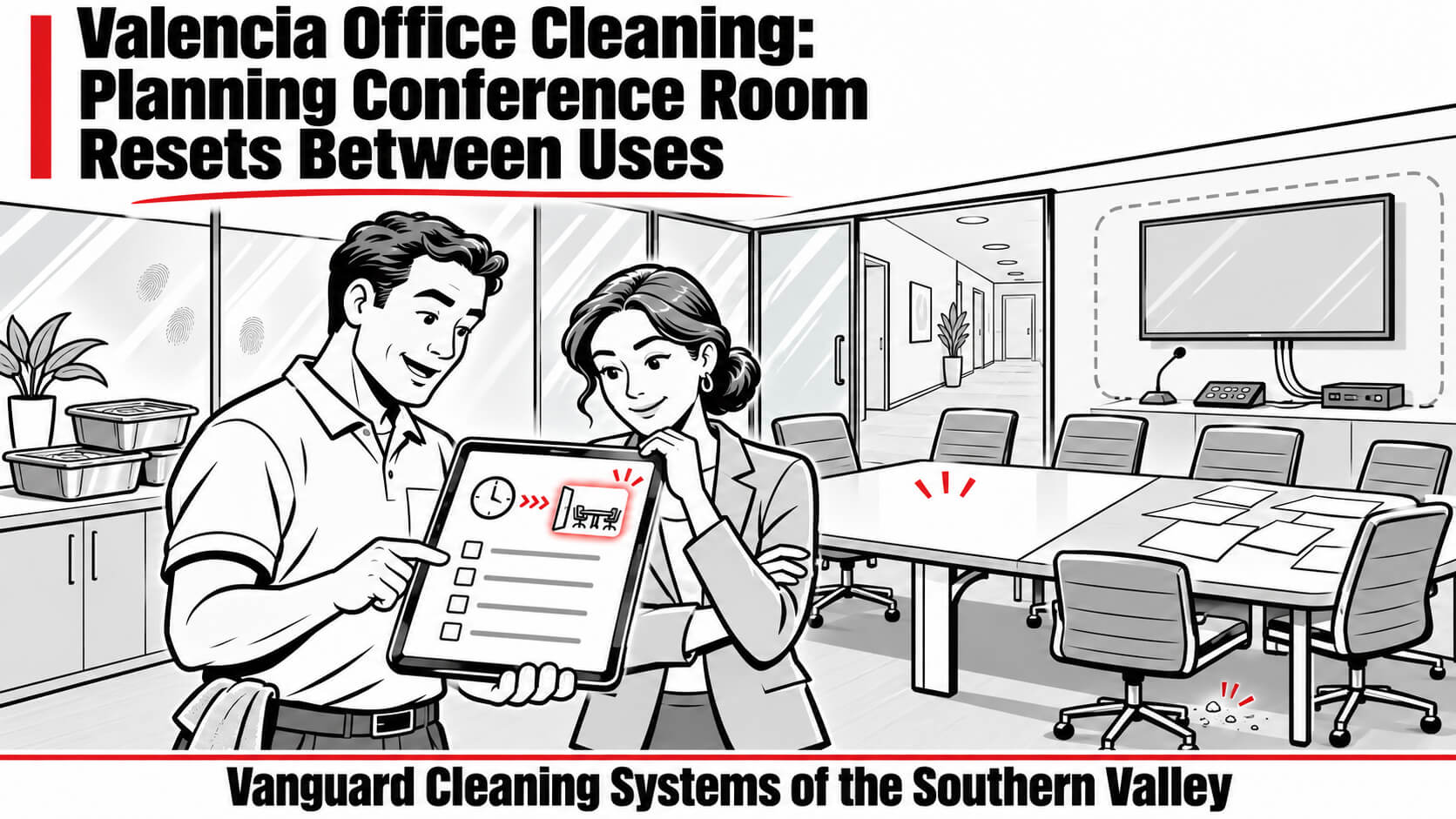
The Next Meeting Starts Before the Room Is Ready
The meeting has ended, but lunch trays still cover the sideboard and papers remain across the table. Someone is packing a laptop while the next group waits outside. Fingerprints show on the glass door, and crumbs have reached the carpet beneath the chairs. A room can appear available on the calendar while several decisions still stand between the last meeting and the next one.
For office cleaning in Valencia, conference room care needs to account for when people leave and when the next group needs access. A short break between bookings may allow a limited reset. Other tasks need a longer service window, especially when furniture must be moved or a floor needs time to dry.
The written plan should identify who releases the room, which surfaces will be accessible, and how unfinished work is reported. Papers and meeting equipment also need clear handling rules before cleaning begins.
Quick Answer
A conference room cleaning checklist should cover approved waste removal, accessible tables, touchpoints, glass, visible floor soil, and the agreed chair layout. Between-meeting work depends on the room being released with enough time to finish safely. After-hours service can address broader floor care and scheduled detail work. Meeting hosts or other authorized people should handle documents and equipment unless those tasks are expressly assigned.
What Is a Conference Room Reset?
A conference room reset is the agreed work needed to prepare a meeting space for its next use. It can include cleaning tasks and arrangements such as returning chairs to an approved layout.
The scope should identify each part of the reset and who performs it. Food service, document clearance, and meeting technology can involve different people from those performing routine janitorial work.
Use task names that describe the actual work. “Wipe accessible table surfaces” gives a clearer instruction than “make the room ready,” which can mean different things to different users.
A reset also needs an end point. The record should show whether the agreed work was completed and whether anything still limits use of the room.
How a Meeting Room Reset Works
Confirm when the room becomes available
The booking end time is a planning reference. Someone still speaking with a guest or collecting meeting materials may need additional time before the room can be released.
Agree on how the release is communicated. A message from the designated contact or an approved room-status update can tell the independent janitorial franchise business when entry is permitted.
Record a late release when it reduces the available work period. The next action may require a change to the task list or the next booking, with that decision made by the authorized contact.
Check the room against the agreed scope
Before work begins, check whether catering materials have been cleared and the scheduled surfaces are accessible. Look for any spill or condition requiring a separate response.
Identify the work that fits the available window. A table covered in papers may leave only part of its surface available, while occupied chairs can prevent access to sections of the floor.
Use the same checklist during each visit so exceptions can be compared later. Add the reason when an assigned task cannot proceed.
Complete the authorized work
Follow the written scope and the care instructions for the installed surfaces. Keep equipment handling within the approved limits.
Where tasks depend on another person clearing the area, record the delay and notify the designated contact. Avoid moving private materials simply to keep the schedule on time.
If a condition needs attention beyond the planned reset, confirm the next step before extending the work. The room’s availability and the following booking may both need review.
Check the result and hand the room back
Check completed tasks before reporting the room’s status. Identify anything left unfinished and any condition that prevents immediate use.
The authorized contact should know whether the room is ready for its agreed use. Equipment readiness may need a separate confirmation from the person responsible for meeting technology.
Between-Meeting Tasks and After-Hours Work
Use this table as a starting point for a site-specific scope. The actual assignment depends on the service agreement, access, surface instructions, and the time available.
| Area or task | Between meetings | After hours | Boundary or release requirement |
|---|---|---|---|
| Catering trays and reusable service items | Removal by the assigned catering or meeting contact before cleaning | Confirm collection arrangements for anything remaining | Identify reusable items, food to retain, and the person authorized to clear them |
| Ordinary waste and recycling | Remove approved waste and service assigned containers as needed | Complete scheduled container service and check surrounding areas | Follow site sorting rules; papers outside waste containers require separate instructions |
| Conference table | Clean exposed, approved surfaces once meeting materials are cleared | Complete scheduled accessible surface care | Follow the table’s care guide; exclude papers, personal items, and unassigned electronics |
| Sideboards and counters | Address accessible food residue and visible marks within scope | Complete scheduled surface work after service items are removed | Catering equipment and items marked for retention remain with the assigned contact |
| Glass doors and partitions | Address visible fingerprints in approved reachable areas | Perform broader glass cleaning at the agreed frequency | Use instructions suited to any film, coating, or adjacent trim |
| Carpet | Remove accessible loose debris when noise and access permit | Complete scheduled vacuuming and arrange periodic care separately | Furniture movement and spot treatment need defined permissions |
| Hard flooring | Check visible soil and report or address spills under the approved procedure | Complete scheduled care with adequate drying and access controls | Confirm the floor is suitable for use before releasing the affected area |
| Chairs and layout | Return permitted chairs to the agreed arrangement | Complete scheduled chair care and reset the approved layout | Heavy furniture and changes to cable routes require separate authorization |
| Papers and personal belongings | Cleared or secured by the meeting host or designated person | Report blocked surfaces and follow the site’s property procedure | No sorting, disposal, or relocation without explicit permission |
| Screens, controllers, microphones, and cables | Check the approved boundary and report any issue observed | Clean only assigned devices using model-specific instructions | Power changes, connections, and technical checks belong to authorized personnel |
| Whiteboards and written meeting notes | Erase only after explicit release under the room’s procedure | Follow the agreed board-care schedule after content is cleared | Confirm permission to erase; protect private meeting information |
| Room-status report | Confirm completed work, exceptions, and release status | Record unfinished tasks and instructions for the next service period | Identify who can change the next booking or approve further work |
Make Tables Accessible Before Cleaning Begins
A long conference table may include several materials and built-in components. The top, edge, cable covers, and power modules can need different care instructions.
Identify the installed finish before selecting a product. A method suitable for one table may damage another finish or leave residue that affects its appearance.
Agree on what “accessible” means for the room. A clear section of table can be cleaned while a section covered by meeting materials remains deferred, provided that partial service is permitted in the scope.
Record the surface left unfinished and what needs to happen before it can be reached. The room contact can then arrange for the material to be cleared.
Who Handles Papers and Meeting Equipment?
Documents stay with an authorized person
The meeting host or designated contact should remove papers and secure private materials. Put that step in the room-release instructions so the expectation is clear before a busy meeting day.
A document left beside a waste container may still be needed. Follow the written disposal rules and refer uncertain items to the designated contact.
Limit reporting to what is needed to explain the blocked surface. The contents of a meeting document generally do not belong in a cleaning log or photograph.
Equipment needs its own assignment
List the devices included in any cleaning assignment and identify their model-specific instructions. Screens and touch controllers may have coatings or openings that require particular care.
The equipment contact should authorize any necessary shutdown and confirm how the device returns to service. Leave cable connections and settings within the agreed technical boundary.
Report a loose cable or missing accessory without attempting to recreate the room’s setup from memory. A cleaning checklist can identify an observation while a separate technical check confirms operation.
Whiteboard content needs a release rule
A full board can contain work someone expects to use later. The room procedure should explain how permission to erase is communicated and who can give it.
Where permission is missing, record the board as unavailable for cleaning. Keep any photograph of written content within the site’s approved privacy rules.
Plan Catering Clearance Before the Next Booking
Catering can occupy the room after a meeting has finished. Trays, beverage containers, and reusable dishes need an assigned collection route before cleaning can reach the surfaces beneath them.
Confirm who decides which items are retained and which are ordinary waste. Those decisions should be made by the designated food or meeting contact.
The cleaning scope can then specify the containers and accessible surfaces to service. Include where approved waste goes and how it is removed without interrupting people arriving for the next meeting.
If food waste remains because collection is delayed, report the condition promptly through the agreed process. Record the affected work and ask for the clearance time.
Review the arrangement for days with several catered meetings. The volume and timing may call for an additional collection or service period.
Give Glass and Floors a Workable Service Window
Glass can have different levels of attention
Visible fingerprints near a door handle may be suitable for a limited check between meetings. Broader partition cleaning needs enough access to complete the assigned area without people moving through the work.
Identify films or coatings when establishing the method. Keep care instructions available for the installed glass and nearby finishes.
Floor work depends on access and room use
Check the path around the table and beneath accessible chairs. Loose crumbs in a quiet room may be addressed during a reset when equipment use fits the available time and noise limits.
Wider floor care belongs in a service window that accommodates the method and any drying requirements. Arrange alternate access if the usual route is temporarily unavailable.
Record a spill that needs a separate response. The next group should receive an accurate room status while the appropriate person arranges the required work.
Set Realistic Task Times From the Actual Room
A useful time allowance starts with observation of the agreed work. Check the room under the conditions it usually presents, including the route to supplies and waste collection.
Record when the room is released and when cleaning can begin. Separate the time spent waiting for access from the time spent carrying out tasks.
Measure the completed work on several representative visits. A lightly used room and a room following a catered meeting should have separate notes so the allowance accounts for the difference.
Include travel, setup, and any required drying or equipment handoff in the review. Record interruptions instead of folding them into an unexplained average.
The independent janitorial franchise business owner and building contact should review the results together. Agree on which tasks fit each type of booking gap and which need a longer window.
Confirm the time allowance after that operational review. Recheck it when the room layout, meeting pattern, or service scope changes.
Record Room Release and Exceptions
A brief record can show why a reset was completed, shortened, or deferred. Use the same room name as the booking system so the entries are easy to match.
- Meeting end time and actual room-release time.
- Time catering and meeting materials were cleared.
- Cleaning start and finish times.
- Assigned tasks completed.
- Tasks deferred and the observed reason.
- Any condition limiting immediate room use.
- Notification sent and acknowledgment received.
- Next action, person responsible, and review time.
Keep a partial reset visible in the record. A room may be usable for a meeting while still having a scheduled task awaiting access, provided the authorized contact has confirmed that arrangement.
Environmental Factors That Affect Valencia Meeting Rooms
Back-to-back bookings and late departures
A series of meetings can leave little time to respond when one runs over. Check the actual gap available after people leave and the next group’s setup begins.
Room booking rules can reserve a service period where the agreed tasks require one. Identify who can change that period when the schedule shifts.
Entrance routes and outdoor conditions
A room close to an outside entrance can receive soil carried by shoes and carts. Record visible conditions along the route, especially after a change in weather or nearby work.
Use those observations when assigning floor checks. A room farther inside the office may have a different need despite having the same number of seats.
Noise, privacy, and nearby work
Vacuuming can affect an adjoining meeting even when the room being cleaned is empty. Check noise limits and plan the equipment route around occupied spaces.
Privacy rules also affect access. A meeting that continues by video or leaves private materials displayed needs an authorized release before the affected work proceeds.
Room size and furniture layout
Chairs packed tightly around a large table can limit access to the floor. A training layout may leave different routes from a boardroom arrangement.
Keep an approved layout reference and identify which furniture can be moved. Review the service allowance when the arrangement changes for an event.
Use the Record to Review Cleaning Frequency
Repeated exceptions can reveal where the plan needs revision. Check whether the issue follows catered meetings, a particular booking period, or a surface that is rarely cleared.
Use that history to adjust office cleaning frequency. A specific room may need an added service period while other areas continue on their established schedule.
For recurring commercial cleaning, put the agreed change in writing. Include the task assignment and the conditions needed for access.
Use Approved Room Photographs to Clarify the Scope
Photographs can help show the intended chair arrangement and which table sections need to be clear. Obtain written permission before photographing the workplace and confirm how the images may be used.
For an internal room reference, choose an empty room with documents removed and screens free of private content. Show the agreed furniture layout from a viewpoint that makes the walking route easy to follow.
A closer image can identify a surface boundary, such as where the tabletop meets a power module. Pair it with a short instruction approved by the building contact and the independent janitorial franchise business owner.
Keep the photograph’s date and room name with the reference. Replace or update the image when the furniture or equipment changes so an old layout does not guide the next reset.
Approval for an internal service reference may have limits. Confirm separate permission before using a workplace photograph in a public article or social post.
Check That the Room-Status Message Is Understood
Agree on what each status means before it is used in a booking system or message. “Cleaning complete” can describe the assigned tasks while a separate equipment check is still pending.
The person controlling room bookings needs enough information to decide whether the next use can proceed. Include a specific restriction when one remains, such as an unavailable table section or a floor area awaiting release.
Record the person receiving that message and any instruction returned. If a task is deferred to after-hours service, add it to that service record so it reaches the person performing the work.
Review any repeated misunderstandings during the next walkthrough. Change the wording or contact route where needed, then check that the revised message reaches the people arranging the room.
People Also Ask
What belongs on a conference room cleaning checklist?
Include approved waste removal, accessible tables and counters, touchpoints, glass, floors, permitted chair resets, and a room-status check. Identify any tasks assigned to catering, the meeting host, or the equipment contact.
Who handles papers and meeting equipment?
The meeting host or designated person should secure documents. Equipment work needs a specific assignment and model-specific care instructions. Record surfaces blocked by items that the person cleaning is not authorized to move.
How long should a conference room reset take?
The allowance depends on the room, its condition, and the agreed tasks. Measure representative visits and include access delays, setup, travel, and any drying or handoff requirements before setting the schedule.
Does after-hours cleaning cover between-meeting resets?
The service agreement needs to assign daytime resets separately where they are required. Confirm availability and the scope before relying on support between bookings.
Frequently Asked Questions
Can a table be cleaned while papers remain on it?
Clean only accessible sections permitted by the scope. Record the covered area and ask the authorized contact to arrange clearance.
Should whiteboards be erased after every meeting?
Follow the room’s content-release procedure. Confirm permission before erasing notes or cleaning the board.
Who removes reusable catering dishes?
Assign that task to the designated catering or meeting contact. The cleaning scope should identify what can be treated as ordinary waste.
What happens when a meeting runs late?
Record the actual release time and notify the designated contact if the work window has changed. Confirm the revised task list or booking arrangement.
Can the room reopen immediately after floor cleaning?
Release depends on the method, drying requirements, and observed floor condition. Confirm the affected area is suitable for use before reopening it.
Build the Reset Into the Valencia Office Schedule
Bring the room calendar and the proposed task table to a service walkthrough. Confirm which surfaces will be available and who can make decisions when the gap between meetings changes.
When reviewing Valencia janitorial services, include room-release times and equipment boundaries in the discussion. Vanguard Cleaning Systems of the Southern Valley can be contacted about those service needs. Cleaning services are performed by independently owned janitorial franchise businesses under the applicable service agreement.
Each Vanguard Cleaning Systems® business is independently owned and operated.
References
California Department of Industrial Relations. (n.d.). General requirements, Cal. Code Regs. tit. 8, § 3362. https://www.dir.ca.gov/title8/3362.html
Joint Task Force. (2020). Security and privacy controls for information systems and organizations (NIST Special Publication 800-53, Revision 5; includes updates as of December 10, 2020). National Institute of Standards and Technology. https://doi.org/10.6028/NIST.SP.800-53r5
Logitech. (n.d.). Cleaning Rally Board 65. https://hub.sync.logitech.com/rallyboard65/post/cleaning-rallly-board-65-aHCQ8JQ1cMFpVjl
Steelcase. (n.d.). Interactive cleaning guide. https://www.steelcase.com/interactive-cleaning-guide/
