
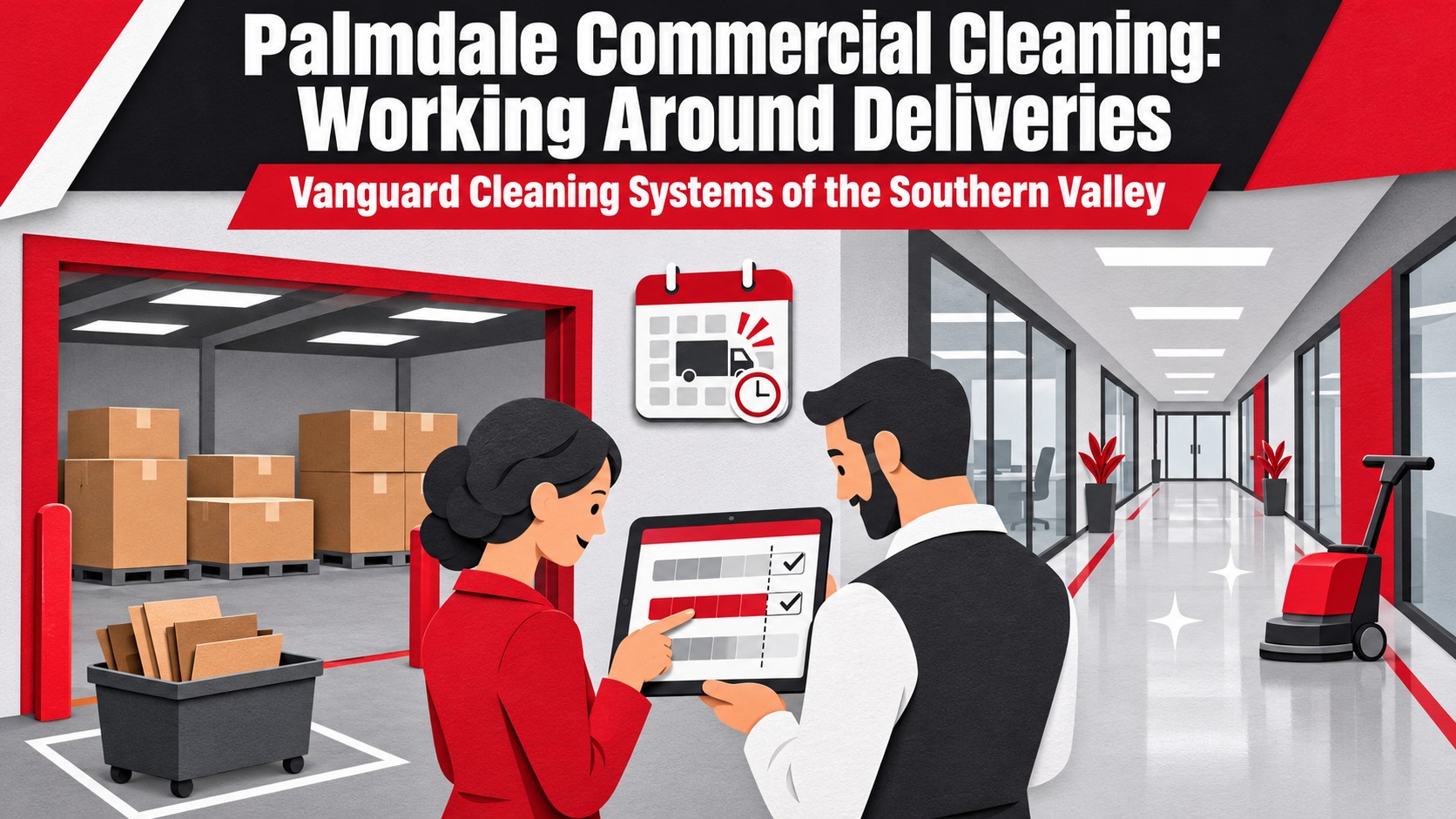
A delivery schedule becomes part of the cleaning plan whenever incoming goods change access to floors, doors, or shared work areas.
A cleared room can change when the next shipment arrives
An evening cleaning visit can begin while boxes still cover the receiving floor. A late shipment may send carts through an area that was ready for floor care a few minutes earlier. Packaging can spread from a back entrance into a corridor as goods move toward storage. These changes leave the cleaning assignment dependent on decisions made elsewhere in the building.
Palmdale commercial cleaning plans need a clear handoff around deliveries. The arrival time matters, but so does the point when goods are checked, packaging is released, and the route becomes available again. A written release process helps the assigned provider work within the space that is ready. It also gives the building a way to carry unfinished tasks forward when receiving runs late.
Quick answer: How do you plan cleaning around deliveries?
Map the delivery route and identify the areas that shipments occupy. Assign responsibility for receiving goods, moving inventory, releasing packaging for removal, and authorizing access for cleaning. Set a service window for each affected zone and an alternate plan for late arrivals. Record any blocked task with a location, reason, owner, and next available opportunity.
Keep cleaning activity within the site's approved separation from vehicles and material movement. The person controlling receiving operations should confirm when the area can be released. Match floor-care timing to the actual usable window and the product and equipment instructions.
What is delivery-aware commercial cleaning?
Delivery-aware commercial cleaning is a service plan that accounts for the way incoming goods affect access to a workplace. It connects the receiving schedule, staging locations, packaging handoff, and cleaning tasks for the areas involved.
A delivery-aware plan can apply to an office receiving supply cases, a showroom accepting merchandise, or a building with a larger receiving operation. The details depend on the actual site. A small quantity of boxes can still block a doorway or the floor beneath a counter.
The plan should show which duties belong to building operations and which are included in the independently owned janitorial franchise business's agreement. Receiving goods, approving damaged shipments, moving inventory, and operating material-handling equipment require their own assignments. Their presence near a cleaning task does not transfer those responsibilities.
A discussion of commercial cleaning in Palmdale can start with the route taken by a typical shipment. Follow it from the entrance to its final storage location and note every floor or door it shares with routine service.
How it works: Release each zone when receiving is finished
Map the route before setting the service time
Walk the path from the delivery entrance to the staging area. Continue through any corridor, elevator, workroom, or storage doorway used while unpacking goods. Mark where shipments wait and where packaging is collected.
Use room and zone names that people can recognize during the visit. “Rear entrance to stockroom corridor” describes a route more clearly than “shipping area.” Add a simple plan showing the boundaries where access changes.
Ask whether the route is used throughout the day or during specific receiving windows. Check the actual pattern over several operating days if arrival times vary. A schedule built from the earliest possible arrival can miss the late deliveries that create recurring access problems.
Separate receiving work from cleaning work
Name the party that accepts shipments and checks their contents. Identify who moves accepted goods to storage and who makes decisions about damaged packaging or goods awaiting inspection. Keep those duties visible on the operating side of the handoff.
The cleaning scope can list floor care, approved surface work, and collection of packaging that has been released for removal. State whether moving empty bins or lightweight site equipment is included. Inventory movement needs its own authorization and assessment.
Record exclusions where an ordinary description could be misunderstood. “Clean receiving area” leaves questions about pallets, stock, loading equipment, and the exterior approach. List the actual surfaces and the condition in which they need to be made available.
Choose a release signal
Use a signal that reaches the assigned provider before the affected task starts. A secure status board, an agreed message, or a direct handoff can work when it fits the building's existing process. Name who can give that release and who covers an absence.
Define what the signal means. Goods have reached the assigned staging location, active movement through the cleaning zone has stopped as required by the site plan, and the approved floor area is available. Record any remaining restriction with the release.
Avoid relying on a quiet moment as evidence that receiving has ended. Another vehicle or cart may be expected. The authorized contact should confirm the operating status using the site's established controls.
Check the area before starting
Review the current conditions at the released zone. Confirm that the path, lighting, surface condition, and available work time match the planned task. Follow the site's hazard-reporting process when an unexpected condition appears.
An unknown leak from a package requires the designated response. The cleaning provider should not identify the substance through smell, touch, or trial application of another product. Keep affected work on hold until the responsible contact gives appropriate direction.
When conditions match the plan, perform the listed tasks with the approved method. Record the area completed and any section that stayed inaccessible. Leave the room status clear for the next person who will use the route.
A handoff table for delivery days
Adapt this table to the building's operation before using it as a working assignment.
| Event | Assignment to confirm | Cleaning handoff |
|---|---|---|
| Shipment arrives | Receiving contact accepts and directs delivery | Affected route stays under the operating plan |
| Goods are checked | Authorized personnel inspect and document the shipment | Items awaiting a decision remain identified |
| Inventory moves to storage | Assigned building personnel handle stock | Released floor area becomes visible |
| Packaging is emptied | Receiving personnel confirm what may be removed | Approved packaging reaches its collection point |
| Area becomes available | Named contact authorizes release | Provider receives the zone and time window |
| Cleaning begins | Assigned provider follows the approved scope | Access controls remain in place |
| Delivery interrupts service | Operating contact coordinates the change | Work pauses or moves under the alternate plan |
| Area returns to use | Named site contact checks the handoff | Completed work and remaining holds are recorded |
Keep the table beside the scope rather than replacing detailed site procedures with it. A receiving zone can have controls that need their own instructions. The handoff table identifies who connects those procedures to the cleaning visit.
Plan for packaging without moving unapproved goods
Mark a packaging-release point
Choose a place where emptied packaging can wait under the site's approved waste arrangements. The location needs to fit the available space and keep required routes clear. Identify the person who confirms that the packaging is ready for removal.
A box can look empty while it still contains parts, documents, or return materials. Use a release method that removes that uncertainty before the cleaning provider collects it. Keep goods awaiting a return in a separately identified location.
State whether flattening cardboard, collecting wrapping, and transferring packaging to an exterior container are included. Each of those steps can require different time and equipment. Record the approved destinations for the materials accepted by the site's collection provider.
Give damaged goods a separate decision
Damaged cartons may need to stay available for inspection or a carrier claim. The building's receiving contact should decide when their contents and packaging can be moved. The cleaning record can describe the blocked area while the goods remain on hold.
Use location-based reporting without copying shipping labels or customer information. A simple reference to the site's shipment record may provide enough detail for the authorized recipient. Photos should follow the building's approved privacy and reporting process.
Once the goods are released or relocated, confirm whether the floor task can still fit within the remaining service window. Record the decision to return, defer, or arrange additional work. Avoid leaving the task with an implied promise of an unscheduled visit.
Assign pallet and equipment duties
Identify who controls pallets, rolling stock, and material-handling equipment. The janitorial scope should state the surfaces that can be reached after those items have been moved by the authorized party. Equipment operation requires its own permission and qualifications.
If a pallet blocks a listed floor area, record that section as inaccessible. The designated operating contact can arrange a release at the next approved opportunity. The report should identify the location without directing untrained people to move equipment.
Check the plan when delivery volume changes. A temporary increase can fill an area that usually stays open. The building may need additional receiving capacity, a different cleaning window, or a separately approved service adjustment.
Environmental factors that affect the cleaning window
Delivery variability
Use the actual spread of arrival times when planning service. A fixed route can work around predictable deliveries, while an irregular schedule may need a flexible order of rooms. Agree on how much variation the provider can accommodate within the scheduled visit.
Set a decision point before the visit ends. If the receiving zone is still occupied at that time, the named contact chooses from the options already agreed in the scope. Those options may include an approved later window or a task carried to another scheduled visit.
Record the cause and duration of the access delay. Several dated entries can reveal whether the service time needs changing. A recurring conflict should be reviewed with the operating schedule rather than left as a repeated nightly exception.
Outdoor soil and open doors
A receiving entrance can bring outdoor material into an otherwise enclosed workplace. Inspect the actual route for loose soil, mat condition, and repeated tracking. Conditions in an Antelope Valley property vary with the building, weather, and traffic pattern.
Include the entrance in the floor-care discussion without making unsupported claims about local weather or contamination. Observe where material appears and when. Use those observations to choose the areas that need attention after deliveries finish.
Any entrance mat must fit the site's access and movement requirements. Check that it stays in its intended position and does not interfere with carts or doors. Follow manufacturer guidance and the site's approved placement rules.
Floor materials and moisture
Receiving routes may cross concrete, resilient flooring, carpet, or another surface. Record the installed material and its care instructions before selecting a method. Treat transitions as part of the route rather than as an afterthought between rooms.
Allow the time required by the approved cleaning method before returning the area to use. The site needs a workable arrangement for access while the floor is being serviced. Use the required signs and controls, and keep the operating contact informed of the work status.
A short gap between deliveries may support one task while requiring another to be scheduled elsewhere. Choose the work based on the actual window. Record periodic floor care separately when it needs more preparation or a longer closure.
Lighting and visibility
Check the area during the hours when service will happen. Bright exterior light, darker interior storage, temporary stacks, and changed layouts can affect what someone sees on the route. Report lighting or visibility problems through the site's process.
Keep the work zone understandable to everyone who may approach it. Agree on the boundaries, access controls, and communication before work starts. Any change in vehicle movement should go through the person responsible for receiving operations.
Include coverage instructions for late or early visits. Someone unfamiliar with the property needs the same zone names and release contacts used in the normal schedule. A copy of yesterday's route cannot establish today's operating status.
Workplace relevance: Connect receiving with adjacent rooms
Delivery activity can affect a front office even when the entrance is at the rear. Cart traffic may pass through a staff corridor. Unpacking can fill a shared waste station. A meeting room may become temporary storage during a large shipment.
Show these secondary effects on the scope. Confirm who restores a borrowed room to its usual use and when the provider can complete its assigned surfaces. If the room stays occupied, keep its tasks separate from work completed elsewhere.
The existing guide to warehouse cleaning around Fresno shift changes provides a related timing discussion. Apply the same room-release discipline to deliveries while preserving the particular controls for the Palmdale site.
Ask about shared doors and tenant boundaries too. A building may use one receiving entrance for several occupants. The property arrangement should identify who coordinates that common area and how individual service providers learn about restrictions.
A late-delivery procedure that fits the agreement
Write a short procedure before the next schedule conflict. Begin with the report channel and the person authorized to change access. State which unaffected areas the provider can continue servicing under the normal scope.
For the interrupted zone, record:
- Time the task became unavailable.
- Zone or floor section involved.
- Work already completed.
- Expected release time, if confirmed.
- Remaining visit time and approved options.
- Person authorizing the next action.
- Follow-up responsibility for unfinished work.
Keep an estimate distinct from a confirmed release. If the shipment is expected in ten minutes, someone still needs to confirm when the route is actually available. The provider can then reassess the task against the usable window.
Use the agreement's change process for extra visits or expanded work. Confirm the task, access arrangements, timing, and charges where applicable before adding it. Record the resulting instruction in the same system used for the original exception.
Use an exception review to improve the schedule
At the end of an agreed review period, group interruptions by location and cause. Separate late delivery access from unreleased packaging, unavailable keys, and floor sections blocked by inventory. Those conditions may need different corrections.
Check whether changing the room order would help within the current visit. A provider may be able to complete offices first and return to a released receiving corridor later. Confirm that the revised sequence fits the agreed work and the site controls.
If the conflict remains, review the service window or the receiving process with the responsible parties. A written decision should identify the change and when it takes effect. Update the route sheet so someone covering the next visit follows the new arrangement.
A walkthrough checklist for the next service review
Bring a simple floor plan and the recent delivery pattern to the discussion. Check the route during a typical receiving period, then compare it with conditions at the proposed cleaning time. Note any area that cannot be assessed without an operating contact present.
Confirm the following details:
- Delivery entrance and normal receiving hours.
- Authorized contact and backup for release decisions.
- Goods awaiting inspection and their holding locations.
- Packaging-release signal and collection point.
- Included surfaces and excluded operating duties.
- Floor materials and available work windows.
- Shared routes and access controls.
- Late-delivery procedure and unfinished-task record.
- Periodic work requiring a separate window.
Use the commercial cleaning service overview to frame the service discussion, then put the actual site assignments in writing. The final scope should identify what is available to be cleaned and who makes it available.
Confirm the first visit after a route change
Review the handoff after the revised plan has been used during an actual delivery day. Ask whether the release reached the provider, whether the available window matched the task, and whether the packaging point worked as intended. Record any remaining access problem by zone.
Update the scope only after the responsible parties agree on the change. Keep the effective date visible and retire outdated route instructions. A coverage provider should be able to use the current sheet without reconstructing the earlier discussion.
People also ask
Can a commercial cleaning visit take place during deliveries?
Some tasks may fit in separately controlled areas while receiving continues elsewhere. The site must approve the arrangement and confirm the required separation. Work in the affected receiving zone needs the agreed release.
Who moves delivered boxes before floor cleaning?
The receiving or building party named in the agreement should move goods. Identify that duty separately from cleaning accessible floors and collecting released packaging.
What happens if a delivery arrives after an area was cleaned?
The operating contact should assess the changed use and any new task needed. Additional cleaning depends on the service agreement, available time, and approved access arrangements.
Does routine cleaning include loading docks?
Only when the written scope includes the specific dock tasks. Dock operations, equipment, exterior areas, and specialized hazards need their own assessment and assignments.
How should an unknown package leak be handled?
Follow the site's immediate reporting and response procedure. Keep the affected task on hold and notify the designated responder. Authorized personnel determine the substance and required controls.
Frequently asked questions
Should delivery days have a different cleaning route?
Use a revised route when it fits the actual receiving pattern. Record the order of areas and the release point for each affected zone.
Can packaging stay in a corridor until pickup?
Use only the site's approved staging arrangement. The responsible contact must keep required routes and access available under the building's procedures.
Who approves an extra visit?
Name the person authorized to approve the work and any charges. Confirm the task and access window before adding the visit.
What if the receiving contact is absent?
Use a named backup with authority to release the area. Record that contact in the controlled service information.
How should recurring delays be tracked?
Record dates, affected zones, and the step that stayed incomplete. Review those entries when adjusting the receiving handoff or service time.
Should floor-care work wait until all boxes leave the building?
Assess the specific zone and method. The required condition is an approved, usable work area with enough time and appropriate controls for the assigned task.
Put delivery handoffs into the site scope
Contact Vanguard Cleaning Systems of the Southern Valley with the delivery route, receiving hours, and areas needing service. Those details support a scope discussion for work provided by an independently owned janitorial franchise business.
Each Vanguard Cleaning Systems® business is independently owned and operated.
© 2026 Prestige Worldwide, Inc. DBA Vanguard Cleaning Systems of the Southern Valley.
References
Occupational Safety and Health Administration. (n.d.). General requirements, 29 C.F.R. § 1910.22. https://www.osha.gov/laws-regs/regulations/standardnumber/1910/1910.22
Occupational Safety and Health Administration. (n.d.). Handling materials: General, 29 C.F.R. § 1910.176. https://www.osha.gov/laws-regs/regulations/standardnumber/1910/1910.176
Occupational Safety and Health Administration. (n.d.). Warehousing: Hazards and solutions. https://www.osha.gov/warehousing/hazards-solutions
