
Persistent workplace odors rarely disappear until the trash, moisture, residue, flooring, drain, or maintenance problem causing them is found and corrected.
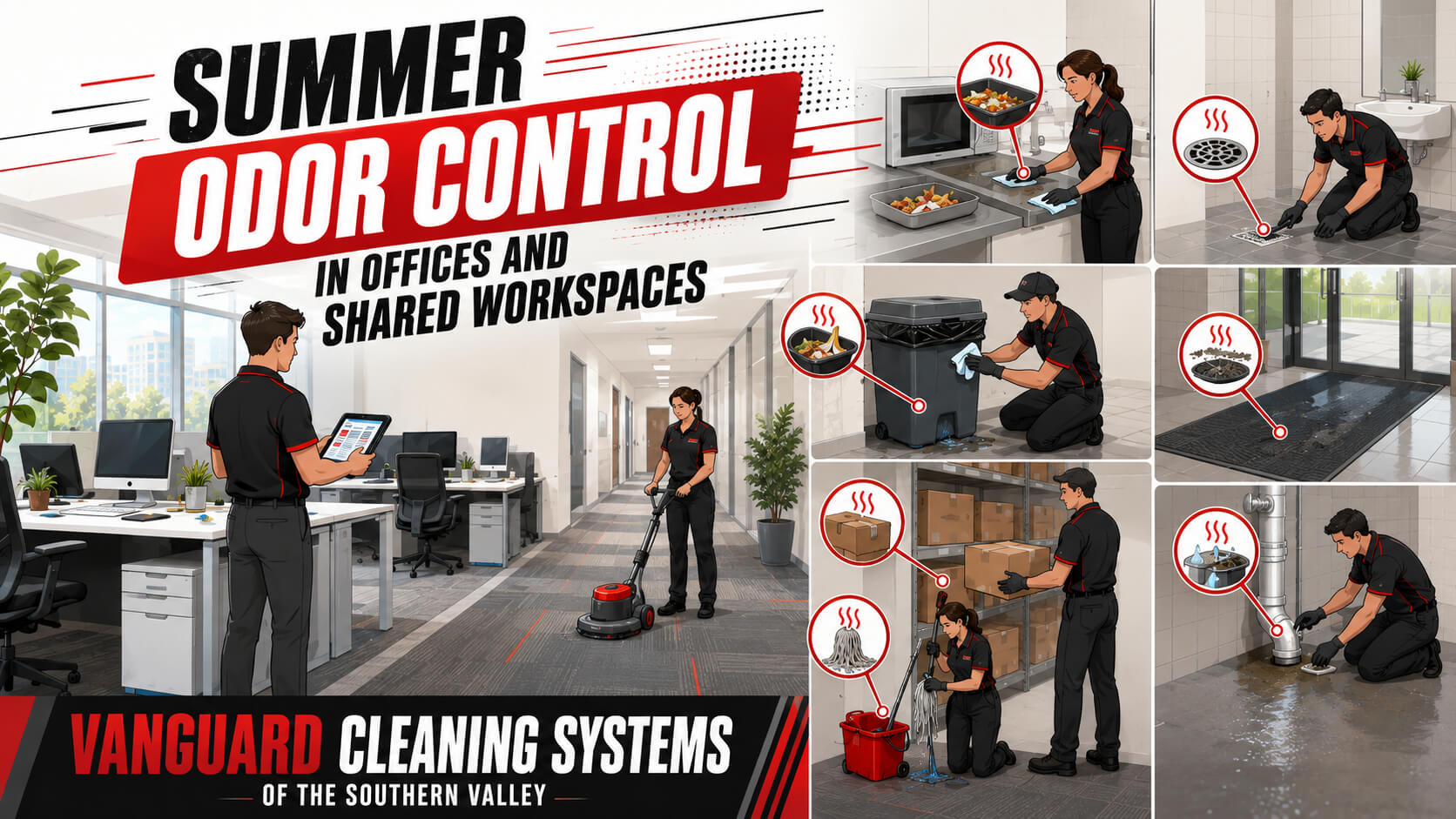
Why Workplace Odors Become Harder to Ignore During Summer
An office can look orderly and still smell unpleasant. A lingering odor near an entrance, restroom, breakroom, hallway, or storage area can quickly affect how people perceive the entire building.
Summer conditions tend to make these problems more noticeable. Warmer temperatures can speed up food spoilage, increase odors from waste containers, and intensify smells held inside carpets and entry mats. Humidity and condensation can also leave materials damp for longer periods.
More people may notice the problem because odors can travel beyond their original source. A dirty trash container in a breakroom may affect a nearby hallway. A dry restroom drain may create a smell that reaches the lobby. Damp carpet near an entrance may make a reception area feel musty.
Covering the smell with fragrance does not correct the source. In some cases, the added scent can make the space less comfortable without resolving the condition underneath it.
Reliable office odor control starts with a simple question: Where is the smell coming from?
Once the source is identified, the cleaning scope, service frequency, building maintenance plan, or occupant practices can be adjusted accordingly.
Quick Answer
Summer office odors commonly come from food waste, restroom residue, floor drains, dirty trash containers, damp carpets, entry mats, storage rooms, spills, plumbing leaks, and cleaning schedules that do not match building use.
The best response is to trace the odor to its source, clean the affected area, remove damaged or saturated material when necessary, and correct any moisture, plumbing, ventilation, or maintenance problem involved.
Air fresheners may temporarily change how a space smells, but they cannot remove food residue, moisture, waste leakage, dirty flooring, or buildup inside a drain.
What Is Office Odor Control?
Office odor control is the process of finding, removing, and preventing the conditions that cause unpleasant smells in commercial buildings.
It includes more than spraying a scented product into the air. Effective odor control may involve:
- Removing waste more frequently
- Cleaning the inside and outside of trash containers
- Addressing food spills and residue
- Cleaning restroom fixtures, floors, partitions, and drains
- Extracting soil from carpets
- Washing or replacing saturated entry mats
- Finding hidden moisture
- Reporting plumbing leaks
- Improving storage practices
- Adjusting cleaning frequency
- Reviewing ventilation or HVAC conditions
Some odor sources fall within a janitorial scope. Others require action from building maintenance, plumbing, HVAC, pest control, property management, or occupants.
The challenge is determining which type of problem is present.
A commercial cleaning service can support that process by identifying cleaning-related conditions, reviewing high-odor areas, and helping a business determine whether the current service schedule reflects how the facility is used.
How Office Odor Control Works
Office odor control works best when the response follows a clear sequence.
1. Locate the strongest point
The first step is determining where the odor is strongest. This may be near a waste container, refrigerator, sink, floor drain, carpeted area, supply closet, restroom fixture, or HVAC vent.
The odor may not be coming from the place where it is first noticed. Air movement, opening doors, foot traffic, and ventilation can carry smells into adjoining areas.
2. Identify the material holding the odor
Hard surfaces can usually be cleaned directly. Soft and porous materials may hold moisture and residue below the surface.
Materials that can retain odors include:
- Carpet fibers
- Carpet padding
- Entry mats
- Upholstered furniture
- Cardboard
- Ceiling tiles
- Grout
- Unsealed concrete
- Wood cabinetry
- Acoustic panels
Cleaning the visible surface may not be enough when liquid or moisture has reached deeper layers.
3. Remove residue and waste
Odor-producing material must be physically removed. That may include food waste, leaked liquids, dirty liners, organic debris, spoiled items, standing water, or soil embedded in flooring.
The affected surface should then be cleaned according to the material, soil type, manufacturer guidance, and facility requirements.
4. Dry the area completely
Moisture can allow musty smells to return. Carpet, mats, grout, walls, and stored materials should not remain damp longer than necessary.
Fans, air movement, HVAC support, or professional water-removal equipment may be needed after a leak or larger spill.
5. Correct the recurring condition
A one-time cleaning may remove an odor temporarily. But it will return when the source is part of an ongoing pattern.
Examples include:
- Trash remaining indoors too long
- Food being left in a refrigerator
- A leaking pipe
- A dry floor drain
- Repeated spills near a coffee station
- Wet entry mats
- Poor storage practices
- Insufficient restroom service
- Carpet cleaning that is overdue
- A task missing from the cleaning scope
The lasting solution depends on changing the condition that allows the odor to develop.
Why Do Offices Smell Worse in Summer?
Several seasonal factors can make workplace odors stronger or more frequent.
Higher temperatures
Warm conditions can increase the release of odor-producing compounds from waste, food residue, flooring, stored materials, and other sources.
Trash that caused little concern during cooler weather may develop a noticeable smell much faster during summer.
Food spoilage
Breakrooms often contain leftovers, dairy products, takeout containers, fruit, coffee additives, and other items that can spoil.
A refrigerator does not prevent every odor problem. Spills, expired food, dirty seals, and abandoned containers can create strong smells even when the appliance is working correctly.
Humidity and condensation
Humidity can slow the drying of carpets, mats, grout, closets, and other materials. Condensation may also form around pipes, cooling equipment, windows, and vents.
When materials stay damp, musty smells can develop or return after surface cleaning.
Increased waste
Summer meetings, employee events, customer visits, cold beverages, and food deliveries may create more trash than usual.
The building may need additional waste removal even when the regular schedule works during other parts of the year.
Dirty entry conditions
Dust, soil, pollen, moisture, and outdoor debris enter the building on shoes, delivery carts, equipment, and entrance mats.
These materials can build up quickly in lobbies and high-traffic corridors, especially when summer conditions are dry, windy, or dusty.
Cooling and airflow patterns
Closed windows and continuous air conditioning can change how odors move through the building. A smell from one room may be carried into another space through open doors, pressure differences, or shared airflow.
Cleaning cannot repair every airflow issue, but odor patterns may help identify where further building investigation is needed.
Common Sources of Workplace Smells
Odors do not always come from an obvious mess. Many start in places that receive limited attention during a basic service visit.
Common sources include:
- Restroom floors and drains
- Food waste
- Dirty trash containers
- Recycling residue
- Refrigerator spills
- Microwave residue
- Sink drains
- Carpet stains
- Damp entry mats
- Storage room clutter
- Janitorial closets
- Plumbing leaks
- Water-damaged materials
- Floor scrubber tanks
- Mop heads and cleaning tools
- HVAC-adjacent dust
- Pest activity
- Spoiled personal food
- Upholstered furniture
- Forgotten waste beneath desks
Tracking where and when complaints occur can narrow the search.
For example, an odor that appears each afternoon may be tied to food waste, heat, or occupant activity. A smell that is strongest on Monday morning may be linked to waste left over the weekend. A musty odor after the HVAC system starts may require a different investigation.
Restroom Odor Control
Restrooms are one of the most common sources of recurring commercial building odors. They combine plumbing, moisture, waste, grout, drains, paper products, and heavy foot traffic in a relatively small space.
A restroom may appear acceptable during a quick visual check while residue remains around fixture bases, behind toilets, under partitions, or inside floor grout.
Common restroom odor sources
- Toilets and urinals
- Fixture bases
- Floors around fixtures
- Grout lines
- Floor drains
- Sink drains
- Partition edges
- Walls near fixtures
- Plumbing leaks
- Waste containers
- Feminine hygiene receptacles
- Damp paper products
- Dirty cleaning tools
- Poor airflow
Why floors often cause recurring restroom smells
Liquid can reach grout, seams, corners, and fixture edges. If cleaning focuses only on the center of the floor, residue may remain along walls and behind fixtures.
Mopping with dirty solution can also spread soil rather than remove it. The floor may look wet and recently serviced while odor-producing residue remains.
Restroom floor care should account for:
- Edges and corners
- Areas behind toilets
- Urinal surroundings
- Partition bases
- Floor drains
- Grout condition
- Cleaning solution changes
- Mop or equipment condition
- Drying time
Do not overlook floor drains
A restroom smell is not always caused by surface cleanliness. A dry drain trap, plumbing problem, or drain buildup can release unpleasant odors.
The cleaning provider can report where the odor appears strongest, but plumbing conditions may require building maintenance or a licensed professional.
Businesses experiencing recurring restroom complaints may benefit from reviewing their restroom cleaning program rather than simply adding fragrance.
Breakroom Odor Control
Breakrooms combine food, shared appliances, liquids, waste, and frequent use. A small amount of residue can become noticeable quickly during warm weather.
Refrigerator odors
Refrigerator smells can come from expired food, leaking containers, spills beneath drawers, dirty shelves, seals, drip pans, or food left behind by former employees.
Simply throwing away the most obvious item may not remove residue that has leaked onto another surface.
A practical refrigerator process may include:
- Establishing a clear food-removal policy
- Labeling personal food
- Scheduling regular cleanout days
- Wiping shelves and drawers
- Cleaning spills promptly
- Checking door seals
- Inspecting beneath and behind the appliance
- Reporting temperature problems
Responsibilities should be clear. Some commercial cleaning scopes exclude personal food removal or the interior of refrigerators unless specifically approved.
Microwaves
Food splatter can collect on the ceiling, door, handle, turntable, and interior walls of a microwave. The smell may return every time the appliance is heated.
A microwave that looks clean from the outside may still contain cooked-on residue inside.
Coffee stations
Coffee grounds, creamer, sugar, flavored syrups, spills, and waste cups can create sticky surfaces and sour odors.
Attention should be given to:
- Countertop seams
- Drip trays
- Coffee machine surroundings
- Waste openings
- Cabinet interiors
- Floors beneath the station
- Reusable containers
- Nearby walls and baseboards
Sinks and drains
Food particles, grease, liquids, and residue can collect in sink strainers and drains. Cleaning the sink basin without checking the drain may leave the main odor source untouched.
A slow drain or sewage-like smell should be reported for maintenance review.
More detailed guidance is available in this breakroom and kitchen cleaning guide.
Trash Container Odors
A trash container can smell before it appears full. Food, coffee, soda, milk, sauces, and other liquids may leak through a damaged liner or spill between the liner and container wall.
Replacing the liner removes the visible waste, but it does not clean the container.
Areas that should be checked
- Container interiors
- Container lids
- Swing doors
- Handles
- Bottom surfaces
- Wheels
- Exterior sides
- Floors beneath the container
- Walls behind the container
- Cabinets holding small bins
- Waste collection carts
Waste frequency matters
A schedule based only on how full the container looks may not work for food waste.
A half-full breakroom container may need to be emptied sooner than a full paper-only office bin. Waste type matters as much as volume.
Businesses may need more frequent removal when:
- Food is served
- Employees eat at their desks
- Summer events are held
- Customer traffic increases
- Beverage waste is common
- The building operates longer hours
- Trash remains indoors over weekends
Recycling can also smell
Recycling containers often hold beverage residue and food-contaminated packaging. A recycling bin may be treated like a dry container even when cups, cans, and bottles still contain liquid.
Regular interior cleaning and clear disposal signs can help reduce the problem.
Carpet and Entry Mat Odors
Carpets and mats trap soil, moisture, spills, organic debris, and particles carried in from outside.
Vacuuming removes loose material, but it may not remove residue that has reached deeper into the fibers or backing.
Common carpet odor sources
- Coffee spills
- Food
- Moisture
- Dirty shoes
- Pet-related residue brought in on footwear
- Waste leakage
- Cleaning solution residue
- Dampness after extraction
- Water intrusion
- Old stains
- Contaminated carpet padding
Entry mats need separate attention
Entry mats receive concentrated foot traffic. They can collect dust, soil, pollen, asphalt residue, moisture, and debris before anyone reaches the lobby.
When a mat becomes saturated, dirty, or slow to dry, it can affect the smell of the entire entrance.
A mat maintenance plan may include:
- Frequent vacuuming
- Soil removal beneath the mat
- Spot cleaning
- Periodic washing or extraction
- Complete drying
- Rotation
- Replacement when damaged or saturated
- Reviewing mat size and placement
The floor beneath the mat should also be inspected. Moisture or residue can remain hidden even when the mat’s surface appears dry.
Carpet extraction must include drying
Carpet cleaning can create a new odor problem when too much moisture remains in the carpet or padding.
Extraction should be planned around:
- Carpet condition
- Soil level
- Equipment capability
- Air movement
- Indoor humidity
- Drying time
- Building access
- Manufacturer instructions
A recurring musty smell after carpet cleaning may indicate slow drying, excess moisture, residue, or a deeper water problem.
Storage Room Odors
Storage rooms often receive less attention because they are not customer-facing. Yet a small odor source can remain hidden there for weeks.
Common storage room problems
- Damp cardboard
- Old food
- Forgotten trash
- Dust buildup
- Leaking supplies
- Dirty equipment
- Stagnant mop water
- Wet tools
- Pest activity
- Plumbing leaks
- Limited airflow
- Water-stained ceiling tiles
- Materials stored directly against walls
Cardboard readily absorbs moisture and odors. Boxes placed on a damp floor may continue to smell after the surface has been cleaned.
Improve storage practices
A cleaner storage room is easier to inspect and maintain.
Helpful practices include:
- Removing unneeded materials
- Keeping boxes off the floor
- Leaving space around walls
- Labeling shelves
- Closing product containers
- Reporting leaks
- Allowing tools to dry
- Emptying equipment tanks
- Cleaning spills promptly
- Avoiding long-term storage of food
- Checking corners and ceilings
A strong smell from a storage room should not automatically be blamed on cleaning products. The source may be damp materials, waste, a leak, equipment, or pests.
Janitorial Closets and Cleaning Equipment
The space used to support cleaning can become an odor source when tools, liquids, and equipment are stored improperly.
Potential sources include:
- Wet mop heads
- Dirty buckets
- Floor machine recovery tanks
- Used cloths
- Standing water
- Clogged utility sinks
- Leaking containers
- Damp shelving
- Poorly stored chemicals
- Trash awaiting removal
Mop heads and reusable cloths should be cleaned and allowed to dry properly. Recovery tanks should not hold dirty water between service visits.
A janitorial closet should be included in periodic quality reviews. It should not be ignored simply because it is not visible to building occupants.
Moisture-Prone Areas
Moisture is a major warning sign when an odor is musty, earthy, or repeatedly returns after cleaning.
Potential moisture sources include:
- Roof leaks
- Plumbing leaks
- Window leaks
- Condensation
- HVAC equipment
- Restroom fixtures
- Water fountains
- Ice machines
- Utility sinks
- Carpet cleaning
- Spills
- Exterior water intrusion
- Refrigerator lines
Cleaning cannot repair a leak
A cleaning provider may remove surface water and report visible damage, but a recurring leak requires maintenance.
Continuing to clean around the problem without repairing it can allow damage to spread into:
- Drywall
- Insulation
- Carpet padding
- Ceiling tiles
- Cabinets
- Baseboards
- Stored materials
Dry wet materials quickly
Wet materials should be addressed promptly. The correct response depends on how much water is present, how long the material has been wet, and whether the water came from a clean or contaminated source.
Large leaks, sewage backups, or extensive water damage require specialized assessment and restoration. They should not be treated as routine janitorial work.
High-Traffic Zones
Lobbies, entrances, hallways, elevators, waiting rooms, conference spaces, and shared work areas collect soil faster than low-use areas.
Odor problems may develop when the service schedule treats every area of the building the same.
What high traffic brings inside
- Dust
- Soil
- Moisture
- Pollen
- Food debris
- Beverage spills
- Outdoor residue
- Waste
- Delivery debris
Signs that service frequency is too low
- Trash smells before pickup
- Entry mats remain dirty
- Spots stay on carpet
- Spills dry before being cleaned
- Hallways smell different from offices
- Restroom odors spread into common areas
- Complaints increase late in the day
- Odors return before the next visit
High-use areas may need extra spot checks, waste removal, mat care, or floor service even when the rest of the building is on a lighter schedule.
Environmental Factors That Affect Odor Control
No single cleaning schedule works for every workplace. Odor risk changes with the building, weather, occupancy, and activities taking place inside.
Building use
A professional office with limited food service has different needs from a call center, school, manufacturing office, medical facility, or property with multiple shifts.
Number of occupants
More people generally create more waste, restroom use, food activity, spills, and tracked-in soil.
Hours of operation
A building that operates twelve hours a day may need different service timing than one that closes at 5:00 p.m.
Flooring
Carpet, tile, concrete, grout, rubber flooring, and entry mats retain different types of soil and require different maintenance methods.
Local climate
Hot, dry, windy conditions can increase dust and debris at entrances. Humid indoor areas may slow drying. Smoke events, outdoor odors, and nearby construction can also affect what people smell inside.
Building age
Older buildings may have worn grout, aging pipes, damaged seals, hidden leaks, or ventilation limitations that affect odor control.
Occupant behavior
Food left at desks, open trash containers, personal appliances, stored athletic gear, wet umbrellas, and unreported spills can all contribute to workplace smells.
Workplace Relevance
Odor complaints are rarely limited to smell alone. People often interpret a persistent odor as evidence that the building is not being maintained carefully.
That perception can affect:
- Employee comfort
- Visitor impressions
- Tenant satisfaction
- Restroom confidence
- Breakroom use
- Property presentation
- Facility complaints
- Confidence in the cleaning program
A building does not need to smell strongly scented to feel clean. In many cases, the most comfortable result is a neutral indoor environment without noticeable waste, moisture, food, drain, or chemical odors.
Odor complaints can also provide useful information. A pattern of repeated reports may reveal that a specific task is missing, a service time is poorly scheduled, or a building repair is overdue.
The goal should not be to silence complaints with fragrance. The goal should be to use the complaints to locate and correct the underlying condition.
Odor Prevention Versus Odor Masking
Odor prevention reduces the material and conditions that create smells. Odor masking adds a stronger scent to compete with them.
Prevention may include:
- Prompt waste removal
- Spill response
- Container cleaning
- Carpet care
- Mat maintenance
- Drain inspection
- Moisture reporting
- Refrigerator cleanouts
- Equipment care
- Improved service frequency
Masking may make the smell less noticeable for a short period, but the source remains.
Adding fragrance to a dirty trash container does not remove leaked liquid. Spraying a restroom does not clean grout. Scenting a lobby does not dry a wet mat. Deodorizing carpet does not repair a plumbing leak beneath it.
Strong fragrances can also create separate comfort complaints. A neutral space is often a better goal than a heavily scented one.
When Is Odor a Cleaning Scope Issue?
A persistent odor may be a cleaning scope issue when the source involves a task that is missing, unclear, or scheduled too infrequently.
Examples include:
- Trash is not removed often enough.
- Food waste is excluded from certain service areas.
- Trash containers are emptied but never washed.
- Floor drains are not included.
- Restroom edges and fixture bases receive limited attention.
- Microwave interiors are excluded.
- Refrigerator cleaning responsibilities are unclear.
- Entry mats are vacuumed but not periodically washed.
- Carpet extraction is overdue.
- Storage rooms are not included.
- The janitorial closet is not reviewed.
- Daytime spot service is needed.
- Weekend waste remains inside too long.
A detailed janitorial services checklist can help a business compare daily, weekly, and periodic tasks.
Questions to ask during a scope review
- Which areas generate the most complaints?
- When are odors strongest?
- Which waste containers hold food?
- Who cleans appliance interiors?
- Are drains included?
- How often are container interiors cleaned?
- When were carpets last extracted?
- How are entry mats maintained?
- Are storage rooms included?
- Who reports leaks and water damage?
- Are summer conditions increasing service needs?
- Does the schedule match current occupancy?
The answers can show whether the problem is a missed task, a frequency issue, an occupant practice, or a building repair.
When Is Odor Not a Routine Cleaning Issue?
Some odor sources require services outside a standard janitorial agreement.
Examples include:
- Sewer gas
- Active plumbing leaks
- Sewage backups
- Extensive water damage
- Suspected mold growth
- Dead animals
- Pest infestations
- Electrical burning smells
- Natural gas
- HVAC failures
- Chemical spills
- Contaminated water
- Damaged building materials
Urgent or hazardous smells should be reported immediately and handled according to the building’s emergency and maintenance procedures.
A janitorial provider can help identify where a smell is strongest and whether visible residue is present. However, cleaning personnel should not be expected to diagnose plumbing, electrical, structural, or mechanical failures.
How to Investigate a Persistent Office Odor
Use a consistent process instead of moving from one scented product to another.
Document the complaint
Record:
- Date
- Time
- Exact location
- Odor description
- Weather conditions
- Nearby activities
- How long it lasted
- Whether it has happened before
Inspect nearby sources
Check waste, drains, appliances, carpet, mats, ceilings, walls, cabinets, supply rooms, and fixtures.
Follow the timing pattern
Ask whether the odor appears:
- After lunch
- Late in the afternoon
- On Monday mornings
- After carpet cleaning
- When the HVAC starts
- During hot weather
- After rainfall
- Near waste pickup days
- When a room is closed
Review recent changes
Odors may begin after:
- A leak
- Construction
- New flooring
- Furniture installation
- A change in waste service
- A cleaning schedule change
- Increased occupancy
- New food service
- HVAC maintenance
- Water damage
Assign responsibility
Once the likely source is found, determine whether the next step belongs to:
- Janitorial service
- Building maintenance
- Property management
- Plumbing
- HVAC
- Pest control
- Occupants
- Waste service
- Water restoration
Confirm that the odor is gone
After corrective work is completed, inspect the area again under the same conditions that produced the complaint.
How Often Should Odor-Prone Areas Be Cleaned?
Frequency should reflect use rather than relying on a universal schedule.
Daily or more often
Depending on the property, daily attention may be appropriate for:
- Food waste
- Restrooms
- Breakroom counters
- Sink areas
- Coffee stations
- High-use trash containers
- Entry mats
- Visible spills
- Common-area floors
Weekly
Weekly tasks may include:
- Container washing
- Appliance exterior detailing
- Restroom edge cleaning
- Baseboards near odor-prone areas
- Storage room checks
- Mat inspection
- Drain checks when appropriate
Periodic
Periodic work may include:
- Carpet extraction
- Mat washing
- Grout detailing
- Refrigerator cleanouts
- Upholstery cleaning
- Floor machine cleaning
- Storage area reorganization
- Scope and frequency reviews
Some facilities need these tasks more often. The schedule should change when building conditions, occupancy, or complaints change.
Local Commercial Cleaning Support
Vanguard Cleaning Systems of the Southern Valley supports businesses that are reviewing commercial cleaning needs across the region.
Local information is available for:
- Bakersfield and surrounding Kern County communities
- Fresno, Visalia, Tulare, and surrounding Central Valley communities
- Valencia and the Santa Clarita Valley
- Lancaster and surrounding Antelope Valley communities
- Palmdale and surrounding communities
Independently owned and operated Vanguard janitorial franchise businesses may provide commercial cleaning services based on the scope, schedule, and conditions agreed upon for each facility.
A building walkthrough can help identify odor-prone locations, clarify service responsibilities, and determine whether the current cleaning frequency matches actual workplace use.
People Also Ask
Why does my office smell worse during summer?
Heat can make smells from food, trash, spills, carpeting, and damp materials more noticeable. Summer humidity, increased waste, heavier foot traffic, and slower drying can also contribute.
What causes a musty smell in an office?
Musty smells are often associated with moisture, damp carpeting, wet ceiling tiles, condensation, leaks, storage materials, or areas that do not dry completely. The source should be investigated rather than covered with fragrance.
Can air fresheners solve workplace odor problems?
Air fresheners may temporarily change the smell, but they do not remove waste, moisture, residue, spoiled food, dirty drains, or contaminated flooring.
Why does the restroom smell after it has been cleaned?
Residue may remain in grout, around fixtures, behind toilets, along partition bases, or inside drains. The smell could also come from a plumbing or ventilation issue rather than the visible surfaces.
How can businesses remove breakroom smells?
Remove food waste, clean spills, wash trash containers, clean shared appliances, inspect drains, remove expired food, and clarify who is responsible for refrigerator interiors and personal items.
Why does office carpet hold odors?
Carpet fibers and padding can absorb liquids, moisture, food residue, and tracked-in soil. Vacuuming may not remove material that has reached below the surface.
How often should office trash be emptied?
Food waste usually needs daily removal and may require more frequent service. Paper-only waste can often follow a different schedule. Frequency should reflect waste type, temperature, occupancy, and operating hours.
What should I do when an odor keeps returning?
Track when and where it occurs, inspect nearby waste and moisture sources, review the cleaning scope, and involve building maintenance when the cause may be plumbing, HVAC, pests, or water intrusion.
Frequently Asked Questions
Are all workplace odors caused by poor cleaning?
No. Cleaning-related residue and waste are common sources, but odors may also come from plumbing, HVAC systems, water damage, building materials, pests, or occupant activities.
Should an office have a noticeable fragrance after cleaning?
Not necessarily. A neutral-smelling space is often preferable. Strong fragrance is not proof that soil, waste, or residue has been removed.
Who should clean the office refrigerator?
That depends on the written scope and workplace policy. Some providers clean exterior surfaces only. Interior cleaning and food removal should be clearly assigned and approved.
Can a dirty trash container smell after the bag is changed?
Yes. Liquid and residue can collect beneath the liner, on the lid, along the sides, and on the floor below the container.
Do entry mats cause odors?
They can. Mats absorb moisture and trap large amounts of soil. They may need vacuuming, washing, drying, rotation, or replacement.
Can cleaning remove a sewer smell?
Surface cleaning may remove nearby residue, but a sewer smell can indicate a dry trap, drain problem, damaged seal, or plumbing issue that requires maintenance.
How can managers tell whether cleaning frequency is adequate?
Review complaints, waste levels, restroom use, spill frequency, entry conditions, occupancy, operating hours, and how quickly odors return after service.
Should storage rooms be part of the cleaning scope?
Storage rooms should at least receive periodic inspection and cleaning when appropriate. Their exact inclusion depends on the service agreement, access, stored materials, and facility requirements.
What is the fastest way to stop an office odor?
Remove the odor-producing material, clean the affected surfaces, dry damp areas, and correct the condition that caused the problem. The exact response depends on the source.
When should carpet be replaced instead of cleaned?
Replacement may be necessary when odor-producing material has reached damaged padding, the carpet has remained wet, stains repeatedly return, or the material cannot be restored through suitable cleaning.
Find the Source Before Covering the Smell
Persistent odors are useful warning signs. They may point to food waste, a dirty container, a damp mat, restroom residue, a forgotten spill, an overdue carpet service, or a larger building problem.
The strongest results come from identifying the source and assigning the right response. Sometimes that means changing a cleaning task. Sometimes it means increasing frequency. And sometimes it means calling maintenance, plumbing, HVAC, pest control, or a water-restoration professional.
Vanguard Cleaning Systems of the Southern Valley can help businesses review their commercial cleaning scope and connect with independently owned and operated Vanguard janitorial franchise businesses serving the region.
Use the contact page to ask a question, or request a quote for a commercial cleaning program based on your facility’s layout, schedule, and service needs.
References
Occupational Safety and Health Administration. (n.d.). Indoor air quality: Building operations and management. U.S. Department of Labor. https://www.osha.gov/indoor-air-quality/building-operations
Occupational Safety and Health Administration. (2011). Indoor air quality in commercial and institutional buildings (OSHA Publication No. 3430-04). U.S. Department of Labor. https://www.osha.gov/sites/default/files/publications/3430INDOOR-AIR-QUALITY-SM.pdf
U.S. Environmental Protection Agency. (1997). An office building occupant’s guide to indoor air quality. https://www.epa.gov/sites/production/files/2014-08/documents/occupants_guide.pdf
U.S. Environmental Protection Agency. (n.d.). An office building occupant’s guide to indoor air quality. https://www.epa.gov/indoor-air-quality-iaq/office-building-occupants-guide-indoor-air-quality
U.S. Environmental Protection Agency. (n.d.). Mold course chapter 2: Why and where mold grows. https://www.epa.gov/mold/mold-course-chapter-2
