
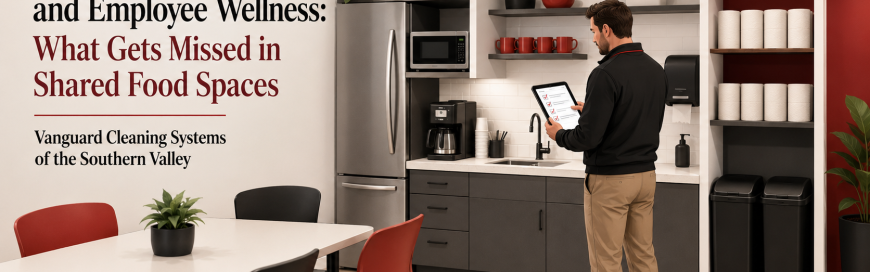
Breakroom hygiene affects more than how a shared food space looks; it can shape employee comfort, illness prevention, morale, and trust in the workplace.
Why the Breakroom Says More Than People Think
The breakroom is one of the few workplace spaces where employees pause, eat, talk, reset, and judge how much care is given to the shared environment.
It may not be the first space visitors see, but it is one of the spaces employees experience most personally. A messy or poorly maintained breakroom can send a clear message: shared employee spaces are not being managed with the same care as front-facing areas. That perception matters because employees often connect facility conditions with management attention, workplace standards, and respect for daily comfort.
Breakrooms also create a different kind of cleaning challenge than offices, lobbies, or meeting rooms. Food, drinks, shared appliances, moisture, trash, hand contact, and high turnover all come together in one small area. When routines are inconsistent, small problems can build quickly.
A breakroom does not need to look dirty to create problems. Many missed areas are small, familiar, and easy to overlook because employees interact with them so often.
Quick Answer
Breakroom hygiene supports employee wellness by reducing food residue, moisture, odors, and contamination on shared high-touch surfaces. The most commonly missed areas include refrigerator handles, microwave controls, coffee stations, sink fixtures, tables, chair backs, appliance handles, vending machines, trash zones, and floor edges. A strong breakroom care plan should include daily surface cleaning, routine high-touch care, regular food-waste removal, weekly appliance attention, and clear accountability for shared responsibilities.
What Is Breakroom Hygiene?
Breakroom hygiene is the routine care of shared food, seating, and rest areas so they stay clean, comfortable, and better prepared to support employee wellness.
It includes more than wiping tables or taking out the trash.
Breakroom hygiene includes:
- Removing food debris
- Cleaning high-touch surfaces
- Managing spills quickly
- Controlling moisture
- Reducing odors
- Emptying waste containers before they overflow
- Cleaning appliance handles and controls
- Keeping sinks and counters clear
- Restocking supplies
- Inspecting corners, edges, and under furniture
- Creating clear daily and weekly responsibilities
A breakroom is different from a private workstation because many people touch the same surfaces throughout the day. One employee may open the refrigerator, another may use the microwave, another may handle the coffee machine, and another may sit at the same table minutes later.
That shared use makes consistency important.
When breakroom hygiene is weak, employees may avoid the space, eat at their desks, complain about odors, question facility standards, or feel that management is not paying attention to basic workplace comfort.
When it is strong, the space feels more reliable, usable, and respectful.
How Breakroom Hygiene Works
Breakroom hygiene works by reducing the buildup of food residue, moisture, soil, and germs on surfaces people touch often.
The process depends on three things:
- Frequency
- Coverage
- Accountability
Frequency matters because breakrooms get used throughout the day. A morning wipe-down may not be enough if the space sees heavy lunch traffic, repeated coffee use, and afternoon snack breaks.
Coverage matters because many of the most important surfaces are not obvious. Tables may get wiped, but microwave buttons, refrigerator handles, chair backs, vending machine controls, and cabinet pulls may be skipped.
Accountability matters because breakrooms often fall into a gray area. Employees may assume cleaning providers handle everything. Cleaning providers may have a scope that excludes refrigerator interiors or personal food items. Facility managers may not know a problem exists until complaints start.
A practical breakroom hygiene program should define what gets handled daily, what gets handled weekly, and what employees are expected to manage themselves.
Why Shared Food Spaces Create More Risk Than Standard Office Areas
Breakrooms combine conditions that make cleaning more complex.
Food residue, moisture, and repeated hand contact create more opportunities for surface buildup than most standard office spaces. Employees may handle food containers, open shared appliances, use sink fixtures, touch coffee controls, move chairs, and dispose of food waste in a short period of time.
That activity creates several common challenges.
Food Residue Builds Quickly
Food particles can collect on counters, tables, microwave interiors, floors, chair seats, and trash container lids.
Even small residue can create:
- Odors
- Sticky surfaces
- Pest attraction
- Poor employee perception
- More difficult cleaning later
Food residue also tends to spread. A spill near the microwave can transfer to hands, handles, counters, and nearby surfaces.
Moisture Creates Ongoing Issues
Breakrooms often include sinks, coffee machines, refrigerators, ice machines, and beverage stations.
Moisture can collect around:
- Sink rims
- Faucet bases
- Counter seams
- Drip trays
- Refrigerator seals
- Coffee machine reservoirs
- Floor edges
Moisture matters because damp areas can hold soil and create odor concerns. It can also make surfaces feel neglected, even when the rest of the room appears tidy.
Shared Touchpoints Get Used All Day
Breakrooms have many shared contact points.
Common examples include:
- Refrigerator handles
- Microwave buttons
- Microwave door handles
- Coffee machine controls
- Cabinet pulls
- Faucet handles
- Soap dispensers
- Paper towel dispensers
- Vending machine buttons
- Chair backs
- Table edges
- Trash lids
- Light switches
These surfaces should not be treated as minor details. They are often the exact places employees touch before eating, after eating, or while handling shared equipment.
Employee Behavior Varies
Some employees clean up immediately. Others leave spills, crumbs, containers, or coffee drips behind.
That variation creates inconsistent conditions unless the facility has a reliable routine.
Common employee habits that affect breakroom hygiene include:
- Leaving uncovered food in the microwave
- Storing expired food in the refrigerator
- Overfilling trash containers
- Leaving cups or utensils near the sink
- Spilling coffee without cleaning it up
- Placing bags, phones, and keys on tables
- Touching appliances after handling food
Breakroom care should not depend only on perfect employee behavior. The space needs a routine that accounts for real use.
The Connection Between Breakroom Hygiene and Employee Wellness
Employee wellness is not only shaped by benefits, programs, or policies. It is also shaped by the daily environment.
Breakrooms matter because they are tied to comfort, recovery, food safety, morale, and workplace trust.
A clean breakroom can support:
- More comfortable meal breaks
- Better hand hygiene access
- Cleaner shared food areas
- Fewer odor complaints
- Stronger confidence in facility care
- Better workplace perception
- Less frustration over shared responsibilities
A poorly maintained breakroom can create the opposite effect.
Employees may feel uncomfortable eating there. They may avoid shared appliances. They may complain about odors, sticky counters, or overflowing trash. They may start to view the workplace as poorly managed.
That perception can affect morale.
People notice whether the spaces meant for their comfort are cared for. A breakroom does not need luxury finishes to feel supportive. It needs consistency, supplies, clean surfaces, and fast attention to common problems.
What Gets Missed Most Often in Breakrooms
Many breakrooms look acceptable at a glance because the tables are mostly clear and the trash has been removed. But closer inspection often reveals missed high-touch and high-residue areas.
These are the areas that deserve more attention.
Refrigerator Handles
Refrigerator handles are touched by many people throughout the day.
Employees may touch the handle before eating, after handling containers, after using their phones, or while moving between tasks. Because the handle is used so often, it should be part of the daily high-touch routine.
Common missed issues include:
- Sticky residue
- Smudges
- Food transfer
- Moisture near the handle
- Buildup around door seals
- Fingerprints on stainless steel
The refrigerator exterior should be checked daily. Interior care should be handled on a planned schedule, especially when old food is a recurring problem.
Refrigerator Interiors
Refrigerator interiors create a different problem because they may contain employee-owned food.
That means cleaning responsibilities need to be clear.
Facility managers should define:
- Who removes expired food
- How often food cleanouts occur
- How employees are notified
- Whether personal containers may be discarded
- Who cleans spills inside the refrigerator
- How refrigerator shelves and drawers are maintained
Without clear rules, refrigerator interiors can become one of the most neglected parts of the breakroom.
Common problems include:
- Expired food
- Leaking containers
- Sticky shelves
- Odors
- Crowded storage
- Unlabeled items
- Blocked airflow
A weekly cleanout policy can prevent many of these problems.
Microwave Buttons and Door Handles
Microwaves are among the most heavily used appliances in many workplace breakrooms.
Employees may wipe the inside after a large spill, but the outside often gets missed. Buttons, touchscreens, handles, and door edges receive constant contact.
Common missed issues include:
- Greasy fingerprints
- Food splatter near vents
- Sticky buttons
- Buildup around the handle
- Odors from old spills
- Crumbs underneath the appliance
The microwave needs both daily exterior care and regular interior cleaning. If the microwave smells bad when opened, the routine is already behind.
Coffee Stations
Coffee stations often look busy even when they are technically clean.
Because employees use them throughout the day, coffee areas collect drips, sugar, creamer residue, stir sticks, napkins, and fingerprints.
Frequently missed areas include:
- Coffee machine buttons
- Carafe handles
- Pod drawers
- Water reservoirs
- Drip trays
- Counter edges
- Stir stick containers
- Creamer stations
- Cabinet handles nearby
Coffee stations should be checked more than once per day in busy workplaces. A clean morning setup can become messy by midafternoon.
Sink Fixtures
Sink areas are supposed to support hand hygiene, but they can become problem spots when moisture and residue build up.
Important areas include:
- Faucet handles
- Faucet bases
- Sink rims
- Drain areas
- Soap dispensers
- Paper towel dispensers
- Counter surfaces around the sink
- Cabinet doors under the sink
Standing water should be removed quickly. Soap and paper towels should be stocked before they run out. A sink without supplies sends the wrong message about employee wellness.
Tables and Table Edges
Tables are usually cleaned more often than other breakroom surfaces, but edges and undersides may be missed.
Employees touch table edges when sitting down, standing up, pulling chairs in, or placing personal items down.
Common missed areas include:
- Table edges
- Undersides near seating positions
- Corners
- Seams
- Crumb collection points
- Areas under tabletop signs or supply holders
Tables should be cleaned after heavy meal periods and checked again before the end of the day.
Chairs, Chair Backs, and Armrests
Breakroom chairs receive frequent contact but are often ignored unless there is a visible spill.
Important areas include:
- Chair backs
- Armrests
- Seat edges
- Undersides
- Chair legs
- Glides and floor-contact points
Chairs with fabric surfaces may hold crumbs and odors more easily than hard-surface seating. If a breakroom uses upholstered chairs, they should be inspected regularly for stains, soil, and odor.
Trash and Recycling Zones
Trash areas strongly influence how employees perceive cleanliness.
Even when other surfaces are maintained, overflowing trash can make the entire breakroom feel neglected.
Common missed problems include:
- Food residue on lids
- Liquid leaks
- Sticky flooring nearby
- Overflowing containers
- Odors
- Dirty container exteriors
- Recycling contamination
- Trash stored too close to seating
Trash areas should be checked during high-use periods, not only at the end of the day.
Vending Machines and Shared Dispensers
Vending machines, water dispensers, ice machines, and snack stations are easy to overlook because they may not appear dirty.
High-touch points include:
- Buttons
- Touchscreens
- Handles
- Dispensing areas
- Coin slots
- Card readers
- Water levers
- Ice machine controls
These areas should be part of the same high-touch routine as door handles and appliance controls.
Floors, Corners, and Edges
Breakroom floors collect crumbs, spills, tracked-in soil, and sticky residue.
The center of the floor may be cleaned regularly, while corners and edges are missed.
Important areas include:
- Under tables
- Around chair legs
- Near trash containers
- Beneath vending machines
- Under counters
- Around refrigerator bases
- Near sink cabinets
- Door thresholds
Floor care is especially important because food debris can attract pests and create odors.
Environmental Factors That Affect Breakroom Hygiene
Not every breakroom needs the same cleaning schedule. The right routine depends on how the space is used.
Facility managers should consider these variables.
Employee Count
A breakroom used by 15 people has different needs than one used by 150 people.
Higher employee counts usually mean:
- More appliance use
- More trash
- More spills
- More hand contact
- Faster supply depletion
- More frequent restroom and breakroom overlap
High-use workplaces may need multiple checks per day.
Shift Structure
Breakrooms used across multiple shifts need extra attention.
In a single-shift office, most use may happen around lunch. In a warehouse, medical office, manufacturing site, school support building, or logistics operation, the breakroom may be used early morning, midday, evening, and overnight.
Multi-shift use can create problems when no one clearly owns the condition of the room between shifts.
Food Type and Food Volume
Some breakrooms are used mainly for coffee and packaged snacks. Others support full meals, reheating, food storage, potlucks, or catered lunches.
More food volume increases the need for:
- Faster trash removal
- More frequent surface cleaning
- Refrigerator cleanouts
- Microwave cleaning
- Odor control
- Pest prevention
The more food a space handles, the stronger the routine needs to be.
Appliance Mix
A basic breakroom may only have a table and coffee maker. A larger one may include refrigerators, freezers, microwaves, vending machines, ice machines, dishwashers, toaster ovens, water dispensers, and multiple sinks.
Each appliance adds new touchpoints and cleaning needs.
Facility managers should list every shared appliance and define care expectations for each one.
Layout and Ventilation
Breakrooms with poor airflow can hold odors longer.
Layout also affects cleaning. Tight corners, crowded furniture, and appliances pushed close to walls can make it harder to remove debris and clean edges.
Helpful layout choices include:
- Easy access around trash zones
- Enough room to clean behind appliances
- Hard-surface furniture where practical
- Clear counter space
- Flooring that can handle food spills
- Visible supply stations
- Easy access to hand hygiene supplies
A better layout makes better hygiene easier.
Supply Access
Employees are more likely to clean up small messes when supplies are easy to find.
Useful breakroom supplies may include:
- Paper towels
- Soap
- Surface wipes approved for the surface type
- Trash liners
- Spill cleanup supplies
- Hand hygiene supplies
- Clear signage for food cleanout rules
Supplies should be visible, stocked, and easy to use.
Workplace Relevance: Why Breakroom Hygiene Affects Business Operations
Breakroom hygiene may seem like a small facility issue, but it can affect daily operations in several ways.
Employee Morale
Employees use breakrooms during personal moments in the workday. They eat there. They rest there. They talk with coworkers there.
When the space is clean and well stocked, it supports comfort.
When it is messy, sticky, smelly, or neglected, it creates frustration.
That frustration can become part of how employees talk about the workplace.
Absenteeism and Illness Concerns
Shared food spaces can play a role in illness prevention because employees touch the same surfaces before and after meals.
A strong routine does not eliminate every risk, but it can reduce missed conditions that allow residue and contamination to spread.
Important areas include:
- Tables
- Appliance handles
- Sink fixtures
- Coffee controls
- Refrigerator handles
- Trash lids
- Chair backs
- Vending machines
These areas deserve consistent attention because they are used by many people throughout the day.
Facility Complaints
Breakroom complaints often start small.
Employees may mention:
- “The microwave smells.”
- “The trash is always full.”
- “There are crumbs everywhere.”
- “The refrigerator is gross.”
- “The counters are sticky.”
- “The sink area is always wet.”
- “There are never paper towels.”
These comments are useful early warnings. They often point to schedule gaps, unclear responsibilities, or service scope issues.
Pest Prevention
Food debris and waste can attract pests.
Common risk areas include:
- Trash containers
- Recycling bins
- Under vending machines
- Floor edges
- Refrigerator bases
- Cabinet interiors
- Forgotten food
- Crumbs under tables
A clean breakroom supports broader pest prevention efforts by removing food sources before they become a bigger issue.
Brand and Visitor Perception
Some breakrooms are employee-only. Others may be seen by vendors, job candidates, visitors, or customers.
A neglected breakroom can weaken confidence in the rest of the facility.
Even if the lobby looks polished, a poor breakroom experience can suggest that behind-the-scenes standards are inconsistent.
Practical Daily Breakroom Care Checklist
A daily checklist should focus on visible conditions, high-touch surfaces, waste, moisture, and supplies.
Surfaces
- Clean tables
- Wipe counters
- Treat high-touch table edges
- Remove crumbs and food debris
- Check chair backs and armrests
- Clean cabinet handles
- Clean light switches
- Check door handles
Appliances
- Clean refrigerator handles
- Wipe microwave handles
- Clean microwave buttons or touchscreens
- Check microwave interiors for spills
- Clean coffee machine controls
- Wipe carafe handles
- Check vending machine controls
- Clean water dispenser touchpoints
Sink Area
- Clean faucet handles
- Clean sink rims
- Remove standing water
- Wipe surrounding counters
- Refill soap
- Refill paper towels
- Check drain areas
- Clean dispenser touchpoints
Waste Management
- Empty trash before overflow
- Replace liners
- Clean container lids
- Wipe container exteriors
- Check recycling stations
- Remove food waste from surrounding areas
- Inspect floor near trash zones
- Address odors quickly
Floors
- Sweep food debris
- Spot-clean spills
- Mop high-use areas as needed
- Check under tables
- Check around chair legs
- Inspect corners and edges
- Clean near vending machines
- Check refrigerator and sink areas
Supplies
- Restock paper towels
- Refill soap
- Check hand hygiene supplies
- Replace trash liners
- Refill approved surface-care supplies
- Verify spill supplies are available
- Report low inventory
- Keep supplies organized
Practical Weekly Breakroom Care Checklist
Weekly care should focus on deeper cleaning, appliance maintenance, odor control, and inspection.
Refrigerator Maintenance
- Remove expired food according to workplace policy
- Clean shelves
- Wipe drawers
- Clean door seals
- Check handles
- Inspect for leaks
- Address odors
- Confirm cleanout notices are posted when needed
Microwave Care
- Clean interior walls
- Remove baked-on food residue
- Clean turntables
- Wipe vents
- Clean exterior controls
- Inspect door seals
- Check underneath the unit
- Remove odor sources
Coffee Station Maintenance
- Clean drip trays
- Wipe reservoirs
- Clean dispensing areas
- Organize supplies
- Remove sticky residue
- Clean nearby cabinet handles
- Check creamer storage areas
- Remove old stir sticks, cups, or packets
Waste and Odor Control
- Wash trash container interiors as needed
- Inspect for liner leaks
- Check recycling bins
- Clean floor beneath containers
- Identify odor sources
- Review trash pickup frequency
- Adjust schedules for heavy-use days
- Report pest concerns quickly
Floors and Edges
- Deep clean floor edges
- Clean under tables
- Clean behind movable furniture
- Check under vending machines where accessible
- Clean baseboards
- Remove sticky buildup
- Inspect grout or seams
- Address recurring spill areas
Documentation and Inspection
- Review completed checklists
- Track employee complaints
- Note recurring problem areas
- Monitor supply usage
- Adjust cleaning frequency
- Clarify responsibility gaps
- Document appliance issues
- Review service scope when needed
Common Breakroom Hygiene Mistakes
Small mistakes can turn into recurring problems.
Mistake 1: Relying Only on Appearance
A breakroom can look tidy and still have missed high-touch surfaces.
Visual checks should not replace a checklist. The checklist should include handles, buttons, fixtures, edges, and waste zones.
Mistake 2: Ignoring Appliance Exteriors
Employees often notice the inside of a microwave or refrigerator first, but the exterior is touched more often.
Handles, buttons, and touchscreens should be part of the daily routine.
Mistake 3: Letting Trash Dictate the Schedule
Trash should be emptied before it becomes a complaint.
If containers are overflowing before the scheduled pickup, the schedule needs to change.
Mistake 4: Leaving Refrigerator Rules Unclear
Refrigerator problems often continue because no one wants to remove someone else’s food.
Clear policy prevents confusion.
Useful refrigerator rules include:
- Label food
- Remove food by a set day
- Clean spills immediately
- Do not store open containers
- Follow cleanout notices
- Respect shared space
Mistake 5: Forgetting Chair Backs and Table Edges
Employees touch chairs and table edges constantly.
These areas should be included in routine high-touch care, especially in busy breakrooms.
Mistake 6: Treating the Breakroom as an Employee-Only Problem
Employees should clean up after themselves, but breakroom care should not depend only on individual behavior.
A reliable facility routine protects the space from becoming inconsistent.
How to Build a Better Breakroom Cleaning Routine
A better routine starts with the way the breakroom is actually used.
Step 1: Map the Touchpoints
Walk through the breakroom and list every shared touchpoint.
Include:
- Doors
- Handles
- Buttons
- Fixtures
- Dispensers
- Chairs
- Tables
- Appliances
- Cabinets
- Trash lids
- Vending machines
- Light switches
This list becomes the foundation for the cleaning schedule.
Step 2: Identify Peak Use Times
Breakrooms often have clear traffic patterns.
Common peak times include:
- Morning coffee
- Lunch
- Afternoon breaks
- Shift changes
- After meetings
- Before closing
High-use times may require mid-day checks.
Step 3: Separate Employee Duties From Facility Duties
Employees may be responsible for personal food, dishes, and immediate spills.
Facility care may include scheduled cleaning, trash removal, supply restocking, floor care, and high-touch surface cleaning.
Clear boundaries prevent confusion.
Step 4: Create Daily and Weekly Checklists
The daily checklist should handle the basics.
The weekly checklist should address deeper tasks.
Do not rely on memory. Use a written checklist so the work is repeatable.
Step 5: Monitor Complaints and Patterns
Complaints are not just problems. They are data.
Track repeat issues such as:
- Odors
- Empty supplies
- Overflowing trash
- Sticky tables
- Microwave spills
- Refrigerator problems
- Pest concerns
- Wet sink areas
Patterns show where the schedule needs to change.
Step 6: Review the Service Scope
Some breakroom tasks may not be included in a standard janitorial scope, especially refrigerator interiors, personal food removal, dishwashing, or appliance maintenance.
Facility managers should confirm what is included, what is excluded, and what requires special scheduling.
Vanguard Cleaning Systems of the Southern Valley helps connect businesses with independently owned and operated janitorial franchise businesses that can support facility cleaning needs based on building use, service scope, and local workplace conditions.
People Also Ask
How often should a workplace breakroom be cleaned?
A workplace breakroom should be checked daily, with extra attention during peak use times. High-use breakrooms may need service more than once per day, especially around lunch periods, shift changes, and coffee station traffic.
What are the dirtiest areas in an office breakroom?
The most commonly missed areas are refrigerator handles, microwave buttons, coffee machine controls, sink fixtures, table edges, chair backs, trash lids, vending machine buttons, and floor edges near food and waste areas.
Who is responsible for cleaning the office breakroom?
Responsibility should be shared but clearly defined. Employees should clean personal messes, remove personal food, and report problems. Facility management or a janitorial provider may handle scheduled cleaning, trash removal, surface care, floors, and supply restocking based on the service agreement.
Why does the breakroom smell even after cleaning?
Persistent odor often comes from trash containers, refrigerator spills, old food, microwave residue, sink drains, damp surfaces, or food debris under furniture and appliances. Odor problems usually require source removal, not just fragrance.
Should refrigerator cleanouts be part of workplace policy?
Yes. Refrigerator cleanouts should be part of a clear workplace policy. Employees should know when food is removed, how items should be labeled, and what happens to expired or abandoned food.
How can breakroom hygiene affect employee morale?
Employees often view shared spaces as a reflection of workplace care. A clean, stocked, and well-maintained breakroom can support comfort and trust. A neglected breakroom can create frustration and make employees feel that their daily experience is not being considered.
FAQ
What is the most important breakroom surface to clean daily?
Refrigerator handles, microwave controls, sink fixtures, coffee station controls, and tables should receive daily attention because they are touched often by many people.
How often should trash be removed from a breakroom?
Trash should be removed before it overflows or creates odor. In busy workplaces, this may require more than one check per day.
Should employees clean the microwave after use?
Yes. Employees should cover food, clean spills immediately, and report larger messes. Scheduled cleaning should still include the microwave because not every spill will be handled by the person who caused it.
Why are coffee stations hard to keep clean?
Coffee stations are used repeatedly throughout the day and often collect drips, sugar, creamer residue, fingerprints, and discarded supplies. They need frequent checks.
Are breakroom chairs part of routine cleaning?
Yes. Chair backs, armrests, and seat edges are common touchpoints and should be included in routine cleaning.
What causes pest problems in breakrooms?
Food debris, overflowing trash, sticky spills, old food, crumbs under furniture, and poorly managed recycling areas can attract pests.
How can facility managers improve breakroom hygiene quickly?
Start by adding refrigerator handles, microwave controls, coffee stations, sink fixtures, chair backs, trash lids, and floor edges to the daily checklist.
Should breakroom cleaning be adjusted during flu season?
Yes. Workplaces may choose to increase attention to high-touch surfaces, shared appliances, sink areas, and trash zones during periods of higher illness concern.
Why Breakroom Hygiene Deserves a Stronger Standard
Breakrooms are not just convenience spaces. They are shared employee wellness spaces that affect comfort, morale, illness prevention, and trust in workplace standards.
The biggest problems are often the easiest to miss. Refrigerator handles, microwave controls, coffee stations, sink fixtures, chair backs, table edges, trash zones, and floor edges may not stand out during a quick visual inspection. But these areas shape the daily employee experience.
A clean breakroom shows that shared spaces matter.
The goal is not perfection. The goal is a routine that matches real use, covers high-touch areas, removes food residue, controls odors, keeps supplies stocked, and creates a space employees can use with confidence.
References
Boone, S. A., & Gerba, C. P. (2007). Significance of fomites in the spread of respiratory and enteric viral disease. Applied and Environmental Microbiology, 73(6), 1687–1696. https://doi.org/10.1128/AEM.02051-06
Centers for Disease Control and Prevention. (2025). Food safety. https://www.cdc.gov/food-safety/index.html
Centers for Disease Control and Prevention. (2025). Preventing food poisoning. https://www.cdc.gov/food-safety/prevention/index.html
Dancer, S. J. (2009). The role of environmental cleaning in the control of hospital-acquired infection. Journal of Hospital Infection, 73(4), 378–385. https://doi.org/10.1016/j.jhin.2009.03.030
Environmental Protection Agency. (2026). An office building occupant’s guide to indoor air quality. https://www.epa.gov/indoor-air-quality-iaq/office-building-occupants-guide-indoor-air-quality
Julian, T. R. (2016). Environmental transmission of diarrheal pathogens in low- and middle-income countries. Environmental Science: Processes & Impacts, 18(8), 944–955. https://doi.org/10.1039/C6EM00222F
Occupational Safety and Health Administration. (n.d.). Indoor air quality. U.S. Department of Labor. https://www.osha.gov/indoor-air-quality
Otter, J. A., Yezli, S., Salkeld, J. A. G., & French, G. L. (2013). Evidence that contaminated surfaces contribute to the transmission of hospital pathogens and an overview of strategies to address contaminated surfaces in hospital settings. American Journal of Infection Control, 41(5 Suppl), S6–S11. https://doi.org/10.1016/j.ajic.2012.12.004
Weber, D. J., Anderson, D., & Rutala, W. A. (2013). The role of the surface environment in healthcare-associated infections. Current Opinion in Infectious Diseases, 26(4), 338–344. https://doi.org/10.1097/QCO.0b013e3283630f04
