
Restroom conditions shape workplace trust fast because they are personal, visible, and hard to ignore.
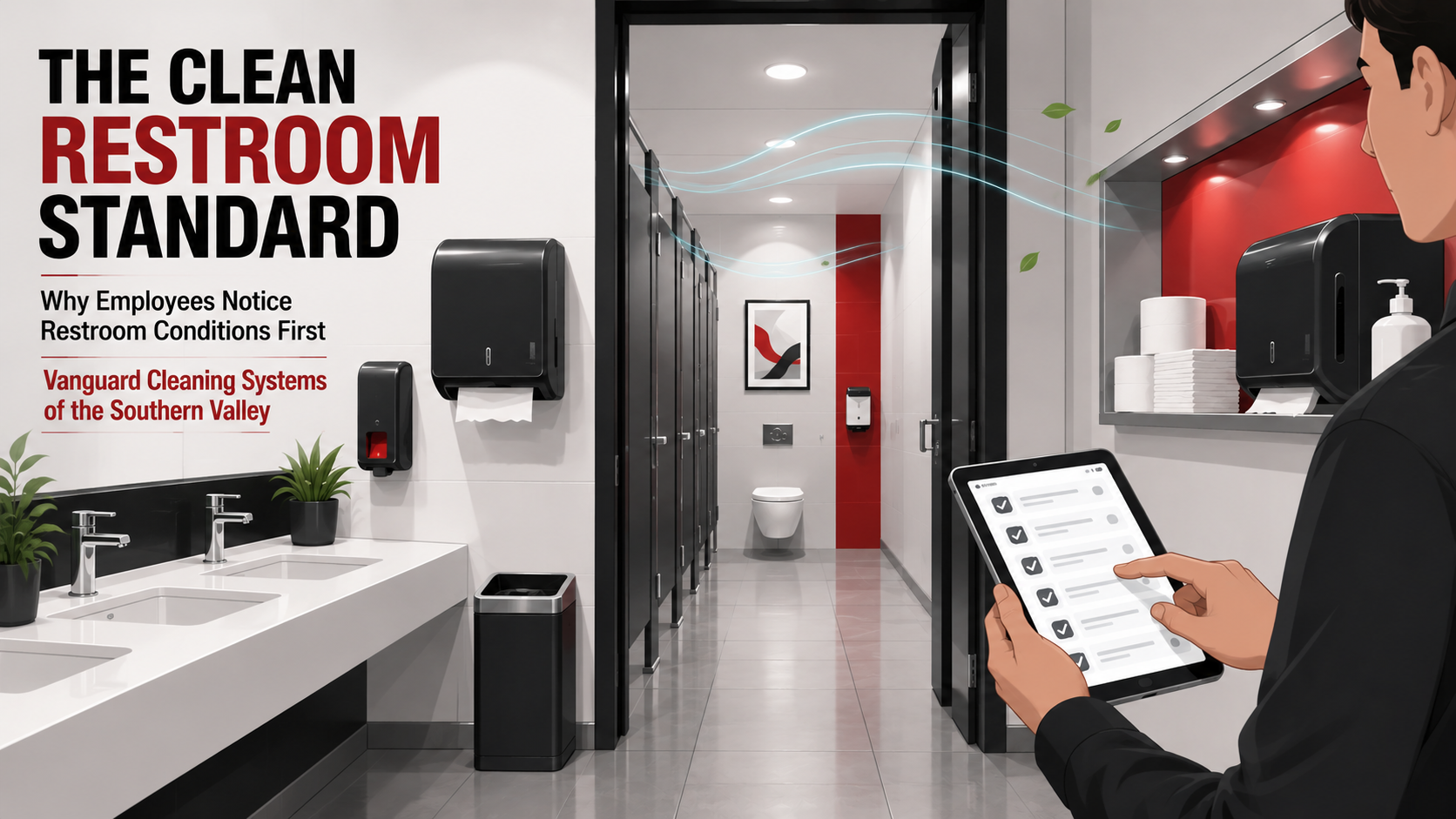
Restrooms Tell People How Much the Workplace Pays Attention
A restroom can change how people feel about an entire building in less than a minute. It is one of the few shared spaces where privacy, comfort, hygiene, odor control, and maintenance all meet in one place. When the space is clean, stocked, and easy to use, people usually move through it without much thought. When it is unpleasant, missing supplies, or showing signs of neglect, people remember.
Restrooms carry more emotional weight than many other areas of a workplace. A dusty lobby table may be noticed, but an empty soap dispenser or strong restroom odor feels more personal. Employees and visitors often use restroom conditions as a shortcut for judging the rest of the building. If the restroom feels neglected, they may wonder what else is being missed.
Quick Answer
Employees notice restroom conditions first because restrooms are high-use, personal, and easy to judge. Odors, missing supplies, wet floors, dirty fixtures, and inconsistent service can quickly affect trust, comfort, morale, and visitor perception. A reliable restroom program should focus on frequent inspections, stocked supplies, odor control, high-touch surfaces, dry floors, and documented follow-up.
What Is the Clean Restroom Standard?
The clean restroom standard is the level of cleanliness, supply readiness, odor control, and maintenance consistency people expect every time they use a workplace restroom.
It is not limited to whether the restroom was cleaned earlier in the day.
It includes:
- Clean and dry floors
- Stocked soap, tissue, and paper products
- Odor control
- Working fixtures
- Clean sinks, counters, toilets, and urinals
- Maintained mirrors and partitions
- Clean high-touch surfaces
- Fast response to spills, leaks, and complaints
- Consistent conditions throughout the workday
The standard is based on the user experience.
A restroom may have been serviced at 7:00 a.m., but if it is out of supplies by 11:00 a.m., occupants see a failure. People judge the restroom based on what they experience in the moment.
That is why restroom care requires more than a checklist at the start or end of the day. It requires a system.
How Restroom Conditions Shape Perception
Restrooms influence perception because they combine visible evidence with personal discomfort.
When a restroom is clean and stocked, it sends clear signals:
- The building is being managed carefully.
- Shared spaces are being checked.
- Occupant comfort matters.
- Supplies are being monitored.
- Cleaning routines are consistent.
- Maintenance issues are not being ignored.
When restroom conditions decline, the message changes.
People may start thinking:
- “No one is checking this.”
- “This building is not being maintained well.”
- “Management is not paying attention.”
- “If this area looks like this, what else is being missed?”
- “This does not feel professional.”
That reaction is not only about appearance.
Restrooms are tied to hygiene, privacy, dignity, comfort, and safety. A poorly maintained restroom can feel like a breakdown in basic workplace care.
Why Employees Notice Restrooms Before Other Areas
Employees may walk past dusty corners or cluttered supply areas without giving them much attention. Restrooms are different because they are used directly, repeatedly, and personally.
Several factors make restroom conditions stand out.
Restrooms Are Used by Nearly Everyone
Most people in a building will use the restroom at some point during the day. That makes it one of the highest-visibility spaces in the workplace.
Unlike private offices, storage rooms, or conference rooms, restrooms are shared across roles, departments, shifts, and visitors.
That means restroom problems spread quickly through word of mouth.
A single bad experience may turn into:
- Employee complaints
- Visitor concerns
- Negative comments from customers
- Internal frustration
- Repeated service requests
Restrooms Are Tied to Basic Comfort
A clean restroom supports basic human comfort. A poorly maintained restroom creates stress because people still need to use it.
Common frustrations include:
- No soap
- No paper towels
- Strong odor
- Wet floors
- Overflowing waste containers
- Dirty counters
- Stained fixtures
- Broken stall locks
- Poor lighting
- Slow response to reported issues
These problems may seem small individually, but they become more serious when repeated.
Restrooms Are Easy to Evaluate
People do not need technical knowledge to judge restroom conditions.
They can immediately tell when:
- Supplies are missing
- Odors are present
- Floors are wet
- Fixtures are stained
- Trash is overflowing
- Mirrors are spotted
- Counters are messy
- Touchpoints look neglected
Because the signs are easy to see, restroom conditions become an instant measure of building care.
Restrooms Affect Trust
Trust in a workplace is built through repeated signals.
A clean restroom tells employees the organization is paying attention. A neglected restroom tells them the opposite.
This matters because employees often connect restroom conditions to broader workplace standards.
They may ask:
- Are other shared spaces being maintained?
- Are health and safety concerns being handled?
- Are complaints being taken seriously?
- Are basic supplies being managed?
- Is leadership aware of the day-to-day workplace experience?
Restroom cleanliness is not just a facility issue. It is a trust issue.
Environmental Factors That Affect Restroom Conditions
Restroom conditions change throughout the day because the space is affected by use, ventilation, moisture, traffic, plumbing, supplies, and cleaning frequency.
A restroom that looks clean in the morning can fall below expectations quickly without inspections and follow-up.
Traffic Volume
High-use restrooms need more attention than low-use restrooms.
Traffic affects:
- Supply use
- Trash volume
- Odor buildup
- Floor moisture
- Fixture cleanliness
- Touchpoint soil
- Complaint frequency
Busy restrooms near lobbies, breakrooms, warehouses, classrooms, clinics, or production areas may need multiple checks per day.
Time of Day
Restroom conditions often change during peak use periods.
Common high-use times include:
- Before work starts
- Mid-morning
- Lunch periods
- Shift changes
- Afternoon breaks
- After large meetings
- After customer traffic spikes
A restroom program should match the building’s real use pattern, not just a fixed cleaning schedule.
Ventilation
Ventilation plays a major role in odor control and comfort.
Poor airflow can allow odors and moisture to linger. This may make a restroom feel unclean even when surfaces have been serviced.
Ventilation concerns may show up as:
- Persistent odor
- Damp air
- Slow-drying floors
- Condensation
- Stale air
- Increased occupant complaints
When odor problems keep returning, cleaning alone may not solve the issue. Ventilation, drains, plumbing, and waste handling may need review.
Moisture
Restrooms are moisture-heavy spaces.
Moisture can come from:
- Sink splash
- Leaks
- Mopping residue
- Wet shoes
- Overflow events
- Poor drying
- Plumbing issues
- Floor drain problems
Moisture affects safety and perception. Wet floors may create slip concerns. Standing water near sinks or toilets also makes the space feel poorly maintained.
Supply Management
Supply outages are one of the fastest ways to damage restroom perception.
People expect the basics to be available every time.
Core supplies include:
- Soap
- Toilet tissue
- Paper towels
- Hand-drying options
- Waste liners
- Seat covers, where provided
- Hand sanitizer, where provided
A supply shortage creates more than inconvenience. It suggests the restroom is not being checked often enough.
Plumbing and Fixture Condition
A restroom can look unclean when fixtures are old, damaged, leaking, stained, or not working correctly.
Common maintenance issues include:
- Slow drains
- Loose faucets
- Weak flush mechanisms
- Running toilets
- Leaking pipes
- Broken stall locks
- Loose partitions
- Damaged dispensers
- Poor lighting
- Cracked tiles or grout
Cleaning routines should include a way to report maintenance concerns quickly.
Waste Handling
Overflowing waste containers are highly visible and often tied to odor complaints.
Waste handling depends on:
- Container size
- Restroom traffic
- Liner replacement
- Feminine hygiene disposal needs
- Paper towel volume
- Food or drink waste misuse
- Inspection frequency
Waste containers should be emptied before they become noticeable, not after complaints begin.
Common Restroom Issues That Drive Complaints
Most restroom complaints come from a few repeat problems. These issues are easy to notice and easy to remember.
Persistent Odors
Odor is often the first problem people notice.
Even when surfaces look clean, odor can make the entire restroom feel poorly maintained.
Common odor sources include:
- Poor ventilation
- Urinal buildup
- Floor drains
- Waste containers
- Moisture
- Leaks
- Plumbing problems
- Infrequent detailed cleaning
- Missed corners and edges
Odor issues should be investigated, not covered up.
Strong fragrances may make the problem worse for some occupants. The goal should be to remove the source, improve airflow, and maintain the surfaces and systems that contribute to odor.
Empty Supplies
Missing supplies create immediate frustration.
A restroom without soap, tissue, or hand-drying supplies feels neglected because the user cannot complete a basic hygiene routine.
Supply issues often happen when:
- Restrooms are checked too infrequently
- Usage patterns are not tracked
- Dispensers are too small for traffic volume
- Backup supplies are not available
- Restocking duties are unclear
- Inspections are not documented
Supply checks should be built into every restroom inspection.
Dirty High-Touch Surfaces
Restrooms contain many high-touch points.
These include:
- Door handles
- Push plates
- Stall locks
- Faucet handles
- Flush handles or buttons
- Soap dispensers
- Paper towel dispensers
- Hand dryer buttons
- Counter edges
- Light switches
When these areas look dirty, people notice.
High-touch surfaces should be cleaned more frequently than low-touch areas because they are used repeatedly throughout the day.
Wet or Dirty Floors
Floors have a strong effect on restroom perception.
People quickly notice:
- Water near sinks
- Paper waste on the floor
- Stains around toilets or urinals
- Sticky areas
- Dirty grout lines
- Debris in corners
- Dust near edges
- Tracked-in soil near entrances
Floors also affect safety. A restroom floor should look clean, feel stable underfoot, and remain as dry as practical during business hours.
Overflowing Trash
Overflowing trash signals poor service frequency.
It can also contribute to odor, clutter, and negative impressions.
A trash container does not need to be fully overflowing to create a problem. If paper towels are piled high or visible waste is spilling over the top, many users will view the restroom as neglected.
Poorly Maintained Fixtures
Cleanliness and maintenance are closely connected.
A clean restroom with broken fixtures still feels poorly managed.
Common fixture concerns include:
- Loose toilet seats
- Broken stall locks
- Damaged partitions
- Slow drains
- Weak water pressure
- Loose faucet handles
- Soap dispensers that do not work
- Paper towel dispensers that jam
- Hand dryers that fail
- Lights that flicker
These issues should be logged and escalated.
Inconsistent Service
Inconsistent service may be the most damaging issue because it creates uncertainty.
Employees may not know what to expect.
One day the restroom is clean. The next day it is out of supplies. The next week odors return. Then a complaint is handled quickly, but the same problem comes back.
Inconsistency can make occupants feel that the building is managed reactively instead of proactively.
A strong restroom program should focus on predictable results.
Workplace Relevance
Restroom conditions affect how people feel about the workplace because they are part of the daily employee experience.
A workplace can have modern furniture, a polished lobby, updated branding, and professional meeting rooms. If the restroom experience is poor, those other investments lose some of their impact.
Employee Morale
Employees who repeatedly encounter unpleasant restroom conditions may feel overlooked.
This can create frustration because restrooms are not optional. People need them throughout the day.
Poor restroom conditions may lead to:
- More complaints
- Lower confidence in building care
- Frustration with management
- Reduced comfort
- More negative workplace conversations
- Less pride in the workplace
Clean restrooms do not solve every morale issue, but they support a baseline of respect and care.
Visitor Impressions
Visitors often judge organizations by small environmental cues.
A clean restroom can reinforce a professional impression.
A poorly maintained restroom can create doubt.
This matters for:
- Customers
- Vendors
- Job candidates
- Tenants
- Parents
- Patients
- Contractors
- Business partners
People may not mention a restroom problem directly, but they remember it.
Complaint Prevention
Restrooms can produce a high number of facility complaints because the problems are personal and easy to describe.
Common complaints include:
- “The restroom smells.”
- “There is no soap.”
- “The floor is wet.”
- “The trash is overflowing.”
- “The toilet is leaking.”
- “The paper towel dispenser is empty.”
- “The restroom is not being cleaned enough.”
A structured inspection process can prevent many of these complaints before they reach management.
Health and Hygiene Support
Restrooms play a direct role in everyday hygiene.
Clean, stocked, well-maintained restrooms support hand hygiene and reduce avoidable contact with soiled surfaces.
At a practical level, the most important steps are simple:
- Keep soap available.
- Keep hand-drying supplies available.
- Clean high-touch surfaces.
- Control moisture.
- Empty waste containers.
- Address odors at the source.
- Report plumbing issues quickly.
- Document inspections.
A Practical Restroom Inspection Checklist
A restroom checklist should be simple enough to use consistently and detailed enough to catch repeat problems.
The best checklist is not just a cleaning task list. It should also support inspection, restocking, maintenance reporting, and accountability.
Daily Restroom Inspection Checklist
Supplies
Check that all essential supplies are available.
- Soap dispensers are filled
- Toilet tissue is stocked
- Paper towels are available
- Hand-drying equipment works
- Seat covers are stocked, where provided
- Hand sanitizer is stocked, where provided
- Waste liners are in place
- Backup supplies are available nearby, where appropriate
Odor Control
Identify odor sources instead of masking them.
- No strong or persistent odors
- Ventilation appears to be working
- Floor drains are not creating odor
- Waste containers are emptied
- Urinals are maintained
- Toilet areas are checked
- Moisture-prone areas are inspected
- Plumbing concerns are reported
High-Touch Surfaces
Focus on surfaces people touch repeatedly.
- Door handles are clean
- Push plates are clean
- Stall locks are clean and working
- Faucet handles are clean
- Flush handles or buttons are clean
- Soap dispensers are wiped
- Paper towel dispensers are wiped
- Hand dryer controls are clean
- Counter edges are clean
- Light switches are clean
Toilets and Urinals
Check both appearance and function.
- Bowls are clean
- Urinals are free of visible buildup
- Seats are clean and secure
- Bases are clean
- Partitions are clean
- Flush mechanisms work
- No overflow issues are present
- No active leaks are visible
- Odor concerns are noted
Floors
Floors should be clean, dry, and safe to walk on.
- No standing water
- No visible debris
- No paper waste on the floor
- No sticky areas
- Corners are clean
- Edges are checked
- Grout lines are monitored
- Entry area is maintained
- Slip concerns are addressed quickly
Sinks, Counters, and Mirrors
These areas shape first impressions.
- Sinks are clean
- Counters are clean and dry
- Mirrors are clean
- Faucets work correctly
- Drains are working
- No standing water is present
- Splash zones are wiped
- Soap residue is removed
Waste Containers
Waste containers should be managed before they become noticeable.
- Trash is below overflow level
- Liners are secure
- Containers are clean
- Feminine hygiene containers are serviced, where present
- Odor is not coming from waste areas
- Paper towel waste is controlled
Maintenance Items
Cleaning inspections should also catch maintenance concerns.
- Lights are working
- Fixtures are secure
- Stall doors close properly
- Locks work
- Dispensers work
- Partitions are stable
- Plumbing issues are reported
- Damaged surfaces are documented
- Ventilation concerns are escalated
Weekly Restroom Verification
Daily checks help maintain the user experience. Weekly verification helps find patterns.
A weekly review should include:
- Deep cleaning needs
- Floor and grout condition
- Odor complaint trends
- Supply usage patterns
- Waste container capacity
- Fixture performance
- Drain condition
- Ventilation concerns
- Inspection logs
- Complaint history
- Recurring problem areas
Weekly verification helps move restroom care from reactive service to planned maintenance.
How to Improve Restroom Consistency
Consistency is the main difference between a restroom that looks clean once and a restroom that supports trust all day.
Match Service to Real Use
Cleaning frequency should reflect actual traffic.
A small office restroom may need fewer checks than a warehouse, school, clinic, gym, restaurant, or high-traffic commercial building.
Useful questions include:
- When is restroom use highest?
- Which restrooms receive the most complaints?
- Which supplies run out first?
- Where do odors return?
- Which fixtures fail most often?
- Are complaints tied to certain days or shifts?
The answers help shape a better schedule.
Use Inspections, Not Assumptions
A restroom should not be considered acceptable only because it was cleaned earlier.
Inspection confirms current conditions.
A practical inspection system should track:
- Time checked
- Supplies restocked
- Issues found
- Corrective actions taken
- Maintenance concerns reported
- Follow-up completed
Documentation helps identify patterns and reduce repeat complaints.
Separate Cleaning Issues From Maintenance Issues
Not every restroom problem is a cleaning problem.
For example:
- A sewer odor may involve drains or plumbing.
- Constant moisture may involve leaks or poor airflow.
- Repeated supply outages may involve dispenser size or traffic volume.
- Stained grout may require periodic restorative cleaning.
- Broken locks require repair, not cleaning.
A strong restroom program makes it easy to route the right issue to the right person.
Make Odor Control Source-Based
Odor control should focus on causes.
Possible actions include:
- Increase inspection frequency
- Check drains
- Improve airflow
- Empty waste containers more often
- Address moisture
- Clean edges and corners
- Review urinal maintenance
- Report plumbing concerns
- Evaluate deep cleaning needs
Covering odor with fragrance is not a complete solution.
Track Supply Use
Supply usage reveals patterns.
If soap or paper products run out regularly, the issue may be the schedule, dispenser capacity, supply placement, or traffic volume.
Tracking helps answer:
- Which restroom uses the most supplies?
- What time do outages happen?
- Are dispensers large enough?
- Are supplies being restocked consistently?
- Are backup products available?
Supply tracking turns complaints into measurable data.
People Also Ask
Why do employees care so much about restroom cleanliness?
Employees care because restrooms are personal, shared, and used throughout the day. Poor restroom conditions can feel like a lack of basic workplace care. Clean, stocked, well-maintained restrooms help employees feel more comfortable and respected.
What restroom problems create the most complaints?
The most common complaints involve odor, missing supplies, wet floors, overflowing trash, dirty fixtures, and broken dispensers. These problems are easy to notice and often affect the user immediately.
How often should workplace restrooms be checked?
Restrooms should be checked based on traffic, not just a fixed schedule. High-use restrooms may need multiple inspections per day. Low-use restrooms may need fewer checks, but they still require consistent review.
Why do restroom odors keep coming back?
Recurring odors may come from drains, poor ventilation, moisture, waste containers, urinal buildup, plumbing issues, or missed detail areas. The source should be identified instead of covered with fragrance.
What is the most important restroom supply to monitor?
Soap is one of the most important supplies because it supports hand hygiene. Toilet tissue and hand-drying supplies are also critical because users expect them every time.
Do clean restrooms improve workplace morale?
Clean restrooms can support morale by showing that the workplace is being cared for. They do not solve every workplace issue, but they help create a more respectful, comfortable environment.
Why do visitors judge a business by its restrooms?
Visitors often use restroom conditions as a sign of overall professionalism. A clean restroom supports confidence. A neglected restroom can create doubt about management standards.
What should be included in a restroom cleaning checklist?
A restroom checklist should include supplies, odors, high-touch surfaces, floors, toilets, urinals, sinks, counters, mirrors, waste containers, and maintenance issues. It should also include inspection times and follow-up notes.
FAQ
What is the clean restroom standard?
The clean restroom standard is the expected level of cleanliness, supply readiness, odor control, and maintenance consistency in a shared restroom.
Why are restrooms so important in commercial buildings?
Restrooms are used often and judged quickly. They influence comfort, trust, complaints, and visitor impressions.
What causes restroom odor?
Common causes include poor ventilation, drains, moisture, waste containers, urinal buildup, plumbing issues, and missed detail cleaning.
How can restroom complaints be reduced?
Complaints can be reduced through frequent inspections, reliable supply checks, odor source control, documented follow-up, and quick maintenance reporting.
What is the biggest restroom maintenance mistake?
One of the biggest mistakes is relying only on scheduled cleaning without checking restroom conditions during the day.
Should restroom inspections be documented?
Yes. Documentation helps confirm service, identify patterns, track recurring issues, and improve accountability.
What areas are most often missed in restrooms?
Commonly missed areas include stall locks, door handles, dispenser surfaces, floor edges, corners, grout lines, toilet bases, and drain areas.
How do restroom conditions affect employees?
Poor restroom conditions can create frustration, lower comfort, and reduce confidence in workplace care. Clean restrooms support a more positive daily experience.
Final Takeaway
Restrooms are one of the clearest signals of how well a workplace is maintained. Employees and visitors notice them because they are personal, high-use, and easy to evaluate. Odors, missing supplies, wet floors, dirty touchpoints, and inconsistent service can quickly damage trust.
A better restroom program does not depend on guesswork. It depends on inspection, documentation, supply tracking, odor source control, and quick maintenance follow-up.
When restrooms stay clean, stocked, and reliable throughout the day, they support comfort, confidence, and a stronger workplace experience.
References
Dancer, S. J. (2009). The role of environmental cleaning in the control of hospital-acquired infection. Journal of Hospital Infection, 73(4), 378–385. https://doi.org/10.1016/j.jhin.2009.03.030
Julian, T. R. (2016). Environmental transmission of diarrheal pathogens in low and middle income countries. Environmental Science: Processes & Impacts, 18(8), 944–955. https://doi.org/10.1039/C6EM00222F
Otter, J. A., Yezli, S., Salkeld, J. A. G., & French, G. L. (2013). Evidence that contaminated surfaces contribute to the transmission of hospital pathogens and an overview of strategies to address contaminated surfaces in hospital settings. American Journal of Infection Control, 41(5 Suppl), S6–S11. https://doi.org/10.1016/j.ajic.2012.12.004
Stankiewicz, B. A., & Kaczmarek, M. (2012). The assessment of indoor air quality in selected public utility buildings based on carbon dioxide concentration and odour nuisance. Przegląd Epidemiologiczny, 66(1), 117–122.
Whitehead, B. R., & Viner, R. M. (2020). Toilet facilities and the well-being of school-aged children: A systematic review of qualitative studies. International Journal of Environmental Research and Public Health, 17(19), 7412. https://doi.org/10.3390/ijerph17197412
World Health Organization. (2018). Guidelines on sanitation and health. World Health Organization. https://www.who.int/publications/i/item/9789241514705
