

Hantavirus risk in commercial storage rooms starts with rodent activity, hidden contamination, and dust disturbance.
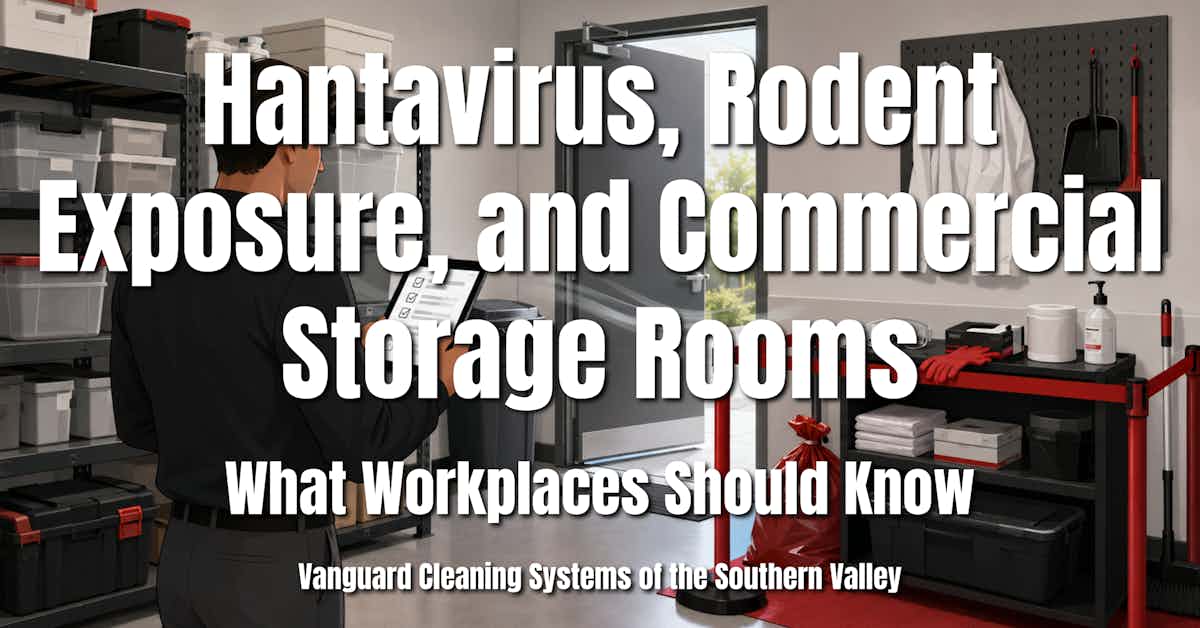
When a Storage Room Becomes More Than a Housekeeping Problem
Rodent activity in a workplace storage room can feel like a simple maintenance issue at first. A few droppings near a box, a damaged bag of supplies, or a nest behind shelving may not look urgent. But enclosed spaces can create real exposure concerns when rodent waste, urine, saliva, or nesting materials are disturbed.
This is especially relevant in areas near open lots, agricultural land, warehouses, equipment yards, and rural-adjacent properties. Storage rooms often stay closed for long periods, which can allow contamination to collect without being noticed. When someone enters and begins moving boxes, sweeping, or cleaning too quickly, contaminated particles may become airborne.
For businesses in Kern County and California’s Central Valley, rodent prevention is not only about protecting supplies and property. It is also part of maintaining a safer workplace.
Quick Answer
Hantavirus exposure can occur when people breathe in airborne particles from infected rodent urine, droppings, saliva, or nesting materials. Commercial storage rooms may carry higher risk because they are often enclosed, cluttered, and used less often. When rodent activity is found, employees should avoid disturbing dust, restrict access, report the issue, use proper protective equipment, and follow approved wet-cleaning procedures.
What Is Hantavirus?
Hantaviruses are a group of viruses carried by certain rodents.
In the United States, the main workplace concern is Hantavirus Pulmonary Syndrome, often shortened to HPS. HPS is rare, but it can be severe. It affects the lungs and can progress quickly after early symptoms begin.
In California and much of the western United States, deer mice are the rodent most often connected with Sin Nombre virus, the hantavirus most associated with HPS in North America.
People may be exposed when they:
- Breathe in contaminated airborne particles
- Touch contaminated materials and then touch their face
- Handle nesting materials, droppings, or contaminated objects
- Enter closed spaces where infected rodents have been active
- Disturb dust in a rodent-contaminated area
Hantavirus is not usually spread from person to person in the United States. The main risk comes from exposure to contaminated rodent materials.
How Hantavirus Exposure Works
Hantavirus exposure is most often linked to air movement and dust disturbance.
When infected rodents leave urine, droppings, saliva, or nesting materials behind, the virus may be present in those materials. If the area is swept, vacuumed, brushed, shaken, or blown with compressed air, small particles can move into the air.
Once airborne, those particles may be inhaled.
That is why dry cleanup methods are a serious concern in storage rooms. A person may think they are helping by quickly sweeping the area, but that action can increase exposure risk.
Common Workplace Exposure Scenarios
Rodent-contaminated dust may be disturbed when someone:
- Moves stored boxes
- Sweeps behind shelving
- Opens a cabinet or closet
- Pulls out old supplies
- Cleans a rarely used room
- Handles nesting material
- Uses a regular vacuum
- Blows dust out of corners
- Shakes rugs, cloths, or stored fabrics
- Removes damaged cardboard or packaging
The risk increases when the space has poor airflow, heavy clutter, or visible rodent activity.
Why Commercial Storage Rooms Can Carry Higher Risk
Storage rooms create the type of environment rodents often seek.
They are usually quiet, dark, and less monitored than public-facing areas. They may contain paper goods, cardboard, food-related supplies, maintenance materials, uniforms, seasonal decorations, or equipment that creates hiding spaces.
Rodents are more likely to remain unnoticed in these areas because employees may enter only when they need something specific. That means droppings, urine, nests, and damaged materials can build up over time.
Storage Room Conditions That Increase Risk
Risk tends to rise when storage areas have:
- Cluttered shelving
- Cardboard stored on the floor
- Gaps under doors
- Damaged weather stripping
- Exterior wall penetrations
- Food or drink storage
- Poor lighting
- Limited airflow
- Rare inspections
- Open trash containers
- Long periods without activity
- Access to loading docks or exterior doors
Even a clean-looking building can have hidden rodent activity if these conditions exist.
Environmental Factors That Affect Rodent Exposure Risk
Rodent activity is shaped by building conditions, nearby land use, weather, food availability, and storage practices.
In California’s Southern Valley, some facilities may face greater pressure because of surrounding conditions. Open land, agricultural activity, seasonal weather shifts, and dust movement can all influence how often rodents seek shelter indoors.
Building Location
Facilities near fields, drainage areas, vacant lots, rural roads, industrial yards, or open land may experience more rodent pressure. Rodents may move toward buildings for shelter, food, water, or nesting material.
Weather Changes
Rodents may move indoors during colder weather, extreme heat, heavy rain, or dry periods when outdoor food and water sources become harder to find.
Storage Practices
Poor storage practices can create hiding places and nesting material. Cardboard, paper, cloth, and soft packing material can make storage rooms more attractive to rodents.
Food and Water Sources
Breakroom supplies, vending storage, employee food, leaking pipes, mop sinks, and open trash containers can increase rodent activity.
Entry Points
Rodents can enter through small gaps around doors, vents, utility penetrations, damaged screens, dock areas, wall openings, and poorly sealed exterior doors.
Inspection Frequency
Rooms that are not inspected often can allow small issues to become larger problems before anyone notices.
Workplace Relevance
Rodent contamination in a storage room can affect more than one department.
A maintenance worker may discover droppings while moving supplies. An office employee may enter the room to grab paper goods. A facility manager may be asked to inspect a strange smell. A vendor may move stored items without knowing the area is contaminated.
Without a clear response plan, someone may try to clean the area quickly using unsafe methods.
That is why workplace procedures matter.
A safer response protects employees, reduces confusion, and helps the organization document what happened. It also helps keep janitorial scope, pest control responsibilities, and facility management duties clearly separated.
What To Do When Rodent Activity Is Found
When rodent droppings, nests, gnaw marks, urine stains, damaged boxes, or live rodents are found, the first step is not cleanup.
The first step is exposure control.
Restrict Access
Limit access to the affected room or section.
This helps prevent employees from walking through contaminated areas, moving materials, or stirring up dust. A simple temporary barrier or posted notice can help reduce unnecessary traffic until the situation is assessed.
Report the Hazard
Employees should report rodent activity to the appropriate supervisor, facility contact, property manager, or safety lead.
A clear reporting process helps the organization:
- Assess the size of the issue
- Determine whether pest control is needed
- Identify affected materials
- Decide who is qualified to handle cleanup
- Review PPE needs
- Document corrective actions
- Prevent repeated exposure
Do Not Sweep or Vacuum
Dry sweeping and standard vacuuming should be avoided when rodent contamination is present.
These methods can move contaminated particles into the air. Compressed air should also be avoided for the same reason.
Employees should not:
- Sweep dry droppings
- Vacuum with a standard vacuum
- Use compressed air
- Shake boxes or fabrics
- Brush contaminated shelves
- Move dusty materials without precautions
- Handle nests with bare hands
Ventilate the Area When Appropriate
If it can be done without disturbing contaminated materials, ventilation may help reduce airborne concentration before cleanup begins.
This may include opening exterior doors or windows where appropriate and safe. Ventilation should be handled according to employer procedures, building conditions, and safety guidance.
Use Proper Protective Equipment
Cleanup should be assigned only to personnel who have the right instructions, equipment, and authorization.
Depending on the level of contamination and employer procedures, PPE may include:
- Disposable gloves
- Protective clothing
- Eye protection
- Respiratory protection when required
- Shoe covers when needed
- Waste handling supplies
Respiratory protection should follow the employer’s respiratory protection program when required.
Use Wet-Cleaning Methods
Rodent-contaminated materials should be wetted with an approved germ-control solution before removal.
This helps reduce dust movement. Materials should be carefully wiped, collected, bagged, and removed according to facility procedures. Hard surfaces should be cleaned using approved wet methods rather than dry sweeping or brushing.
Dispose of Contaminated Materials Properly
Contaminated disposable materials should be placed into appropriate sealed bags or containers.
This may include:
- Paper towels
- Disposable gloves
- Damaged cardboard
- Nesting materials
- Contaminated packaging
- Single-use cleaning supplies
Waste handling should follow employer procedures and local requirements.
Wash Hands After Cleanup
After PPE is removed, employees should wash their hands thoroughly with soap and water.
Hand hygiene matters because contamination can transfer from gloves, tools, or surfaces during cleanup.
When Professional Support May Be Needed
Not every rodent issue should be handled by regular employees.
Professional pest control, environmental health, or qualified remediation support may be needed when contamination is heavy, widespread, recurring, or located in difficult-to-access spaces.
Professional support may be appropriate when:
- Droppings are found in multiple rooms
- There is heavy nesting material
- Rodent activity is ongoing
- Contamination is inside HVAC spaces
- Employees may need respiratory protection
- Stored materials are heavily contaminated
- The source of entry is unclear
- The facility has sensitive occupants
- The issue involves food storage, healthcare, education, or regulated spaces
The goal is to match the response to the risk level.
Prevention Starts Before an Infestation
The best way to reduce hantavirus risk is to prevent rodent activity before cleanup is ever needed.
A prevention plan should focus on exclusion, sanitation, storage practices, monitoring, and fast reporting.
Rodent Exclusion
Exclusion means keeping rodents from entering the building.
Facility teams should inspect and maintain:
- Door sweeps
- Weather stripping
- Dock doors
- Exterior wall gaps
- Pipe penetrations
- Utility openings
- Vent screens
- Roofline openings
- Foundation gaps
- Damaged siding
- Window screens
Small gaps can be enough for rodents to enter. Regular inspections help catch problems before they become infestations.
Better Storage Practices
Storage rooms should be organized in ways that reduce hiding places and make inspection easier.
Helpful practices include:
- Keeping boxes off the floor when possible
- Using sealed containers instead of open cardboard
- Leaving inspection space along walls
- Removing unused items
- Keeping shelving organized
- Avoiding long-term storage of damaged packaging
- Separating food-related supplies from general storage
- Labeling items clearly
- Rotating stored materials
A room that is easy to inspect is easier to protect.
Food and Waste Control
Rodents are more likely to stay where food and water are available.
Workplaces should avoid storing food in general supply closets or maintenance rooms. Breakroom items should be sealed, trash should be contained, and spills should be addressed quickly.
Key steps include:
- Use closed trash containers
- Remove trash on a regular schedule
- Store food in sealed containers
- Avoid leaving snacks in storage rooms
- Repair leaks
- Keep mop sinks and utility areas clean
- Remove standing water
- Keep exterior waste areas maintained
Routine Inspections
A quick inspection can prevent a larger issue.
Storage rooms, utility rooms, maintenance closets, loading areas, and exterior-access spaces should be checked regularly for:
- Droppings
- Gnaw marks
- Nesting material
- Damaged packaging
- Urine stains
- Unusual odors
- Food debris
- Gaps or openings
- Rub marks along walls
- Live or dead rodents
The earlier activity is found, the easier it is to control.
What Employees Should Know
Employees do not need to become pest control experts to support safer facility conditions.
They do need to know what to do when they see signs of rodents.
Simple Employee Guidance
Employees should be trained to:
- Stop work in the affected area
- Avoid sweeping or vacuuming
- Avoid touching droppings or nests
- Report the issue promptly
- Keep others away from the area
- Follow supervisor instructions
- Use PPE only when trained and authorized
- Seek medical guidance if symptoms develop after possible exposure
A simple response plan can prevent risky cleanup attempts.
Symptoms Employees Should Not Ignore
HPS symptoms can begin days or weeks after exposure.
Early symptoms can resemble other illnesses, which may make the risk easy to miss. Anyone who develops symptoms after possible rodent exposure should seek medical guidance and mention the exposure.
Symptoms may include:
- Fever
- Fatigue
- Muscle aches
- Headache
- Dizziness
- Chills
- Nausea
- Vomiting
- Diarrhea
- Abdominal discomfort
- Coughing
- Shortness of breath
Difficulty breathing after possible rodent exposure should be treated as urgent.
People Also Ask
Can you get hantavirus from a workplace storage room?
Yes, exposure can occur in a workplace storage room if infected rodents have contaminated the space and materials are disturbed. The main concern is breathing in airborne particles from contaminated droppings, urine, saliva, or nesting materials.
Is hantavirus common in California?
Hantavirus illness is rare, but California does have deer mice that can carry Sin Nombre virus. Workplaces near rural areas, open land, agricultural zones, or rodent-prone buildings should take prevention seriously.
Should employees sweep rodent droppings?
No. Employees should not dry sweep rodent droppings. Sweeping can move contaminated particles into the air and increase inhalation risk.
Can a regular vacuum be used on rodent droppings?
No. A standard vacuum should not be used on rodent-contaminated materials. Vacuuming can aerosolize particles and spread contamination.
What should be done first when droppings are found?
The first step is to stop and avoid disturbing the area. Access should be limited, the issue should be reported, and cleanup should follow approved wet methods with proper protective equipment.
Are all mice a hantavirus risk?
Not all mice carry hantavirus. In California, deer mice are the main concern for Sin Nombre virus. Because employees may not be able to identify the rodent species, rodent contamination should be handled carefully.
Can hantavirus spread from person to person?
In the United States, hantavirus linked to HPS is not usually spread from person to person. The primary concern is exposure to infected rodents and contaminated materials.
How can workplaces prevent rodent activity?
Workplaces can reduce rodent activity by sealing entry points, improving storage practices, controlling food and water sources, inspecting regularly, and responding quickly to signs of rodents.
FAQ
What makes storage rooms risky?
Storage rooms are often enclosed, cluttered, and checked less often. This can allow rodent contamination to collect unnoticed.
What should employees avoid doing?
Employees should avoid sweeping, vacuuming, blowing, shaking, or dry brushing contaminated materials.
Who should clean rodent-contaminated areas?
Cleanup should be handled by trained and authorized personnel using the right PPE and approved wet-cleaning procedures.
Why are wet methods recommended?
Wet methods help reduce the movement of contaminated dust and particles during cleanup.
Should contaminated boxes be moved right away?
No. Materials should not be moved until the area has been assessed and safe handling steps are in place.
Can rodent prevention reduce workplace risk?
Yes. Exclusion, cleaner storage practices, food control, waste control, and regular inspections can reduce the chance of rodent contamination.
What should someone do if they feel sick after exposure?
They should seek medical care and tell the healthcare provider about possible rodent exposure.
Key Takeaway
Rodent activity in a commercial storage room should never be treated as a minor housekeeping issue. Droppings, nesting materials, and contaminated dust can create exposure concerns when disturbed. The safest response is to stop work, limit access, report the issue, avoid dry cleanup, use proper protective equipment, and rely on approved wet-cleaning methods.
For workplaces in Kern County and California’s Central Valley, prevention is the strongest protection. Cleaner storage practices, sealed entry points, routine inspections, and fast reporting help reduce risk before a small rodent issue becomes a larger workplace concern.
References
California Department of Public Health. (n.d.). Hantavirus occupational health toolkit: Reducing risk of exposure. https://www.cdph.ca.gov/Programs/CID/DCDC/Pages/HantaToolkit.aspx
California Department of Public Health. (n.d.). Preventing hantavirus pulmonary syndrome in the workplace. https://www.cdph.ca.gov/Programs/CID/DCDC/CDPH%20Document%20Library/PreventingHPSintheWorkplaceFactSheet.pdf
California Department of Public Health. (n.d.). Hantavirus infection. https://www.cdph.ca.gov/Programs/CID/DCDC/Pages/HantavirusPulmonarySyndrome.aspx
Centers for Disease Control and Prevention. (2024). Hantavirus prevention. https://www.cdc.gov/hantavirus/prevention/index.html
Centers for Disease Control and Prevention. (2026). Hantavirus outbreak toolkit. https://www.cdc.gov/hantavirus/toolkit/index.html
Centers for Disease Control and Prevention. (2026). Clinician brief: Hantavirus pulmonary syndrome. https://www.cdc.gov/hantavirus/hcp/clinical-overview/hps.html
Centers for Disease Control and Prevention. (2024). About hantavirus. https://www.cdc.gov/hantavirus/about/index.html
National Park Service. (2025). Hantavirus fact sheet and light infestation cleaning protocols. https://www.nps.gov/articles/000/upload/Hantavirus-fact-sheet-and-light-infestation-cleaning-guidanceJune2025-508c-2.pdf
National Park Service. (2025). Hantavirus pulmonary syndrome. https://www.nps.gov/articles/000/hantavirus-pulmonary-syndrome.htm
