
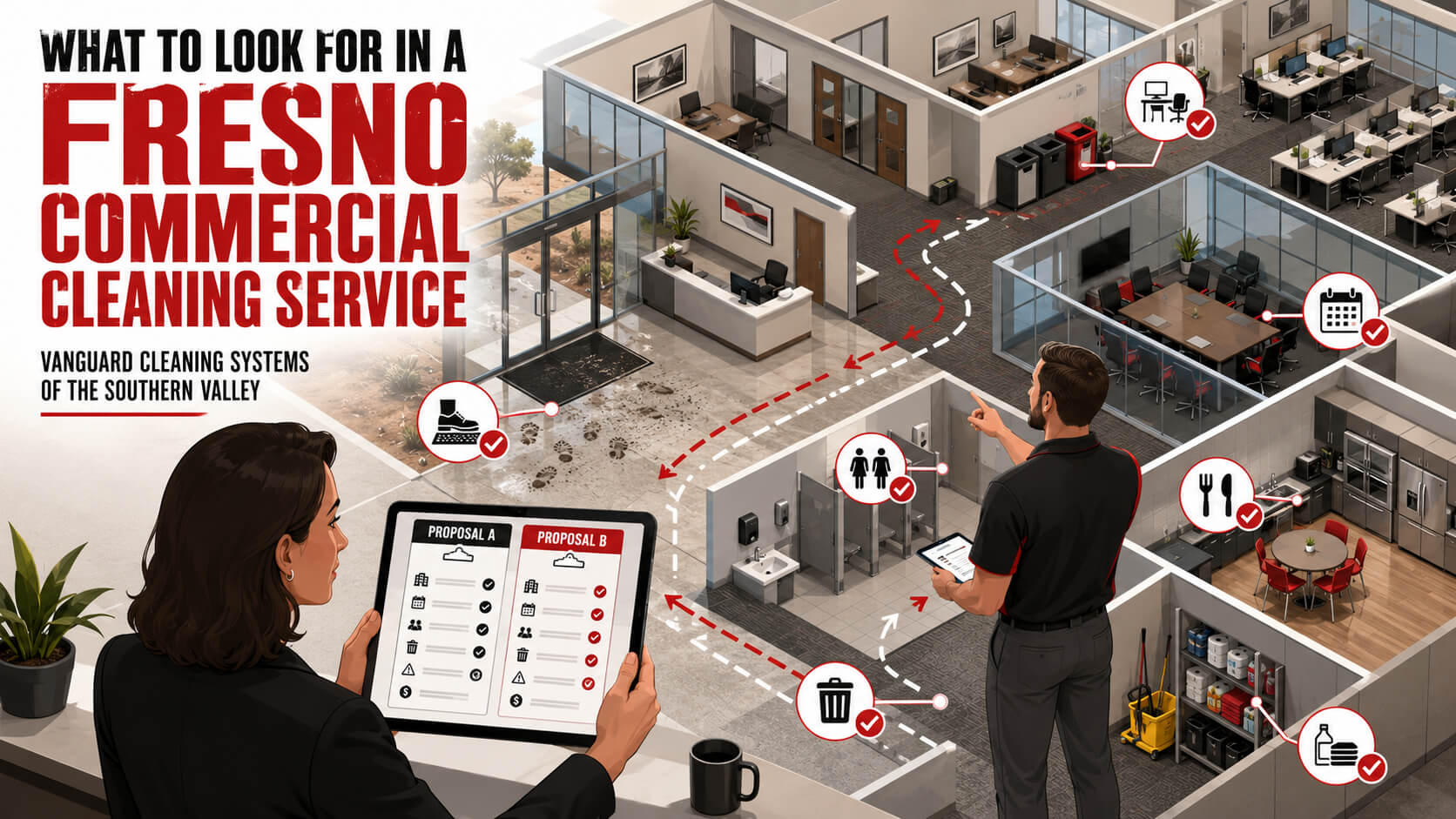
A good cleaning proposal should make the work, schedule, reporting process, and quality expectations easy to understand.
A Clear Plan Makes the Choice Easier
Choosing a commercial cleaning service can feel simple until the proposals arrive. One company may offer a short list of tasks, while another gives pages of detail with no clear way to judge the work. Price adds another layer, especially when the bids cover different duties or service schedules. A useful proposal connects the building's needs to a clear scope, a workable communication process, and results that can be checked over time.
Fresno buildings also vary widely. A small office near Shaw Avenue doesn't run like a warehouse, a busy clinic, or a multi-tenant property. Each space brings its own traffic, floor materials, restroom use, food areas, operating hours, and access rules. The service plan should account for those conditions from the start.
Quick Answer
Look for a Fresno commercial cleaning service that provides a room-by-room scope, task frequencies, floor-care methods, restroom standards, issue-reporting steps, quality checks, and a clear local contact. Compare what each proposal includes before comparing the total price. Ask who will provide the service, how concerns will be corrected, and how the plan can change when the building's use changes.
What Is a Fresno Commercial Cleaning Service?
A Fresno commercial cleaning service provides recurring care for business and institutional buildings based on an agreed scope and schedule. The work may include offices, shared areas, entryways, restrooms, breakrooms, floors, waste stations, and other spaces named in the agreement.
The phrase covers a broad range of service plans. Some buildings need service several times each week. Others need daily care, daytime checks, periodic floor work, or added attention during a busy season. The scope should fit the site instead of relying on a standard task list copied from another property.
Vanguard Cleaning Systems of the Southern Valley supports independently owned janitorial franchise businesses that provide services under written account requirements. Businesses comparing commercial cleaning services in Fresno can use a facility walkthrough to define those requirements before a plan is proposed.
How a Commercial Cleaning Plan Works
A sound plan begins with a close look at the building. The walkthrough gives both sides a chance to inspect the areas, discuss concerns, review access, and identify work that may require special tools or added time.
The provider then builds a scope that should state:
- Which rooms and areas are included
- Which tasks apply to each area
- How often each task will be completed
- Which tasks are performed only when conditions call for them
- Who handles consumable supplies
- What periodic services are included
- Which services require separate approval or pricing
- How inspections and issue reports are handled
Once service begins, the scope becomes the working standard. It guides the people completing the work, the person reviewing quality, and the customer contact who reports concerns. Clear terms also make later changes easier. If occupancy rises or a room changes use, the affected tasks and frequencies can be updated without rebuilding the whole plan.
Start With a Detailed Scope of Work
Broad phrases can hide major differences between proposals. “Clean offices” could mean emptying waste and vacuuming open areas. It could also include desks, ledges, partitions, interior glass, doorframes, corners, and spot removal. The price won't make sense until the duties are clear.
Ask each company to show the work by room or area. A useful scope often separates:
- Entryways and reception areas
- Private offices and shared workstations
- Conference and training rooms
- Restrooms
- Breakrooms and kitchens
- Corridors, stairs, and elevators
- Storage and supply areas
- Waste and recycling points
- Carpet, hard floors, and entrance mats
Then look at the task detail. “Floor care” is too broad when the building has carpet, luxury vinyl tile, ceramic tile, sealed concrete, and entrance mats. Each surface has different routine and periodic needs.
The proposal should also identify exclusions. Work above a set height, exterior glass, upholstery, interior appliance cleaning, and large-item removal may fall outside routine service. Written exclusions reduce surprises and help the building decide whether those tasks need separate scheduling.
The commercial cleaning service options page can help when sorting routine duties from added or periodic work.
Match the Schedule to the Way the Building Is Used
There is no single cleaning schedule that fits every Fresno property. Service frequency should follow what happens inside the building.
Review these factors during the walkthrough:
- Daily occupancy and visitor volume
- Number of shifts and operating hours
- Restroom fixture count and use
- Food preparation and shared appliance use
- Waste volume and pickup limits
- Floor type and foot traffic
- Outdoor soil carried through entrances
- Public-facing appearance standards
- Seasonal activity and special events
- Past complaints and repeat trouble spots
A busy lobby may need frequent glass and floor attention, while a low-use records room may need less frequent care. Restrooms might need checks during occupied hours even when most other work happens after closing. A warehouse office can have added soil near the door that connects it to the work floor.
Ask the provider to separate daily, weekly, monthly, and condition-based duties. This makes the schedule easier to review. The daily, weekly, and monthly janitorial checklist offers a useful starting point, though the final list should still follow the building.
Look Closely at Restroom Expectations
Restrooms often drive complaints because many people use a small space throughout the day. Supply levels, odors, wet floors, waste, spots on mirrors, and fixture condition are easy to notice.
A restroom scope should identify care for:
- Toilets and urinals
- Sinks, counters, and faucets
- Mirrors and dispensers
- Partitions, doors, and handles
- Floors, edges, and corners
- Waste and sanitary product containers
- Soap, tissue, and towel stock
- Visible soil and odor sources
- Leaks, clogs, and fixture concerns that need reporting
Supply responsibility needs special attention. The proposal should state who orders products, who stores them, who monitors stock, and how shortages are reported. A restroom can look well cared for and still frustrate users when soap or paper supplies run out.
Ask how often heavily used restrooms will be checked. One full service after closing may leave a gap in a building with steady daytime traffic. The right answer depends on use, staffing, and the standards set by the facility.
More detail about recurring tasks is available on the restroom cleaning services page.
Define Breakroom and Kitchen Duties
Breakrooms collect food residue, spills, packaging, and waste throughout the workday. Shared appliances also create questions about what the cleaning service may touch and what employees must manage themselves.
Clarify whether the routine scope includes:
- Tables, counters, sinks, and faucets
- Cabinet fronts and drawer handles
- Refrigerator and microwave exteriors
- Appliance interiors
- Coffee stations and vending areas
- Waste and recycling containers
- Floor edges and areas beneath movable items
- Food left in refrigerators or cabinets
- Dishware and personal items
Access matters here. A crowded counter covered with personal cups, food, and paperwork may limit the work that can be completed safely. Written rules help employees leave shared surfaces ready for service.
The scope should also explain how spills, leaks, pests, damaged containers, or strong odors are reported. These conditions may require a building contact, maintenance worker, or pest professional rather than a routine cleaning response.
Use these breakroom and kitchen cleaning practices to identify duties that belong in the building's plan.
Check Floor-Care Knowledge
Floors can take up a large share of the work and budget. They also show wear quickly near doors, service counters, elevators, restrooms, and paths between busy rooms.
During the walkthrough, ask the provider to identify every floor material. Then ask how each surface will be maintained. The answer should account for the manufacturer's care guidance, current finish, traffic, moisture, soil, and prior damage.
Routine floor work may include:
- Vacuuming carpet and mats
- Spot care for small spills or marks
- Dust mopping hard surfaces
- Damp or wet mopping where suitable
- Edge and corner cleaning
- Entry mat care
- Reporting loose tiles, torn carpet, or trip concerns
Periodic work may include carpet extraction, hard-floor refinishing, machine scrubbing, or other surface-specific care. Ask whether those tasks are built into the proposal or priced when requested. A low monthly bid can become less useful when important floor work sits outside the agreement.
Equipment choice matters too. Ask what machines and products are planned for the site, where they will be stored, and how cross-area use will be managed. A clear answer shows that the floor plan was built around the property rather than a generic checklist.
Ask How Communication Works
Communication should be part of the operating plan. A phone number alone doesn't explain who owns a concern or when the customer can expect an update.
Ask these questions before signing:
- Who is the main customer contact?
- Who receives routine requests?
- How are urgent building concerns reported?
- What details should a report include?
- When will the customer receive an acknowledgment?
- Who assigns and checks corrective work?
- How is completion confirmed?
- How often are service reviews held?
The company should be able to describe a simple path from report to resolution. For example, the customer records the location and concern, the contact assigns it, the work is checked, and the customer receives confirmation. The exact process can vary. It needs to be clear enough that both sides know what happens next.
Ask to see a blank issue form, inspection report, or service review format. A sample often tells you more than a broad promise about responsive service.
Review the Issue-Reporting Process
Missed work happens in any service relationship. The response reveals how well the account is managed.
A useful reporting process records:
- The date and time
- The exact room or area
- The condition observed
- A photo when useful and allowed
- The requested response
- The person assigned
- The completion time
- Any follow-up needed
Repeat concerns deserve a deeper review. A restroom that runs out of paper each afternoon may need a stock change or an added daytime check. Dust that returns near an entry could point to a mat, door-seal, or air-movement issue. A wet floor might involve a leak that requires maintenance.
Records make these patterns easier to see. They also help the provider decide whether the cause lies in the task instructions, timing, access, staffing, supply levels, equipment, or building condition.
Find Out How Quality Is Checked
A task list shows what should happen. Quality checks show whether the expected condition was reached.
Ask who conducts inspections, how often they occur, and what the reviewer looks for. Inspection timing should fit the building. A daytime review may catch supply and traffic issues, while an after-service review may show whether scheduled work was completed.
Useful measures can include:
- Completion of scheduled duties
- Inspection scores by area
- Response time for service concerns
- Time to complete corrective work
- Repeat issues by location
- Restroom supply availability
- Completion of planned floor care
- Reports of leaks, damage, or access problems
The measures should connect to the building's priorities. A perfect checklist score means little if the lobby glass stays marked or restroom supplies keep running out.
Review how the results will be shared. Some accounts may need a brief monthly meeting. Others can use a written report and a quarterly review. The method should support fast decisions without creating needless paperwork.
Confirm Staffing, Access, and Continuity
Commercial cleaning often takes place when few employees are present. That makes access rules and building knowledge important.
Ask how the provider handles:
- Keys, badges, alarm codes, and restricted rooms
- Site-specific safety and access instructions
- Worker absences
- Holiday and closure schedules
- Changes in assigned personnel
- After-hours contacts
- Supply and equipment storage
- Service during unusual building events
The people providing the service should have clear account instructions. Those instructions can cover approved entry points, rooms that require permission, alarm steps, areas with private material, and contacts for unexpected conditions.
Continuity also affects quality. Ask who covers an absence and how that person receives the building's task list. A backup worker needs more than an address and a door code. Room duties, priority areas, product limits, and reporting steps should already be documented.
Understand What Local Support Means
“Local support” can mean many things, so ask for specifics. Find out where the account contact is based, who can visit the building, and who has the authority to adjust the service plan.
Local contacts can be useful when a concern needs an on-site review. Still, an office address doesn't explain response time, accountability, or the chain of communication. Those details belong in the discussion before service begins.
Vanguard Cleaning Systems of the Southern Valley has regional information for businesses seeking service in Bakersfield, Fresno, Visalia, Valencia, Lancaster, and Palmdale. These pages help a business connect with the office serving its area.
Compare Proposals on Equal Ground
Place the proposals side by side and compare the same items. Start with the scope, since prices based on different work plans can't be judged fairly.
Review:
- Included rooms and areas
- Task detail by room
- Frequency by task
- Restroom and breakroom duties
- Routine and periodic floor care
- Supply responsibility
- Inspection and reporting methods
- Issue response and follow-up
- Staffing continuity
- Added-service pricing
- Contract terms and change process
If one proposal lacks detail, ask for a written update. Don't fill gaps with assumptions. A short bid may be workable, but the missing items should be resolved before a decision.
Price can then be viewed in context. One proposal may cost more because it includes periodic carpet work, restroom checks, or a stronger quality process. Another may place those duties outside the monthly rate. The best comparison uses the full expected cost and the actual work promised.
Watch for Warning Signs in a Proposal
Some proposal gaps deserve another question before moving forward:
- The scope uses broad terms without room-level detail.
- Frequencies apply to whole areas instead of specific tasks.
- Floor materials were never identified.
- Restroom supplies have no assigned owner.
- Periodic work is mentioned without a schedule or price.
- The issue process depends on verbal messages only.
- No one can explain who checks the completed work.
- The provider can't describe absence coverage.
- Exclusions are missing.
- The quote was prepared without a building walkthrough.
One unclear item doesn't settle the decision. It does show where the next conversation should begin.
What Should Be Discussed During a Facility Walkthrough?
Walk through the building during a normal operating period when possible. This makes traffic, noise, access, waste, and supply use easier to judge.
Point out:
- Areas that draw the most complaints
- Rooms with restricted access
- Busy entrances and traffic paths
- Floor damage or known care limits
- Restrooms that need daytime checks
- Breakroom rules and appliance limits
- Waste pickup times and container locations
- Storage space for products and equipment
- Alarm and access procedures
- Upcoming occupancy or schedule changes
Bring recent issue records if they are available. A short list of repeat concerns gives the provider practical information for the proposed scope.
People Also Ask
How do I choose a commercial cleaning company in Fresno?
Compare a written room-by-room scope, task schedule, floor methods, restroom duties, inspection process, issue response, staffing coverage, and local contact. Review price after confirming that each company has quoted the same work.
What should a commercial cleaning proposal include?
It should include service areas, tasks, frequencies, exclusions, routine and periodic floor care, supply duties, quality checks, reporting steps, contacts, pricing, and terms for changing the plan.
How often should a Fresno office be cleaned?
Frequency depends on occupancy, operating hours, visitor traffic, restroom use, food areas, waste volume, floor materials, and appearance needs. Busy shared areas may need daily service or daytime checks, while low-use rooms may need less frequent attention.
What questions should I ask a commercial cleaner?
Ask who provides the service, who manages the account, how quality is checked, how concerns are reported, what happens during an absence, which tasks cost extra, and how the schedule can be changed.
Should I choose the lowest commercial cleaning bid?
Choose based on the work and support included in the bid. A lower price may cover fewer tasks, lower frequencies, or less periodic care. Compare the complete scope and expected yearly cost.
What areas are often missed in a cleaning scope?
Common gaps include floor edges, baseboards, interior glass, partition tops, areas beneath movable items, appliance interiors, vents, high ledges, storage rooms, and periodic floor work. Each item should be assigned a frequency or listed as an exclusion.
Frequently Asked Questions
Does every business need daily commercial cleaning?
No. The schedule should match building use. Some properties need daily work, while smaller or lower-traffic sites may use service several times per week.
Are cleaning supplies included in commercial cleaning contracts?
Contract terms vary. The proposal should state who provides cleaning products, equipment, liners, and restroom consumables, along with any added charges.
Who handles repair problems found during cleaning?
The building or its maintenance provider usually handles repairs. The cleaning scope should explain how leaks, broken fixtures, loose flooring, damaged dispensers, and access problems are reported.
Can the cleaning scope change after service begins?
Yes. Ask for the process used to approve added tasks, remove work, change frequencies, and update pricing. Put all agreed changes in writing.
How can cleaning quality be measured?
Use area inspections, task completion, response time, repeat issue rates, supply availability, scheduled floor-care completion, and records of reported building conditions.
Is a facility walkthrough needed before getting a quote?
A walkthrough helps the provider see the size, layout, floor types, traffic, access limits, and current conditions. Those details support a more accurate scope and price.
Choose Clarity Before Price
The strongest proposal gives both sides a shared picture of the work. It states what will be done, where it will happen, how often it will occur, and how results will be checked. It also gives the customer a clear route for reporting a concern and receiving confirmation after the response.
Compare the proposed scope, communication process, and building priorities before focusing on price alone. To discuss a Fresno facility, contact Vanguard Cleaning Systems of the Southern Valley or request a facility walkthrough and quote.
References
Abdul Rahman, A., Mohd Amin, I. Z., Hassan, R., Mohamad, M. A., & Noor Azman, N. Z. (2026). Impact of outsourcing on cleaning service quality: A study of Harta Maintenance Sdn Bhd. Journal of Facilities Management, 24(3), 477–507. https://doi.org/10.1108/JFM-11-2024-0145
Horrevorts, M., Van Ophem, J., & Terpstra, P. (2018). Impact of cleanliness on the productivity of employees. Facilities, 36(9/10), 442–459. https://doi.org/10.1108/F-02-2017-0018
Lok, K. L., Opoku, A., & Baldry, D. (2018). Design of sustainable outsourcing services for facilities management: Critical success factors. Sustainability, 10(7), Article 2292. https://doi.org/10.3390/su10072292
Mohamed, A., Mohammed, A. H., & Abdullah, M. N. (2015). Service level agreements: Governance in outsourcing facility management. Jurnal Teknologi, 73(5). https://doi.org/10.11113/jt.v73.4313
Verma, S. K., Chang, W. R., Courtney, T. K., Lombardi, D. A., Huang, Y. H., Brennan, M. J., Mittleman, M. A., Ware, J. H., & Perry, M. J. (2011). A prospective study of floor surface, shoes, floor cleaning and slipping in US limited-service restaurant workers. Occupational and Environmental Medicine, 68(4), 279–285. https://doi.org/10.1136/oem.2010.056218
Vos, M. C., Galetzka, M., Mobach, M. P., van Hagen, M., & Pruyn, A. T. H. (2019). Measuring perceived cleanliness in service environments: Scale development and validation. International Journal of Hospitality Management, 83, 11–18. https://doi.org/10.1016/j.ijhm.2019.04.005
