
A neglected breakroom can change how employees feel about the entire workplace, even when the rest of the building looks well maintained.
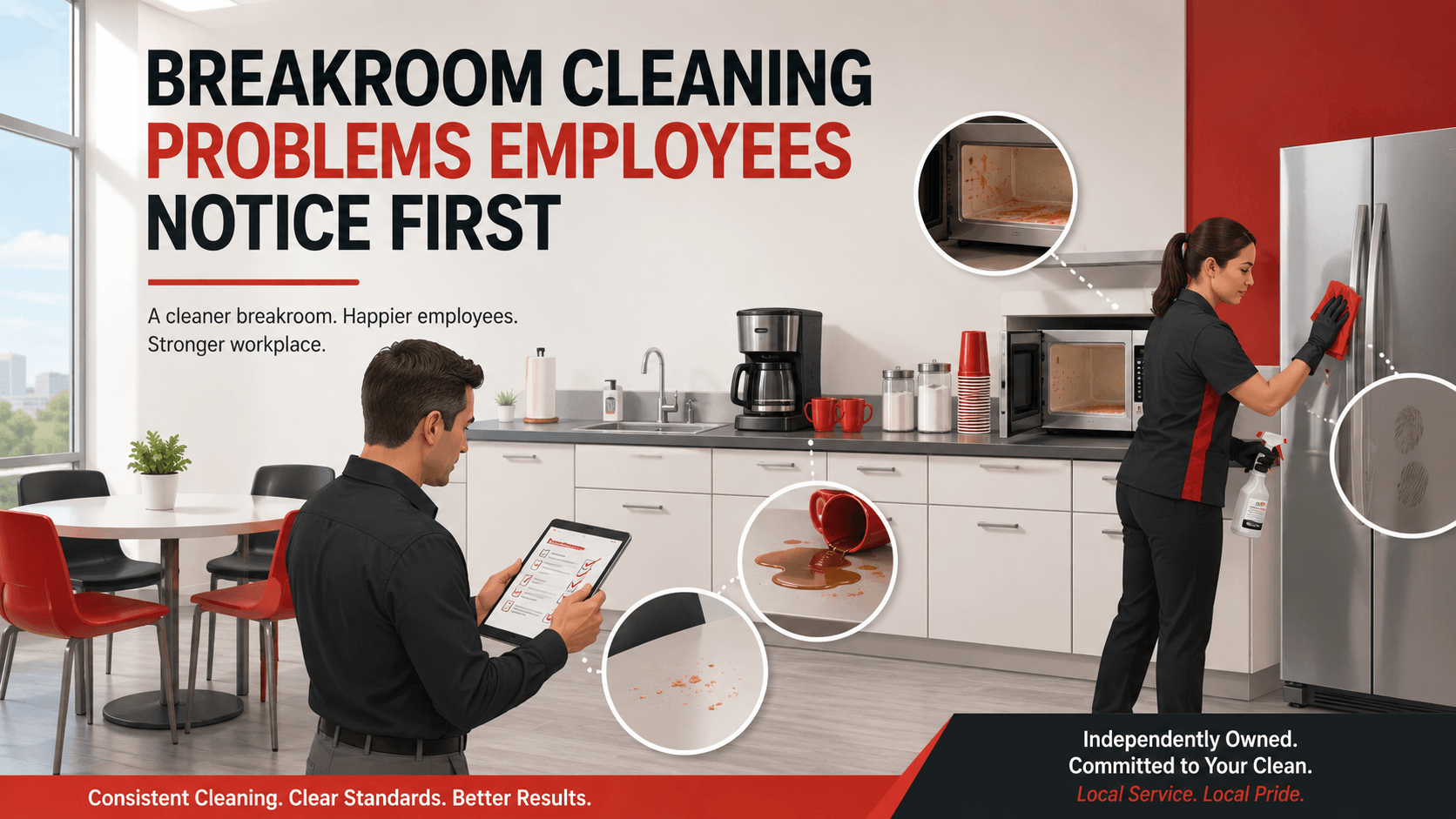
Small Breakroom Problems Become Big Workplace Complaints
The office breakroom is supposed to provide a comfortable place to eat, recharge, and step away from work. But it also combines food, shared appliances, frequent hand contact, moisture, trash, and steady foot traffic in one small space.
That combination makes cleaning problems easy to create and hard to ignore.
A sticky refrigerator handle may seem minor. So might a few crumbs near the toaster or a small coffee spill on the counter. But when several issues appear at once, employees may begin to question whether the space receives consistent attention.
Breakroom conditions also affect more than appearance. Food residue can create odors. Moisture around the sink can leave counters looking neglected. Full trash containers may attract pests. Shared appliance controls can accumulate fingerprints, grease, and debris throughout the day.
Employees often notice these problems before anyone submits a formal complaint. They experience the room several times a day, often during moments when they expect comfort and a break from their normal workload.
Quick Answer
The breakroom cleaning problems employees notice first usually include sticky appliance handles, dirty microwave controls, coffee spills, crumbs, wet counters, sink residue, full trash containers, low supplies, and lingering food odors.
A reliable commercial breakroom cleaning routine should address food-contact areas, shared touchpoints, appliances, floors, trash, sinks, odors, and supply levels. Cleaning frequency should also match the number of people using the room and the amount of food waste produced each day.
What Is Commercial Breakroom Cleaning?
Commercial breakroom cleaning is the routine care of shared workplace eating and food preparation areas.
A typical scope may include:
- Cleaning tables and counters
- Wiping appliance exteriors
- Cleaning microwave interiors
- Caring for sinks and faucets
- Removing crumbs and food debris
- Emptying trash and recycling
- Cleaning the outside of trash containers
- Wiping cabinet and drawer handles
- Cleaning floors
- Restocking approved supplies
- Addressing accessible odor sources
Breakroom cleaning is different from cleaning a private office because the room has more shared equipment, food residue, moisture, and waste. It may also experience concentrated traffic around morning coffee, lunch, and afternoon breaks.
The exact division of responsibility should be clearly documented. For example, employees may be responsible for washing personal dishes and removing expired food, while the janitorial business handles assigned surfaces, floors, fixtures, and waste removal.
Without clear responsibilities, recurring problems can fall between the cleaning scope and workplace policies.
How Breakroom Cleaning Works
A well-managed breakroom cleaning program separates tasks by frequency, responsibility, and risk.
Routine service
Routine tasks address the conditions that appear during normal daily use. These may include wiping counters, cleaning tables, emptying trash, removing visible debris, caring for sinks, and cleaning floors.
High-touch surface care
Some surfaces receive contact from many people throughout the day. Refrigerator handles, microwave buttons, coffee maker controls, cabinet pulls, water dispenser buttons, and faucet handles may require more attention than nearby walls or decorative surfaces.
Periodic detailed cleaning
Certain areas do not need the same attention every visit but should not be ignored. Examples include refrigerator seals, the space beneath movable appliances, cabinet fronts, wall splashes, vents, baseboards, and the exterior sides of trash containers.
Restocking
Soap, paper towels, trash liners, and other agreed-upon supplies should be checked regularly. Employees may view an empty dispenser as a cleaning failure even when every visible surface has been serviced.
Quality checks
Inspections help determine whether the written scope still matches actual breakroom use. A room used by 15 people has different needs from a breakroom serving several departments or multiple shifts.
Why Employees Notice Breakroom Conditions So Quickly
Employees tend to inspect breakrooms more closely than hallways, storage spaces, or unused conference rooms.
They sit at the tables. They place food on the counters. They touch the appliances. They stand near the trash. They notice smells while eating.
This close interaction makes small problems harder to overlook.
The room also carries an expectation of comfort. Employees may tolerate a temporary box in a hallway or fingerprints on an entry door. They are less likely to accept sticky surfaces, old food, unpleasant smells, or visible residue near the place where they eat.
Breakroom problems can also repeat throughout the day. A person may touch the same refrigerator handle in the morning, at lunch, and before leaving. Each interaction reinforces their impression of how well the room is maintained.
1. Sticky Refrigerator Handles and Door Surfaces
The refrigerator handle is often one of the most frequently touched objects in a shared breakroom.
Employees may open the refrigerator to store lunches, retrieve drinks, add creamer to coffee, or check food throughout the day. Food residue, condensation, fingerprints, and spills can collect quickly.
Common refrigerator complaints include:
- Sticky handles
- Greasy fingerprints
- Drips down the front
- Dirty door seals
- Crumbs on lower ledges
- Spills on accessible shelves
- Strong odors when the door opens
The exterior handle and surrounding door surface should be included in routine high-touch care. Door seals and other detailed areas may require periodic attention, depending on the service agreement.
The inside of the refrigerator requires clear responsibility. A janitorial business should not be expected to remove personal food or throw away containers unless that task is included in the written scope and supported by workplace policy.
A scheduled refrigerator cleanout can help. Employees should receive advance notice and clear instructions about labeling food and removing personal items.
2. Microwave Buttons, Handles, and Interior Splatter
Microwaves create visible problems quickly because food is heated in a small enclosed space.
Sauces splatter. Steam loosens food residue. Containers overflow. Grease transfers from hands to buttons and handles.
Employees commonly notice:
- Greasy control panels
- Sticky door handles
- Dried food inside
- Burned residue
- Food beneath the rotating tray
- Strong smells from earlier meals
- Splashes on the wall behind the appliance
The keypad and handle may need routine attention because they receive frequent hand contact. The microwave interior should also be checked for visible food residue.
Waiting too long makes the job harder. Fresh splatter is usually easier to remove than residue that has been reheated many times.
Workplace rules can reduce buildup. Employees can be asked to cover food, wipe fresh spills, and report larger messes. Those expectations do not replace scheduled service, but they can prevent one careless use from affecting everyone else.
3. Messy Coffee Stations
Coffee stations are high-traffic gathering points. They may be used throughout the entire workday rather than only during lunch.
A coffee area can include:
- Coffee makers
- Single-cup brewers
- Carafes
- Electric kettles
- Sugar and sweetener containers
- Creamer storage
- Stir sticks
- Cups and lids
- Water reservoirs
- Used pod containers
Small spills can create sticky rings and dark stains. Sugar packets may tear. Used grounds may fall onto the counter. Creamer can drip onto nearby surfaces.
Employees often notice when the station has:
- Coffee rings on the counter
- Sticky sweetener residue
- Used pods piled near the machine
- Overflowing grounds
- Empty cup or lid dispensers
- Water around the appliance
- Stained cabinet fronts
- Old coffee left in a pot
A clean coffee station should look orderly and ready for use. Wiping only the open section of the counter may not be enough. The area behind the machine, drip tray, nearby cabinet pulls, and waste container may also need attention.
Responsibility for internal appliance care should be documented. The janitorial scope may cover exterior surfaces while workplace personnel handle brewing components, filters, reservoirs, and manufacturer-specific maintenance.
4. Crumbs and Sticky Tables
Employees expect breakroom tables to be usable when they sit down.
Crumbs, grease, drink rings, food wrappers, and sticky spots immediately weaken that expectation. Even a recently cleaned room may feel neglected when one table still has visible residue.
Common table and counter problems include:
- Crumbs along edges
- Sticky beverage rings
- Dried sauce
- Grease residue
- Dust near backsplashes
- Food under small appliances
- Chairs with crumbs or spills
- Debris where tables meet walls
Routine care should cover the full accessible surface, not only the center of a table. Edges, corners, chair seats, and nearby floor areas can collect debris.
Counter cleaning may require extra care around employee belongings, appliances, electrical cords, food containers, and personal items. A cluttered counter can prevent complete service.
Workplace policies should encourage employees to store personal items and remove dishes so assigned surfaces remain accessible.
5. Wet or Neglected Sink Areas
The sink combines water, food residue, soap, dishes, and hand contact. It can become one of the most noticeable problem areas in the room.
Employees may leave cups, utensils, food containers, or dishes in the basin. Water can collect around the faucet. Food particles may remain near the drain.
Common concerns include:
- Standing water
- Food particles in the basin
- Residue around the drain
- Water spots on fixtures
- Soap buildup
- Wet counters
- Dirty sponges
- Used towels
- Dishes left overnight
- Cabinet moisture beneath the sink
A routine scope may include cleaning the accessible sink basin, faucet, surrounding counter, and visible splash areas. It should also address debris that can be safely removed from the drain opening.
Janitorial businesses generally should not be expected to wash personal dishes unless the agreement specifically includes that task. Dirty dishes can block access to the sink and contribute to odors.
Leaks should be treated as maintenance issues. Repeated moisture under the sink, around supply lines, or near cabinet bases should be reported rather than treated as an ordinary cleaning problem.
6. Overflowing Trash and Recycling Containers
Trash is one of the fastest ways for a breakroom to look and smell neglected.
Food waste is heavier and more likely to leak than ordinary office paper. Containers may hold lunch scraps, coffee grounds, used napkins, food packaging, fruit peels, and liquids.
Employees quickly notice:
- Waste above the rim
- Bags pulling away from the container
- Liquids leaking onto the floor
- Sticky lids
- Food around the opening
- Trash beside a full container
- Strong odors
- Recycling mixed with food waste
Trash service frequency should be based on real use rather than a fixed assumption. A container that fills before lunch may need another service visit, a larger container, or a better placement strategy.
The exterior of the container matters too. Food residue around lids, doors, foot pedals, and surrounding floors can remain after the bag is changed.
Waste handling expectations should also be clear. Containers intended for liquids, recycling, compost, or ordinary trash need simple labels and consistent placement.
7. Empty Soap, Paper Towels, and Shared Supplies
A breakroom can look clean and still feel poorly maintained when essential supplies are missing.
Commonly monitored supplies include:
- Hand soap
- Paper towels
- Trash liners
- Cups
- Lids
- Stir sticks
- Napkins
- Approved surface wipes
- Dish soap
- Replacement sponges
The janitorial business may not be responsible for every item. However, the service agreement should identify which supplies are checked, who purchases them, where backups are stored, and who should be notified when stock is low.
Empty soap and paper towel dispensers deserve prompt attention because they affect how people use the sink area.
A supply problem may also be caused by more than poor restocking. The dispenser may be jammed, broken, installed incorrectly, or incompatible with the available refill.
Regular checks help separate inventory issues from equipment problems.
8. Dirty Shared Touchpoints
Some of the most frequently handled breakroom surfaces are easy to miss because they are small.
Examples include:
- Cabinet handles
- Drawer pulls
- Refrigerator handles
- Microwave buttons
- Faucet handles
- Water dispenser controls
- Vending machine buttons
- Coffee maker handles
- Light switches
- Door handles
- Chair backs
- Soap dispensers
Research involving office environments has found that shared breakroom surfaces can play a role in the movement of contamination through a workplace. Refrigerator handles, faucets, and other shared surfaces deserve attention because many people may touch them during a single workday.
The written scope should identify high-touch surfaces rather than relying on broad language such as “clean the breakroom.” Specific instructions make inspections more consistent and reduce misunderstandings.
9. Lingering Food Odors
Odor is often the first problem employees notice when they enter the room.
Air fresheners may temporarily cover a smell, but they do not remove the source. Strong fragrances can also create new complaints for people who are sensitive to scented products.
Frequent odor sources include:
- Expired food
- Open containers
- Microwave splatter
- Used coffee grounds
- Leaking trash bags
- Food beneath appliances
- Damp cloths or sponges
- Sink residue
- Recycling with leftover liquids
- Unclean waste container interiors
Odor control should begin with inspection.
Where is the smell strongest? Does it become worse when a cabinet, refrigerator, or trash container is opened? Does it return shortly after waste removal?
Recurring odors may indicate that the service frequency is too low, a detailed cleaning task is missing, or a maintenance issue needs attention.
Drain odors, plumbing leaks, pest activity, and ventilation problems may require support beyond routine janitorial service.
10. Food Debris on Floors
Breakroom floors collect crumbs, liquids, tracked soil, food packaging, and chair marks.
Debris often gathers:
- Beneath tables
- Around chair legs
- In corners
- Near vending machines
- Under cabinet edges
- Around trash containers
- In front of refrigerators
- Near the coffee station
- Along baseboards
Visible crumbs can attract pests and make the room look neglected. Sticky spills can also create slip concerns and collect more soil.
Floor care should match the material. Resilient flooring, tile, grout, carpet, mats, and sealed concrete each have different needs.
Spot cleaning may handle a fresh spill, while periodic detailed care may be needed for grout lines, edges, buildup, or worn finish.
Environmental Factors That Affect Breakroom Conditions
The same cleaning schedule does not work equally well in every building. Several conditions affect how quickly problems appear.
Number of users
A breakroom serving 10 people may stay orderly with one routine service. A room serving 100 people may require checks during the day.
Shift schedules
Facilities with evening, overnight, or weekend shifts may produce food waste long after the main service visit.
Meal patterns
A room used mainly for coffee has different needs from one where employees cook full meals.
Appliance count
More refrigerators, microwaves, vending machines, and coffee makers create more touchpoints and more spaces where debris can collect.
Room size
Small breakrooms can feel crowded and messy even when the amount of debris is modest. Limited counter space also makes cleaning harder.
Climate and building conditions
Heat may make food and waste odors more noticeable. Humidity can slow drying around sinks and floors. Dust may enter through doors, vents, or nearby work areas.
Employee habits
Uncovered food, abandoned dishes, spilled drinks, and unmarked refrigerator items can overwhelm a reasonable cleaning schedule.
Service timing
A breakroom cleaned before the morning rush may look different by lunchtime. Inspection timing should match the periods when problems are most likely to appear.
Workplace Responsibilities Should Be Clearly Divided
Breakroom care works best when the cleaning scope and employee responsibilities support each other.
Tasks commonly assigned to a janitorial business
Depending on the agreement, these may include:
- Cleaning accessible tables and counters
- Wiping assigned appliance exteriors
- Cleaning microwave interiors
- Caring for sinks and faucets
- Emptying assigned waste containers
- Cleaning floors
- Wiping identified touchpoints
- Restocking agreed-upon products
- Reporting leaks or maintenance concerns
Tasks commonly assigned to workplace personnel
These may include:
- Washing personal dishes
- Labeling food
- Removing expired items
- Cleaning major spills immediately
- Maintaining internal coffee equipment
- Reporting appliance problems
- Keeping counters accessible
- Following recycling rules
- Approving refrigerator cleanout schedules
The exact division can vary. What matters is that expectations are written, understood, and reviewed.
Commercial Breakroom Cleaning Checklist
Every scheduled service
- Remove visible trash and food debris
- Empty assigned trash and recycling containers
- Replace liners
- Check for leaks around waste containers
- Wipe accessible tables and counters
- Clean sink basins and faucets
- Wipe refrigerator handles
- Wipe microwave handles and controls
- Remove visible microwave splatter
- Clean coffee station surfaces
- Wipe cabinet and drawer handles
- Check soap and paper towel levels
- Clean floors
- Report maintenance or pest concerns
Periodic detailed care
- Clean refrigerator door seals
- Wipe appliance sides and upper surfaces
- Clean beneath movable countertop appliances
- Detail cabinet fronts
- Clean chair legs and backs
- Address buildup around trash containers
- Clean baseboards and edges
- Inspect wall splashes
- Review floor corners and grout lines
- Check vents and other dust collection points
Workplace-managed tasks
- Remove abandoned dishes
- Label personal food
- Dispose of expired food
- Clean internal refrigerator spills when assigned
- Maintain coffee equipment components
- Report leaks and damaged appliances
- Keep cleaning access clear
How Often Should an Office Breakroom Be Cleaned?
Cleaning frequency should match use.
A lightly used breakroom may be adequately maintained during the normal service visit. A larger or heavily used room may need one or more daytime checks in addition to evening service.
Signs that frequency may need to increase include:
- Trash fills before the next visit
- Food odors return every afternoon
- Tables remain sticky during lunch
- Paper products run out
- Floors collect visible crumbs
- Sink counters stay wet
- Coffee stations become cluttered
- Employees submit repeated complaints
Increasing frequency is not the only solution. The building may also need larger trash containers, better supply storage, improved employee policies, or a revised division of responsibility.
What a Better Breakroom Cleaning Scope Should Include
A useful scope should be specific enough to inspect.
Instead of stating only “clean breakroom,” it can identify:
- Which appliances are included
- Whether appliance interiors are included
- Which high-touch surfaces require attention
- How often trash is removed
- Which supplies are restocked
- Who removes personal food
- How refrigerator cleanouts are scheduled
- Whether dishes are excluded
- Which periodic tasks are included
- How service concerns are reported
- When quality inspections occur
A clear scope protects both the workplace and the independently owned janitorial franchise business. It gives everyone a shared standard and makes recurring problems easier to correct.
How Breakroom Conditions Affect Employee Comfort
Breakrooms support more than meals. They provide a place to pause, talk with coworkers, and step away from work.
When the space feels neglected, employees may avoid it, eat at their desks, or leave the building for breaks. Some may interpret the condition as a sign that workplace concerns are not being noticed.
A clean, stocked, and orderly breakroom supports a more comfortable daily experience. It also reduces avoidable complaints about sticky surfaces, smells, waste, and missing products.
Research on workplace breakroom environments has found associations between breakroom quality and employee health outcomes. Cleaning alone does not determine those outcomes, but the findings support the broader value of maintaining functional and comfortable break spaces.
People Also Ask
What is the dirtiest surface in an office breakroom?
There is no single surface that will always be the dirtiest. Refrigerator handles, sink faucets, microwave controls, coffee equipment, drawer pulls, and other shared touchpoints can accumulate residue because many people handle them throughout the day.
Why does the office breakroom smell bad?
Common causes include old food, microwave splatter, coffee grounds, leaking trash, leftover liquids, sink residue, damp materials, and food beneath appliances. Plumbing, pest, or ventilation problems may also create recurring odors.
Who should clean the office refrigerator?
Responsibility should be stated in the workplace policy and janitorial agreement. Routine exterior care may be assigned to the janitorial business, while employees or management handle personal food, expired items, and scheduled interior cleanouts.
How often should breakroom trash be emptied?
Trash should be emptied often enough to prevent overflow, leakage, and food odors. High-use breakrooms may need daytime removal as well as evening service.
Should employees wash their own dishes?
In most workplaces, employees are responsible for personal dishes unless the service agreement says otherwise. Dirty dishes can block sink access and make routine care more difficult.
What should be included in commercial breakroom cleaning?
A complete scope may include tables, counters, sinks, faucets, floors, waste containers, appliance exteriors, microwave interiors, touchpoints, visible food debris, and assigned supply restocking.
Why do breakroom complaints continue after cleaning?
The scope may not match the room’s traffic, the service may occur too early, employees may be leaving new messes after service, or responsibility for dishes, food, and appliances may be unclear.
Can air fresheners solve breakroom odors?
Air fresheners may cover smells briefly but do not remove food waste, spills, drain residue, or other sources. Odor control should begin by locating and correcting the cause.
Frequently Asked Questions
What should be cleaned every day in a breakroom?
Tables, counters, sinks, faucets, appliance touchpoints, visible microwave residue, floors, and waste areas usually need routine attention in a frequently used room.
Do breakroom appliance interiors need cleaning?
Microwave interiors often need regular care because spills are common. Refrigerator interiors may require a separate schedule and clear rules for handling employee food.
Are vending machine buttons part of breakroom cleaning?
They can be included as shared touchpoints when the machines are accessible and the scope assigns that task.
Why are there crumbs after the room was cleaned?
Crumbs may appear after service, remain beneath furniture, or collect in areas blocked by employee belongings. Inspection timing and access should be reviewed.
How can a workplace reduce breakroom odors?
Remove food waste promptly, clean spills, manage refrigerator contents, care for microwaves and sinks, clean around appliances, and investigate plumbing or ventilation problems.
Should janitorial service include coffee supplies?
Only when the agreement assigns that responsibility. Coffee, cups, creamer, and related products are often managed separately from soap, paper towels, and trash liners.
When should the cleaning scope be reviewed?
Review it when occupancy changes, new shifts are added, appliances increase, complaints repeat, trash overflows, or the breakroom’s use changes.
Create a Breakroom Scope That Matches Daily Use
Employees do not judge breakroom cleanliness from a written checklist. They judge it from what they see, smell, and touch.
Sticky refrigerator handles, greasy microwave buttons, wet sinks, full trash containers, missing paper products, and lingering food odors can make the entire space feel neglected.
A stronger approach starts with a clear scope. Identify the surfaces that receive the most use, define who handles food and dishes, match service frequency to actual traffic, and inspect the room during the times when employees use it most.
Vanguard Cleaning Systems of the Southern Valley supports businesses seeking commercial janitorial options through independently owned and operated janitorial franchise businesses. Service plans can be reviewed based on facility use, scheduling needs, traffic patterns, and the areas that generate the most frequent concerns.
Request information about commercial cleaning services.
References
Casanova, L. M., Jeon, S., Rutala, W. A., Weber, D. J., & Sobsey, M. D. (2018). Impact of a hygiene intervention on virus spread in an office building. Journal of Hospital Infection, 100(3), e130–e134. https://doi.org/10.1016/j.jhin.2018.07.035
Jones, N. M., McDonnell, M., Sparer-Fine, E., Rosner, B., Dennerlein, J. T., Kales, S. N., & Messerlian, C. (2021). Associations between the breakroom built environment, worker health habits, and worker health outcomes: A pilot study among public transit rail operators. Journal of Occupational and Environmental Medicine, 63(1), 58–65. https://doi.org/10.1097/JOM.0000000000002057
