
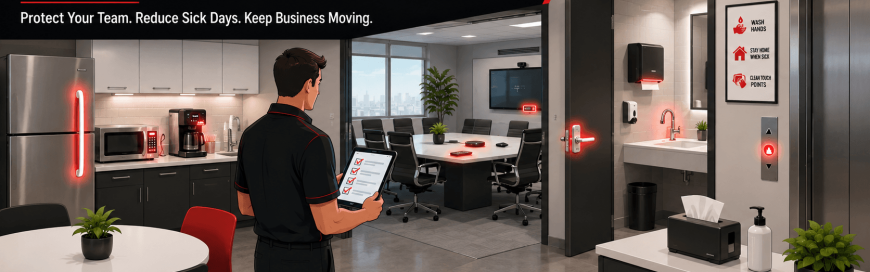
Norovirus can move through an office faster than most people expect because it only takes one illness event, one shared space, and inconsistent surface care to create avoidable exposure.
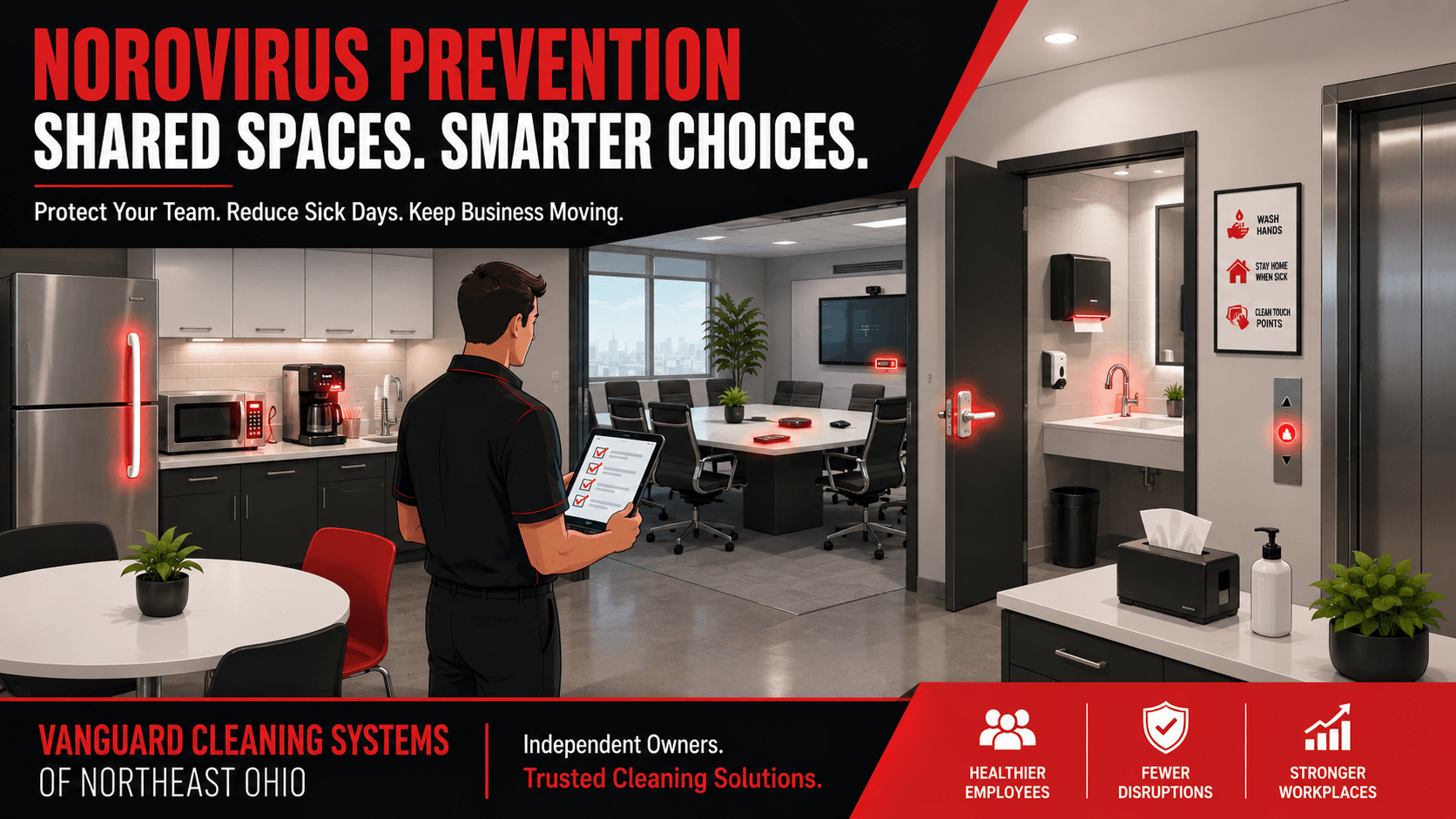
Why Office Norovirus Prevention Starts With Shared Spaces
Norovirus is one of the most common causes of acute gastroenteritis in the United States. It is often associated with schools, healthcare facilities, restaurants, cruise ships, and long-term care environments, but offices are not immune to the same basic transmission risks. Any workplace with shared restrooms, breakrooms, meeting rooms, elevators, entrances, and common equipment has surfaces that many people touch throughout the day.
The challenge is that norovirus does not need a visibly dirty workplace to spread. A conference room table can look clean. A breakroom refrigerator handle can look fine. A restroom faucet can look polished. Yet the real concern is not always what can be seen. It is whether high-touch surfaces, shared food areas, and illness-response routines are being managed with enough consistency.
Sick-day prevention in an office is not only an HR issue. It is also a facility management issue. When cleaning schedules, stocked supplies, employee communication, and response procedures work together, offices are better prepared for seasonal stomach illness concerns.
Quick Answer
Norovirus prevention in offices depends on three practical priorities: keep sick employees home until at least 48 hours after symptoms stop, focus cleaning routines on high-touch shared surfaces, and respond quickly when vomiting or diarrhea occurs in the workplace. The highest-risk areas are restrooms, breakrooms, conference rooms, shared office equipment, entrances, and any surface touched repeatedly by multiple people.
What Is Norovirus?
Norovirus is a highly contagious virus that causes acute gastroenteritis. People often call it a “stomach bug,” but it is not the flu. Influenza primarily affects the respiratory system. Norovirus affects the stomach and intestines.
Common symptoms include:
- Vomiting
- Diarrhea
- Nausea
- Stomach cramps
- Body aches
- Low-grade fever
- Fatigue
Symptoms often come on suddenly. Many people feel better within one to three days, but that short illness window can still cause major workplace disruption. An employee may become ill at work, expose shared areas, miss shifts, or return too soon and continue spreading the virus.
Norovirus spreads easily because infected people can shed the virus before they feel fully recovered. That is why the CDC recommends waiting at least 48 hours after symptoms stop before returning to settings where others may be exposed.
How Norovirus Spreads in Offices
Norovirus spreads through several routes, but shared surfaces matter in offices because so much of the workday involves repeated hand contact.
An employee may touch a restroom fixture, open the breakroom refrigerator, use the microwave, press elevator buttons, join a meeting, handle a shared remote, or use a copier. If hands are not washed well, contamination can move from one surface to another quickly.
Common office transmission paths include:
- Touching a contaminated surface and then touching the mouth or food
- Sharing utensils, cups, or food after an infected person has handled them
- Contact with restroom surfaces after vomiting or diarrhea
- Contact with breakroom surfaces used by an ill employee
- Cleaning an illness incident without proper protection or procedure
- Returning to work too soon after symptoms stop
Norovirus is also difficult to manage because it can take very little exposure to make someone sick. This makes prevention less about one dramatic cleaning event and more about disciplined daily routines.
High-Touch Workplace Areas Deserve Priority
Not every office surface carries the same level of concern. The greatest attention should go to areas that combine frequent hand contact, shared use, and possible exposure to food or restroom contamination.
Restrooms
Restrooms deserve close attention during norovirus season because they combine high traffic with direct illness-related risk.
Priority restroom surfaces include:
- Door handles
- Faucet handles
- Flush handles
- Toilet partitions
- Stall latches
- Soap dispensers
- Paper towel dispensers
- Sink counters
- Trash container touchpoints
- Light switches
A restroom can look acceptable while still missing key touchpoints. The goal is not just appearance. The goal is a routine that matches how people actually use the space.
Breakrooms
Breakrooms are one of the most overlooked norovirus risk areas in offices. They combine food, shared equipment, hand contact, and employee gathering.
Priority breakroom surfaces include:
- Refrigerator handles
- Microwave buttons
- Coffee machine controls
- Water dispenser levers
- Vending machine buttons
- Countertops
- Sink handles
- Cabinet pulls
- Shared tables
- Chair backs
- Trash container lids
- Shared utensils or condiment containers
Breakroom cleaning should not stop at wiping counters. Appliances and handles often matter more because they are touched repeatedly by many people.
Conference Rooms
Conference rooms create exposure opportunities because people gather in enclosed spaces, share equipment, and touch the same tables, remotes, and switches.
Priority conference room surfaces include:
- Tables
- Chair arms
- Door handles
- Remote controls
- Touchscreens
- Presentation equipment
- Shared keyboards
- Light switches
- Whiteboard markers
- Speakerphones
Conference rooms are easy to miss because they may look neat after a meeting. Neat does not always mean properly maintained.
Entrances, Reception Areas, and Shared Pathways
Common pathways are important because they connect people across the building.
Priority surfaces include:
- Entrance door handles
- Reception counters
- Elevator buttons
- Stair railings
- Badge readers
- Shared pens
- Lobby furniture arms
- Delivery counters
These areas may not seem connected to stomach illness prevention, but they are part of the same contact chain.
Shared Office Equipment
Printers, copiers, shared phones, scanners, and touchscreens often receive less attention than restrooms or breakrooms. They still matter because many employees use them throughout the day.
Priority equipment surfaces include:
- Touchscreens
- Keypads
- Copier lids
- Paper tray handles
- Shared phones
- Shared keyboards
- Mouse devices
- Printer buttons
Shared equipment should be part of the routine, especially during seasonal increases in gastrointestinal illness.
Why Visible Cleanliness Is Not Enough
A clean-looking office can still have risk points. Dust, spills, and clutter are easy to notice. Viral contamination is not.
That is why office cleaning programs should be based on risk, not just appearance. A low-touch wall or decorative shelf may look dusty, but it is usually less important for norovirus prevention than a restroom faucet, microwave keypad, or refrigerator handle.
A stronger office routine separates surfaces into practical categories:
- High-touch surfaces used by many people
- Food-contact and food-adjacent areas
- Restroom surfaces
- Shared equipment
- Low-touch surfaces
- Surfaces affected by an illness incident
This helps facility managers avoid wasting time on areas that look important while missing areas that matter more for transmission control.
Cleaning for Risk, Not Just Appearance
Routine cleaning should remove soil, residue, and organic material from surfaces. After that, certain high-touch areas may require an EPA-registered product with a norovirus claim, used according to the label.
The label matters because contact time matters. Many products must remain wet on the surface for a specific period to work as intended. If the product is sprayed and immediately wiped dry, it may not achieve the intended result.
A practical office approach includes:
- Cleaning visible soil first
- Using products appropriate for the surface and risk level
- Following product label directions
- Allowing the required wet contact time
- Using fresh cloths or wipes to avoid spreading contamination
- Paying attention to touchpoints instead of only large visible surfaces
- Increasing frequency when illness reports rise
This is where training and accountability matter. The right product used the wrong way can create a false sense of security.
Workplace Response After a Suspected Stomach Illness Incident
When vomiting or diarrhea happens at work, routine cleaning is not enough. The area should be treated as a higher-risk incident.
A practical response should include:
- Limit access to the affected area as soon as possible.
- Protect the person responding with appropriate PPE, such as gloves and eye protection.
- Remove visible contamination carefully without spreading it to nearby surfaces.
- Clean the affected surface thoroughly before applying an EPA-registered product with a norovirus claim.
- Follow the product label, including contact time and surface compatibility.
- Address nearby high-touch surfaces that may have been contaminated.
- Place used cleaning materials in sealed waste bags.
- Wash hands thoroughly with soap and water after cleanup.
- Encourage the ill employee to leave the workplace and remain home until at least 48 hours after symptoms fully stop.
- Increase attention to restrooms, breakrooms, and shared work areas for the next several days if more illness is reported.
The most important point is speed. Waiting until the next scheduled cleaning allows more people to move through the affected area.
Why Sick-Day Policies Matter
Cleaning alone cannot solve an office norovirus problem if sick employees feel pressured to come in. Norovirus prevention depends on both facility routines and workplace expectations.
Employees should know they are expected to stay home when they have vomiting or diarrhea. They should also understand that returning too soon can expose coworkers, customers, vendors, and visitors.
A strong sick-day message should be simple:
- Stay home when vomiting or diarrhea is present.
- Return no sooner than 48 hours after symptoms stop.
- Avoid preparing or sharing food while sick.
- Wash hands with soap and water often after returning.
- Report workplace illness incidents quickly so affected areas can be handled.
This protects the workplace without making the message complicated.
Handwashing Is Still One of the Most Important Controls
Handwashing is one of the most practical ways to reduce norovirus spread. Alcohol-based hand sanitizer may be useful for some germs, but soap and water are especially important for norovirus prevention.
Offices should make handwashing easy by keeping supplies stocked and visible.
Restrooms and breakrooms should have:
- Running water
- Soap
- Paper towels or working hand dryers
- Covered trash containers where appropriate
- Clear access to sinks
- Regular supply checks
A workplace can have a strong cleaning schedule and still struggle if soap or paper towels run out during the day.
Environmental Factors That Affect Norovirus Risk
Norovirus risk is shaped by how the workplace operates. Two offices of the same size may have very different needs depending on traffic, layout, and employee behavior.
Building Traffic
Higher traffic means more contact with shared surfaces. Offices with frequent visitors, vendors, customers, delivery drivers, or rotating staff may need more frequent attention to entrances, reception counters, restrooms, and shared equipment.
Restroom Volume
Restrooms with heavy use need more than cosmetic checks. Supplies, touchpoints, waste levels, and sink counters should be monitored during the day.
Breakroom Habits
Shared meals, potlucks, coffee stations, open snack areas, and crowded lunch periods can increase risk. Breakrooms need clear expectations for food handling, shared surfaces, and employee cleanup after use.
Shared Equipment
The more employees rely on shared printers, phones, keyboards, scanners, tablets, and touchscreens, the more important those surfaces become.
Cleaning Frequency
Frequency should match use. A restroom used by ten people does not need the same routine as one used by one hundred people. A busy breakroom should not be treated like a rarely used storage area.
Product Use
Surface products must be matched to the task. Product claims, dwell time, surface compatibility, ventilation, PPE, and label directions all matter.
Communication
Employees need to know what to report. If a vomiting incident happens and no one tells facility management, the response will be delayed.
Workplace Relevance: Why Norovirus Can Disrupt Office Operations
Norovirus can create a chain reaction inside an office. One illness may lead to several absences, delayed work, rescheduled meetings, lower morale, and concerns about shared spaces.
The operational effects can include:
- More sick days
- Reduced productivity
- Interrupted meetings
- Temporary staffing gaps
- Lower confidence in workplace cleanliness
- Increased complaints about restrooms or breakrooms
- More pressure on facility managers
- Greater concern during seasonal illness periods
Even when symptoms are short-lived, the disruption can be meaningful. A small outbreak can affect scheduling, customer response times, team coverage, and employee confidence.
A well-managed facility plan helps reduce that disruption by focusing attention where it matters most.
Prevention Starts Before an Outbreak
The best time to improve norovirus prevention is before illness spreads through the workplace.
Routine prevention includes:
- Prioritizing high-touch surfaces
- Keeping restrooms stocked
- Keeping breakrooms orderly
- Cleaning shared equipment consistently
- Encouraging employees to stay home when sick
- Responding quickly to vomiting or diarrhea incidents
- Reviewing product labels and contact times
- Communicating simple illness-reporting steps
- Adjusting cleaning frequency during seasonal increases
A prevention plan does not need to be complicated. It needs to be consistent.
Practical Office Checklist for Norovirus Season
Use this checklist to review whether the office is ready for seasonal stomach illness concerns.
Restrooms
- Soap dispensers are stocked
- Paper towels are stocked
- Sink counters are cleaned regularly
- Faucet handles receive attention
- Flush handles receive attention
- Door handles and stall latches are included
- Trash containers are emptied before overflow
- Restroom checks happen during high-use periods
Breakrooms
- Refrigerator handles are included
- Microwave buttons are included
- Coffee station controls are included
- Countertops are cleaned after heavy use
- Shared tables are cleaned consistently
- Sink handles are included
- Trash containers are closed or managed
- Food spills are addressed quickly
Conference Rooms
- Tables are cleaned after group use
- Door handles are included
- Remote controls are included
- Shared keyboards or touchscreens are included
- Chair arms are included
- Food and beverage waste is removed promptly
Shared Equipment
- Printer touchpoints are included
- Copier screens and buttons are included
- Shared phones are included
- Badge readers and touchscreens are included
- Cleaning supplies are available where appropriate
Illness Response
- Employees know who to notify
- PPE is available for response
- Affected areas can be restricted quickly
- EPA-registered products with norovirus claims are available
- Product contact times are understood
- Waste handling steps are clear
- Follow-up cleaning frequency can be increased
People Also Ask
How long should an employee stay home after norovirus symptoms stop?
Employees should stay home for at least 48 hours after vomiting and diarrhea have completely stopped. This helps reduce the chance of exposing others after symptoms improve.
Can norovirus spread through office surfaces?
Yes. Norovirus can spread when a person touches a contaminated surface and then touches their mouth or food. Shared surfaces such as restroom handles, breakroom appliances, elevator buttons, and conference room equipment can become part of the transmission chain.
Are breakrooms a major concern during norovirus season?
Breakrooms deserve close attention because they combine food, shared appliances, hand contact, trash, sinks, tables, and employee gathering. Refrigerator handles, microwave buttons, coffee stations, and shared counters should be treated as priority areas.
Why is norovirus so hard to control in workplaces?
Norovirus spreads easily, symptoms can come on suddenly, and contaminated surfaces may look clean. People may also return to work too soon after feeling better, which can extend the risk window.
What should an office do after someone vomits at work?
The affected area should be restricted, visible contamination should be removed with proper protection, surfaces should be cleaned, and an EPA-registered product with a norovirus claim should be used according to the label. Nearby high-touch surfaces should also be addressed.
Is hand sanitizer enough for norovirus prevention?
Soap and water are especially important for norovirus prevention. Hand sanitizer may help with some germs, but employees should wash hands thoroughly after using the restroom, before eating, after cleaning, and after contact with potentially contaminated surfaces.
FAQ
What office areas need the most attention during norovirus season?
Restrooms, breakrooms, conference rooms, shared equipment, reception areas, elevators, and entrance touchpoints need the most attention.
Can a clean-looking office still have norovirus risk?
Yes. Norovirus contamination is not visible. A surface can look clean and still require proper cleaning and surface treatment based on risk.
Should cleaning frequency increase when employees report stomach illness?
Yes. Restrooms, breakrooms, shared equipment, and high-touch surfaces should receive more frequent attention when gastrointestinal illness is reported.
What supplies should offices keep stocked?
Offices should keep soap, paper towels, gloves, eye protection, waste bags, and appropriate EPA-registered surface products available.
Why are high-touch surfaces more important than low-touch surfaces?
High-touch surfaces are handled repeatedly by many people. That makes them more likely to move contamination through the workplace.
Should employees share food during norovirus season?
Shared food should be handled carefully. Employees with symptoms should not prepare or handle food for others, and shared utensils or open food stations should be managed with extra care.
What is the most important policy step?
Encourage employees to stay home when they have vomiting or diarrhea and return no sooner than 48 hours after symptoms stop.
References
Centers for Disease Control and Prevention. (2024). How to prevent norovirus. https://www.cdc.gov/norovirus/prevention/index.html
Centers for Disease Control and Prevention. (2025). NoroSTAT surveillance network. https://www.cdc.gov/norovirus/php/reporting/norostat.html
Centers for Disease Control and Prevention. (2026). NoroSTAT data. https://www.cdc.gov/norovirus/php/reporting/norostat-data.html
Julian, T. R., Leckie, J. O., & Boehm, A. B. (2010). Virus transfer between fingerpads and fomites. Journal of Applied Microbiology, 109(6), 1868–1874. https://doi.org/10.1111/j.1365-2672.2010.04814.x
Jones, E. L., Gaither, M., Kramer, A., & Gerba, C. P. (2024). Transmission of viruses from restroom use: A quantitative microbial risk assessment. Food and Environmental Virology, 16, 125–139. https://doi.org/10.1007/s12560-023-09580-1
Rönnqvist, M., Aho, E., Mikkelä, A., Ranta, J., Tuominen, P., Rättö, M., & Maunula, L. (2014). Norovirus transmission between hands, gloves, utensils, and fresh produce during simulated food handling. Applied and Environmental Microbiology, 80(17), 5403–5410. https://doi.org/10.1128/AEM.01162-14
Teunis, P. F. M., Moe, C. L., Liu, P., Miller, S. E., Lindesmith, L., Baric, R. S., Le Pendu, J., & Calderon, R. L. (2008). Norwalk virus: How infectious is it? Journal of Medical Virology, 80(8), 1468–1476. https://doi.org/10.1002/jmv.21237
