
Summer building conditions can change fast, and a practical janitorial checklist helps keep restrooms, breakrooms, entryways, floors, and shared spaces from falling behind.
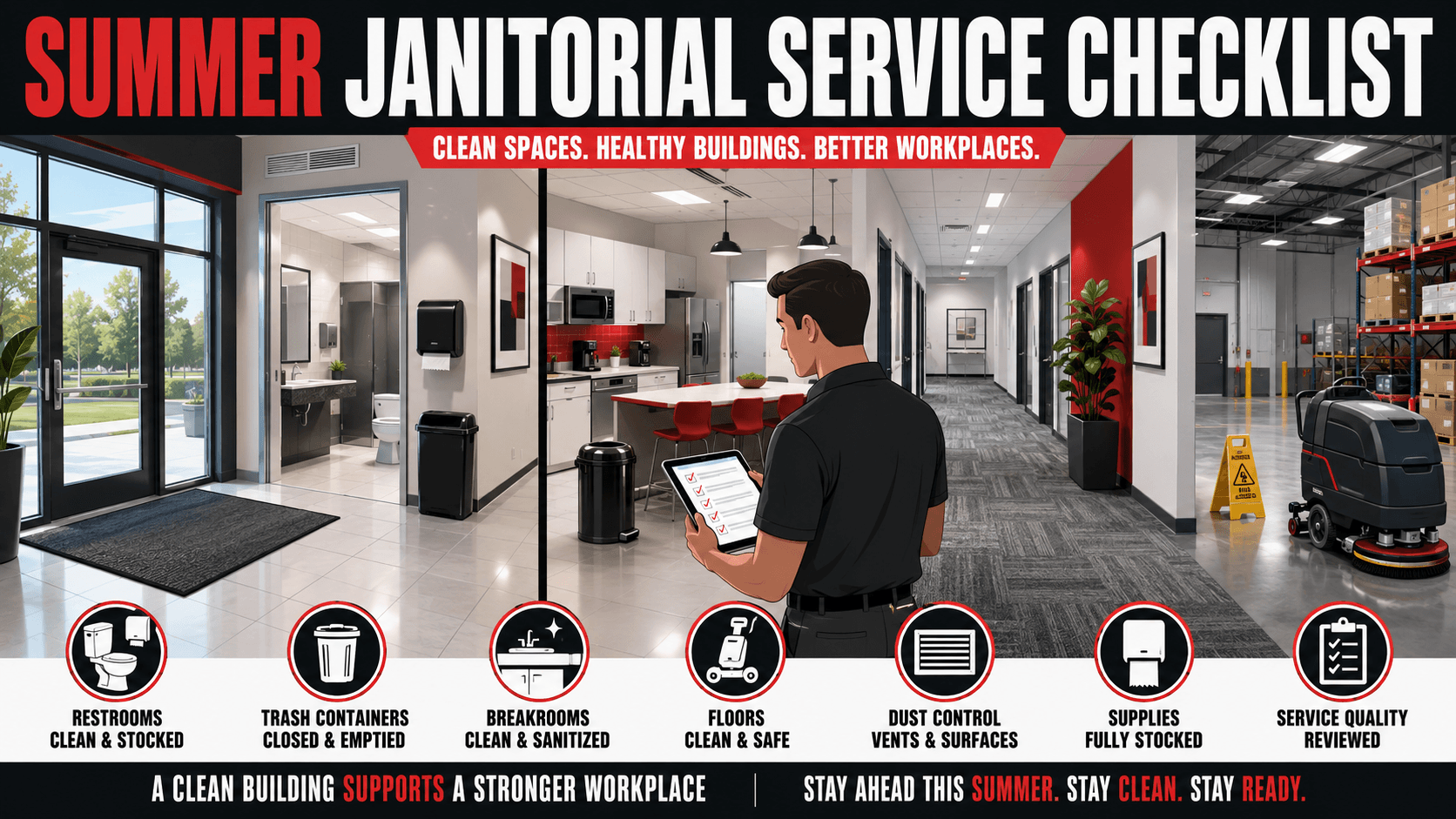
Keeping Commercial Buildings Clean in the Summer
During summer, commercial buildings often experience more foot traffic, more pollen, more dust, heavier restroom use, more breakroom activity, and higher demand for supplies. HVAC systems may run longer during the day, which can make dust near vents, corners, and air returns more visible. Trash areas can also become harder to manage when heat increases odor concerns.
A standard commercial cleaning checklist is useful year-round, but summer requires a sharper look at frequency, quality, and consistency. The goal is not just to make the building look clean. The goal is to help the workplace feel comfortable, cared for, and ready for daily use.
Whether the facility is an office, school, medical office, warehouse, or shared workspace, summer is a good time to review whether the current janitorial program is keeping pace with real building conditions.
Quick Answer
A summer janitorial service checklist should focus on restrooms, breakrooms, entryways, floors, carpets, dust near vents and corners, trash, odor control, high-touch surfaces, supply restocking, and routine service quality reviews. These areas tend to feel the most pressure during hot weather because of higher humidity, increased foot traffic, heavier shared-space use, and faster odor development.
What Is a Summer Janitorial Service Checklist?
A summer janitorial service checklist is a seasonal cleaning plan that helps commercial buildings stay ahead of warm-weather cleaning challenges.
It outlines the areas that need daily, weekly, and periodic attention during the summer months. It also helps facility managers, property managers, and business leaders evaluate whether their current service schedule is still a good fit.
A strong checklist does more than list tasks. It helps answer practical questions:
- Are restrooms staying clean throughout the day?
- Are supplies being restocked before they run out?
- Are breakrooms being maintained well enough for heavier summer use?
- Are entryways keeping dust, pollen, and debris from spreading indoors?
- Are floors and carpets receiving enough attention?
- Are odors being addressed at the source?
- Are inspections being documented?
- Are service issues being corrected quickly?
Summer is a useful time to review these questions because seasonal conditions often expose weak spots in a janitorial program.
How Summer Janitorial Service Works
A summer janitorial program works best when it adjusts cleaning frequency based on how the building is actually being used.
Some tasks remain daily priorities year-round, such as restroom cleaning, trash removal, floor care, and supply restocking. Other tasks may need more attention during summer because heat, humidity, dust, pollen, and building traffic can change the condition of the space.
A practical summer janitorial plan usually includes:
- Daily cleaning for restrooms, breakrooms, entryways, trash areas, and high-use floors
- Frequent checks for paper products, soap, liners, and other supplies
- More attention to odor sources in restrooms, breakrooms, and waste areas
- Routine dusting near vents, corners, baseboards, and air returns
- Spot cleaning for carpets, glass, counters, and shared surfaces
- Periodic deep cleaning for floors, carpets, and high-traffic zones
- Regular service inspections to catch missed tasks early
The checklist should be specific enough to guide work, but flexible enough to match the building type. A medical office, warehouse, school, and shared workspace do not have the same cleaning needs, even when they share many of the same basic task categories.
Summer Conditions That Affect Cleaning Needs
Heat
Heat can make odors more noticeable, especially in restrooms, trash areas, breakrooms, and shared food spaces. Waste that may not be noticeable in cooler weather can become a concern much faster during hot months.
Humidity
Humidity can make indoor spaces feel heavier and less comfortable. It can also make restrooms, floor drains, entryways, and some storage areas feel less fresh when cleaning schedules are not adjusted.
Dust
Summer dust can come from dry landscaping, nearby construction, open doors, loading docks, parking lots, and outdoor foot traffic. Once dust enters the building, it can collect around vents, corners, ledges, baseboards, floors, and carpets.
Pollen
Pollen can enter through doors, windows, clothing, shoes, entry mats, and HVAC-adjacent areas. In offices, schools, and shared workspaces, this can make surfaces look dirty faster and make entryways harder to maintain.
Foot Traffic
More people moving through a building means more soil, more fingerprints, more restroom use, more trash, and more wear on floors. Summer schedules can also change building patterns, especially in schools, warehouses, medical offices, and offices with seasonal projects.
HVAC Operation
When air conditioning systems run longer, dust buildup near vents and air returns may become more visible. Cleaning does not replace HVAC maintenance, but janitorial service can help reduce visible dust around accessible surfaces and improve the overall appearance of the building.
Why This Checklist Matters in the Workplace
People notice building conditions quickly.
They notice when restrooms smell bad. They notice when breakroom trash is full. They notice when entry glass is covered in fingerprints. They notice when carpets look worn, vents look dusty, or paper towels are missing.
These details may seem small, but they affect how people experience the workplace. A clean, well-maintained building can support comfort, trust, morale, and professionalism. A neglected building can create complaints, reduce confidence, and make employees or visitors feel like the space is not being managed carefully.
Summer makes those impressions stronger because heat and humidity can make issues harder to ignore. That is why a seasonal checklist is useful. It gives decision-makers a clear way to evaluate whether the janitorial program is keeping up.
Summer Janitorial Service Checklist
1. Restrooms
Restrooms are one of the clearest indicators of building cleanliness. When restrooms are not maintained well, people usually notice quickly.
Daily Restroom Checklist
- Clean toilets, urinals, sinks, counters, and partitions
- Wipe faucets, flush handles, stall latches, door handles, and push plates
- Clean mirrors and chrome fixtures
- Refill soap, paper towels, toilet tissue, and seat covers
- Empty trash before containers overflow
- Mop floors with attention to corners, edges, and grout lines
- Check floor drains where applicable
- Remove visible dust from vents, ledges, and partitions
- Address odor sources instead of relying only on fragrance products
Weekly or Periodic Restroom Checklist
- Detail-clean grout lines and floor edges
- Clean partition walls and doors more thoroughly
- Inspect dispensers for damage or poor function
- Check under sinks and around plumbing for moisture concerns
- Review supply usage patterns
- Look for recurring odor problems
- Confirm that cleaning logs or inspection notes are being completed
Summer Focus for Restrooms
Higher temperatures and humidity can make restroom odors more noticeable. Summer can also increase restroom use in busy buildings, especially when visitors, employees, vendors, and seasonal activity increase.
Restrooms should be checked often enough to prevent empty dispensers, full trash containers, wet floors, and recurring odor complaints.
2. Breakrooms
Breakrooms are high-use shared spaces where food, trash, appliances, tables, sinks, and foot traffic all come together.
During summer, breakrooms can become a major source of complaints if food waste, spills, and refrigerator issues are not managed consistently.
Daily Breakroom Checklist
- Clean counters, tables, and chair touchpoints
- Wipe sinks and faucets
- Clean coffee stations
- Wipe microwave handles and exteriors
- Check microwave interiors for spills
- Wipe refrigerator handles
- Empty trash and recycling containers
- Replace liners
- Sweep and mop floors
- Clean visible spills right away
- Check for food waste left on counters or tables
Weekly or Periodic Breakroom Checklist
- Clean appliance exteriors more thoroughly
- Review refrigerator condition
- Remove expired or abandoned food according to building policy
- Clean cabinet fronts and handles
- Detail mop floor edges and corners
- Clean baseboards and nearby walls
- Inspect trash containers for odor buildup
- Check under tables and around appliances
Summer Focus for Breakrooms
Heat can make food-related odors develop faster. Breakrooms may also see heavier use when employees stay indoors during hot afternoons.
Trash should be removed before it becomes a problem. Refrigerators should be checked regularly. Spills should not be allowed to sit. Tables, counters, and shared appliances need consistent attention because they shape how people feel about the shared workplace.
3. Entryways and Lobbies
Entryways are the first thing visitors see and the first line of defense against outdoor dust, dirt, pollen, and debris.
A neglected entryway can make the entire building feel poorly maintained, even when other areas are clean.
Daily Entryway Checklist
- Vacuum entrance mats
- Mop hard flooring
- Clean entrance glass
- Wipe door handles, push plates, and railings
- Remove visible pollen, dust, dirt, and debris
- Empty lobby trash containers
- Straighten lobby furniture
- Spot-clean walls, doors, and reception surfaces
- Check corners for soil buildup
Weekly or Periodic Entryway Checklist
- Deep clean entrance mats
- Clean baseboards and edges
- Detail lobby furniture
- Clean interior glass partitions
- Inspect mats for wear or poor placement
- Check for dust near vents and ledges
- Review floor finish condition in high-traffic paths
Summer Focus for Entryways
Dry weather, landscaping, construction, and parking lot dust can increase the amount of debris entering the building. Entry mats should be kept clean enough to keep soil from spreading into hallways, offices, classrooms, waiting rooms, and shared spaces.
4. Floors and Carpets
Floors carry the evidence of building use.
During summer, dust, pollen, sand, moisture, and increased traffic can make floors look worn faster. Carpeted areas can also hold debris that is not always visible at first glance.
Daily Floor Checklist
- Vacuum carpeted areas
- Sweep hard floors
- Mop hard floors as needed
- Spot-clean spills quickly
- Remove visible debris from corners and edges
- Check high-traffic paths
- Clean under tables and around seating areas
- Inspect entry mats
Weekly or Periodic Floor Checklist
- Detail vacuum carpet edges
- Spot-treat carpet stains
- Machine-clean high-traffic carpet areas as needed
- Burnish or maintain hard floors according to floor type
- Review floor finish wear patterns
- Schedule carpet extraction when needed
- Inspect for moisture concerns near entries, restrooms, and breakrooms
- Clean stairwells and elevator landings
Summer Focus for Floors and Carpets
Dust and pollen can become embedded in carpet fibers and entry mats. If these areas are not maintained, the debris can spread deeper into the building.
High-traffic flooring may also need more frequent care during summer because dry soil can act like sandpaper on floor finishes. A summer checklist should include both daily upkeep and periodic floor maintenance.
5. Dust Near Vents, Corners, and Edges
Dust buildup can make a building look neglected even when daily cleaning tasks are being completed.
Summer often makes this issue more visible because air conditioning systems run longer, doors open more often, and dry outdoor dust enters the building more easily.
Dust Control Checklist
- Dust supply vents and return air grilles where accessible
- Dust ceiling corners
- Remove cobwebs
- Dust window sills
- Clean baseboards
- Dust high ledges
- Wipe door frames
- Detail corners behind doors
- Clean around reception counters and waiting areas
- Check air returns for visible buildup
Weekly or Periodic Dust Control Checklist
- Schedule high dusting where appropriate
- Review HVAC-adjacent dust patterns
- Clean tops of cabinets and partitions
- Detail conference room corners
- Clean warehouse office edges and ledges
- Dust storage room shelving where appropriate
- Inspect light fixtures for visible buildup
Summer Focus for Dust
Dust near vents, corners, and edges can create the impression that the building is not being maintained carefully. It can also be a sign that the current cleaning scope or frequency needs to be reviewed.
Janitorial service does not replace HVAC service, filter changes, or mechanical maintenance. However, visible dust on accessible surfaces should be part of a summer building review.
6. Trash and Odor Control
Trash problems become more noticeable during summer.
Food waste, restroom waste, breakroom waste, and exterior trash areas can all create odor issues if removal schedules are not frequent enough.
Daily Trash Checklist
- Empty trash containers
- Replace liners
- Remove food waste promptly
- Empty restroom trash before overflow
- Empty breakroom trash daily
- Check recycling areas
- Clean spills around trash containers
- Inspect for odor sources
- Move collected trash to the proper disposal area
Weekly or Periodic Trash Checklist
- Clean trash receptacles
- Check lids and container condition
- Wash or wipe containers when needed
- Inspect floor areas under trash containers
- Review exterior trash area condition
- Check for recurring odor complaints
- Adjust removal frequency if needed
Summer Focus for Trash and Odors
Summer heat can turn a small trash issue into a building-wide complaint. Waste removal frequency should match actual building use, not just a fixed routine that worked in cooler months.
Odor control should focus on the source. That may include food waste, restroom waste, floor drains, trash containers, spills, or neglected breakroom appliances.
7. High-Touch Surfaces
Shared touchpoints should be cleaned consistently because they are used by many people throughout the day.
These surfaces also influence how people judge cleanliness. A smudged reception counter, sticky door handle, or dirty conference table can make the building feel poorly maintained.
High-Touch Surface Checklist
- Door handles
- Push plates
- Light switches
- Elevator buttons
- Handrails
- Reception counters
- Shared desks
- Conference tables
- Breakroom appliance handles
- Sink faucets
- Restroom stall latches
- Shared phones
- Copy machines
- Touchscreens
- Vending machines
Summer Focus for High-Touch Surfaces
Summer may bring more visitors, vendors, seasonal employees, students, patients, or shared-space users depending on the facility type. Cleaning frequency should match occupancy and use patterns.
High-touch surfaces should be part of the written checklist so they are not missed during busy service windows.
8. Supply Restocking
Supply problems create immediate frustration.
A restroom without paper towels, soap, or toilet tissue sends the wrong message. A breakroom without liners or stocked basics can also make the space feel neglected.
Supply Checklist
- Soap
- Paper towels
- Toilet tissue
- Seat covers where used
- Hand hygiene products where provided
- Trash liners
- Cleaning products
- Breakroom supplies
- Odor management products where used
- Floor care products
- Restroom fixture supplies
- Spare dispenser parts when applicable
Summer Focus for Supplies
Summer usage patterns may change. Some buildings experience more traffic. Others change schedules. Schools may shift into summer programs or project work. Warehouses may see more seasonal activity. Medical offices may experience steady traffic with higher comfort expectations.
Supply levels should be reviewed before shortages happen. A good janitorial program should include communication about supply trends, unusual usage, and recurring restocking issues.
9. Service Quality Review
A checklist only works when the work is checked.
Service quality reviews help identify missed tasks, recurring complaints, supply issues, frequency problems, and areas where the cleaning scope no longer matches the building’s needs.
Service Review Questions
- Are restroom complaints increasing?
- Are odors becoming more frequent?
- Are trash containers filling too quickly?
- Are supplies running out before restocking?
- Are high-touch surfaces being cleaned consistently?
- Are carpets showing more visible wear?
- Are entryways tracking in dust and debris?
- Is dust collecting near vents, corners, or ledges?
- Are breakrooms being maintained well enough for daily use?
- Are cleaning tasks documented?
- Are inspections performed regularly?
- Are issues corrected after they are reported?
- Does the current service schedule still match building use?
Summer Focus for Service Quality
Summer often reveals whether the current janitorial schedule is strong enough. If the building has persistent odors, dusty vents, overflowing trash, or inconsistent restroom conditions, the issue may not be one missed task. It may be a sign that the schedule, scope, inspection process, or communication routine needs to be reviewed.
Summer Cleaning Tips by Facility Type
Office Buildings
Office buildings depend heavily on shared spaces. Restrooms, breakrooms, conference rooms, reception areas, copy rooms, and entryways often shape the daily workplace experience.
Office Checklist Priorities
- Restrooms
- Breakrooms
- Conference rooms
- Reception counters
- Entry glass
- Door handles
- Shared desks
- Trash removal
- Carpet spot cleaning
- Dust near vents and ledges
Office Summer Focus
Breakrooms and restrooms should receive close attention. Employees are more likely to notice odors, empty supplies, sticky surfaces, and overflowing trash when they use the same shared spaces every day.
Schools
Summer can be a good time for deeper maintenance because some schools have lower occupancy or adjusted schedules. However, summer programs, administrative work, and facility projects can still create cleaning needs.
School Checklist Priorities
- Restrooms
- Classrooms in use
- Administrative offices
- Entryways
- Gym areas
- Cafeterias
- Staff lounges
- Floors and carpets
- High dusting
- Trash removal
School Summer Focus
Summer is a useful time to schedule floor work, carpet extraction, high dusting, and detailed restroom care. Lower occupancy can create an opportunity to handle tasks that are harder to complete during the school year.
Medical Offices
Medical offices require a higher level of consistency because patients, visitors, and employees pay close attention to cleanliness.
Medical Office Checklist Priorities
- Waiting rooms
- Reception counters
- Restrooms
- Exam room touchpoints
- Door handles
- Seating areas
- Floors
- Trash removal
- Supply restocking
- Entry glass
Medical Office Summer Focus
Waiting areas and restrooms should be reviewed frequently. Patients and visitors often form quick impressions based on visible surfaces, odors, floors, and restroom condition.
Medical offices may also have specific requirements based on the type of care provided, so the janitorial scope should match the facility’s procedures and expectations.
Warehouses
Warehouses face different summer challenges than traditional offices. Dust, loading dock activity, restrooms, break areas, and employee entrances often need more attention.
Warehouse Checklist Priorities
- Employee restrooms
- Breakrooms
- Locker areas
- Office areas
- Loading dock entrances
- Walkways
- Dust-prone surfaces
- Trash areas
- Entry mats
- Floors near high-traffic routes
Warehouse Summer Focus
Dust control is especially important in warehouses during dry months. Employee restrooms and breakrooms should also be reviewed closely because they often carry much of the daily comfort burden in industrial environments.
Shared Workspaces
Shared workspaces have frequent user turnover. Many people may use the same desks, conference rooms, kitchens, restrooms, and lounge areas throughout the day.
Shared Workspace Checklist Priorities
- Shared desks
- Meeting rooms
- Communal kitchens
- Restrooms
- Entryways
- Touchscreens
- Door handles
- Reception counters
- Trash removal
- Supply restocking
Shared Workspace Summer Focus
Because users rotate throughout the day, shared surfaces and communal areas need consistent attention. Restrooms, kitchens, and meeting rooms should be checked often enough to support a professional experience for each new user.
Daily Summer Janitorial Checklist
Use this section as a quick daily review.
- Clean and restock restrooms
- Empty trash and replace liners
- Clean breakroom counters, tables, sinks, and appliance handles
- Vacuum entry mats
- Mop hard floors as needed
- Clean entrance glass and door handles
- Wipe high-touch surfaces
- Spot-clean spills and stains
- Check supply levels
- Remove visible dust from common areas
- Address odor sources
- Document service issues
Weekly Summer Janitorial Checklist
Weekly tasks help keep daily cleaning from becoming reactive.
- Detail-clean restroom partitions, edges, and fixtures
- Review restroom odor concerns
- Clean breakroom appliance exteriors
- Check refrigerator condition according to building policy
- Detail vacuum carpet edges
- Spot-treat carpet stains
- Clean baseboards and corners
- Dust vents and ledges where accessible
- Clean trash containers as needed
- Inspect entry mats
- Review supply inventory
- Check service notes and complaints
Monthly or Periodic Summer Checklist
Monthly and periodic work helps protect the building from slow decline.
- Schedule carpet extraction where needed
- Review hard floor finish condition
- Perform high dusting where appropriate
- Detail entryways and lobby areas
- Review HVAC-adjacent dust patterns
- Inspect floor drains where applicable
- Review cleaning scope against building use
- Meet with the service provider or janitorial business owner to review issues
- Update the checklist based on seasonal conditions
- Confirm inspection routines are being followed
Signs Your Current Janitorial Program May Not Be Keeping Up
Summer can make service gaps easier to see.
Watch for these signs:
- Restroom odors return shortly after cleaning
- Paper towels, soap, or toilet tissue run out often
- Breakroom trash fills too quickly
- Refrigerator or food waste issues repeat
- Entry mats look dirty early in the day
- Carpets show more visible stains or traffic lanes
- Dust collects around vents, corners, and ledges
- Employees mention sticky surfaces or dirty tables
- Visitors notice restroom or lobby issues
- Trash areas smell worse during warm weather
- Cleaning tasks are not documented
- Service issues are reported but keep returning
These problems do not always mean the provider is failing. Sometimes the scope, frequency, or communication process simply needs to be adjusted for seasonal conditions.
How to Review Your Summer Janitorial Scope
A strong janitorial review should be practical. Walk the building and compare the written scope to the actual condition of the facility.
Ask these questions:
- Which areas receive the most complaints?
- Which areas look dirty fastest?
- Where do odors appear most often?
- Which supplies run out first?
- Which floors show the most wear?
- Where does dust collect?
- Are restrooms checked often enough?
- Are breakrooms cleaned often enough?
- Are entryways controlling outdoor debris?
- Are service expectations written clearly?
- Is there a regular inspection process?
- Is the provider communicating issues early?
A checklist should help create accountability, not just paperwork. If the same problems appear week after week, the checklist should be updated and the service plan should be reviewed.
People Also Ask
What should be included in a commercial cleaning checklist?
A commercial cleaning checklist should include restrooms, breakrooms, entryways, floors, carpets, trash removal, high-touch surfaces, dusting, supply restocking, and service inspections. It should also define task frequency so daily, weekly, and periodic work is clear.
How often should commercial restrooms be cleaned in summer?
Commercial restrooms should be cleaned daily at minimum, but busy buildings may need more frequent checks. Summer heat and humidity can make odors, supply shortages, and floor issues more noticeable.
Why do commercial buildings need a different cleaning checklist in summer?
Summer conditions can increase dust, pollen, odors, foot traffic, and restroom demand. A seasonal checklist helps adjust cleaning frequency before small problems become complaints.
What areas are most important in an office cleaning checklist?
The most important areas are restrooms, breakrooms, entryways, conference rooms, shared desks, reception areas, high-touch surfaces, floors, trash areas, and supply stations.
How can a building reduce summer odor complaints?
The best approach is to identify and remove odor sources. Common areas to review include restroom fixtures, trash containers, breakroom waste, refrigerator contents, floor drains, entry mats, and spills.
FAQ
What is the difference between a regular cleaning checklist and a summer janitorial checklist?
A regular checklist covers standard recurring tasks. A summer checklist adds seasonal focus to heat, humidity, dust, pollen, odor control, supplies, and increased shared-space use.
Should carpets be cleaned more often during summer?
High-traffic carpets may need more frequent vacuuming, spot cleaning, and periodic extraction during summer because dust, pollen, and outdoor debris can build up faster.
How often should breakroom trash be removed?
Breakroom trash should usually be removed daily. In busy buildings or food-heavy breakrooms, it may need to be removed more often to prevent odors.
Why is dust near vents more noticeable in summer?
Air conditioning systems often run longer in summer. This can make dust around vents, air returns, corners, and ledges easier to see.
What supplies should be checked most often?
Soap, paper towels, toilet tissue, trash liners, seat covers where used, and hand hygiene products should be checked often because shortages affect the building experience quickly.
Who should use a summer janitorial checklist?
A summer checklist is useful for offices, schools, medical offices, warehouses, shared workspaces, and other commercial facilities that need to maintain a clean, comfortable environment during warm weather.
Is Your Janitorial Program Keeping Up With Summer Building Conditions?
Summer often exposes weaknesses in commercial cleaning programs. Persistent odors, dusty vents, overflowing trash, worn entryways, inconsistent restroom cleanliness, and recurring supply shortages may indicate that the current service schedule is no longer meeting the building’s seasonal needs.
A proactive janitorial program should adapt to building conditions, support regular inspections, document recurring issues, and address seasonal challenges before they become complaints.
If your facility is experiencing recurring restroom concerns, breakroom odors, dusty surfaces, inconsistent supply restocking, or declining service quality during warmer months, it may be time to review whether your janitorial program is keeping up with summer building demands.
Vanguard Cleaning Systems of the Southern Valley can help businesses review commercial janitorial needs and connect with independently owned and operated Vanguard Cleaning Systems janitorial franchise businesses that provide commercial cleaning services.
Each Vanguard Cleaning Systems® business is independently owned and operated.
References
Buildingstars. (2025). 2025 commercial cleaning checklist: An easy-to-follow guide. https://buildingstars.com/2025-commercial-cleaning-checklist/
Centers for Disease Control and Prevention, National Institute for Occupational Safety and Health. (2024). Ventilation and respiratory viruses. https://www.cdc.gov/niosh/ventilation/about/index.html
Environmental Protection Agency. (2025). Building air quality guide: A guide for building owners and facility managers. https://www.epa.gov/indoor-air-quality-iaq/building-air-quality-guide-guide-building-owners-and-facility-managers
Environmental Protection Agency. (2026). Mold in schools and commercial buildings. https://www.epa.gov/mold/mold-schools-and-commercial-buildings
Jobber. (2026). Commercial cleaning checklist: 15 lists + free template. https://www.getjobber.com/academy/cleaning/commercial-cleaning-checklist/
Nilfisk. (2025). Commercial cleaning quality inspection checklist. https://www.nilfisk.com/en-us/professional/news-and-articles/commercial-cleaning-quality-inspection-checklist/
Occupational Safety and Health Administration. (n.d.). Indoor air quality. https://www.osha.gov/indoor-air-quality
Occupational Safety and Health Administration. (2003). Indoor air quality in commercial and institutional buildings. https://www.osha.gov/sites/default/files/publications/3430INDOOR-AIR-QUALITY-SM.pdf
Vanguard Cleaning Systems. (2026). The workplace wellness cleaning checklist for summer. https://www.vanguardsv.com/2026/06/the-workplace-wellness-cleaning-checklist-for-summer/
