

Summer building conditions can shape how employees feel about comfort, cleanliness, trust, and the quality of the workplace.
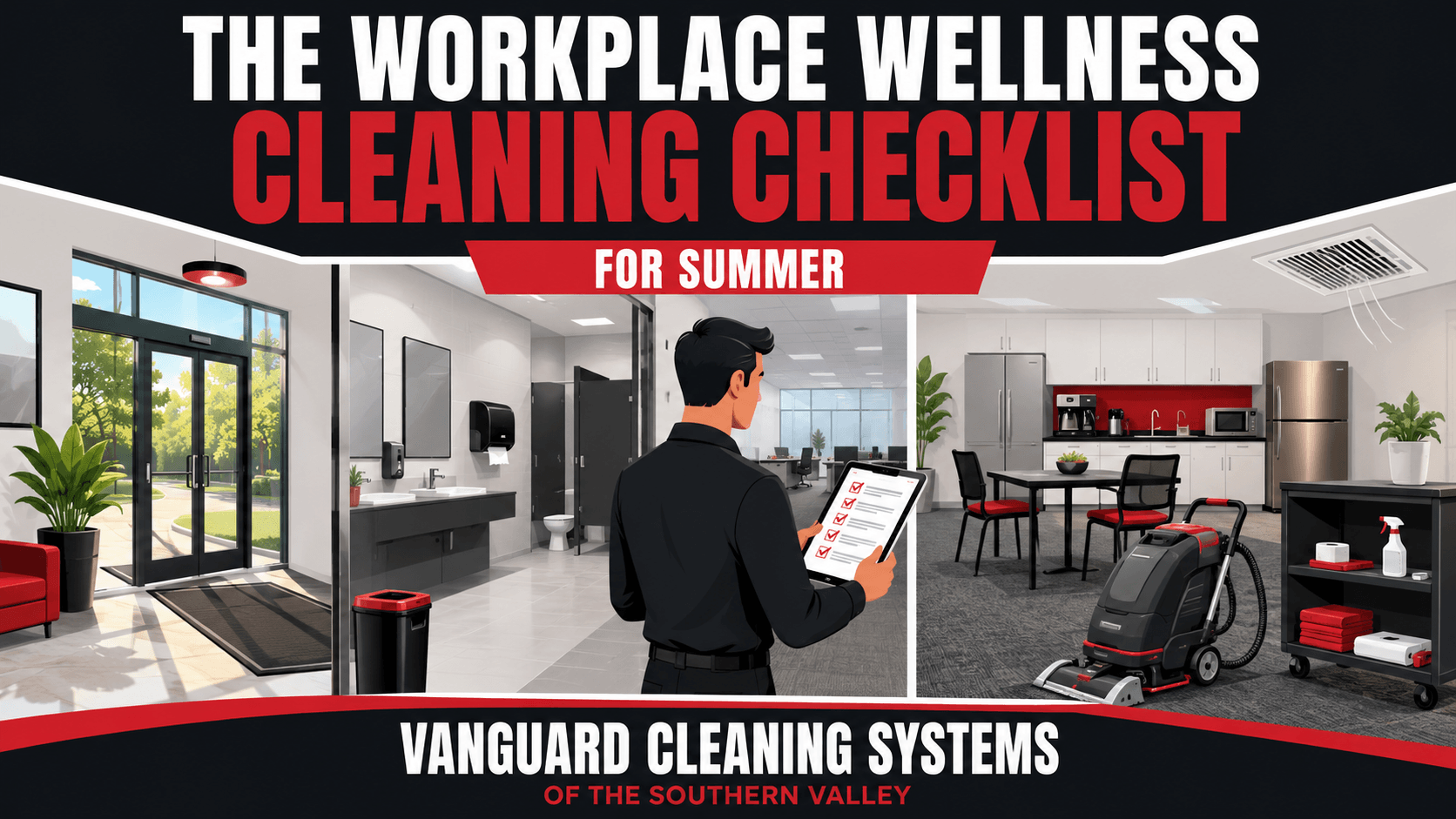
Summer Facility Conditions Affect More Than Appearance
When summer arrives, employees notice more than the temperature. Warmer weather can increase odors, dust, pollen, tracked-in debris, restroom complaints, breakroom messes, and indoor comfort issues. These conditions can make shared spaces feel less welcoming, especially when cleaning routines are not adjusted for seasonal use.
A proactive summer cleaning checklist helps businesses identify the areas that most directly affect employee comfort and workplace perception. Restrooms, breakrooms, entryways, HVAC-adjacent dust, carpets, high-touch surfaces, trash, and odor control all play a role in how people experience the building each day. Cleanliness does not solve every comfort issue, but it can reduce avoidable complaints and show that the workplace is being maintained with care.
For businesses comparing janitorial service quality, summer is a useful time to assess consistency. Heat, humidity, dust, and heavier building use can reveal whether a cleaning program is keeping up with real conditions or simply completing the same basic tasks every day.
Quick Answer
A summer workplace wellness cleaning checklist should focus on restrooms, breakrooms, entryways, HVAC-adjacent dust, carpets and floors, high-touch surfaces, trash management, and odor control. These areas affect employee comfort, trust, morale, and the number of facility-related complaints that reach managers. A strong janitorial program should adjust cleaning routines for warmer weather, heavier foot traffic, and seasonal indoor air quality concerns.
What Is a Workplace Wellness Cleaning Checklist?
A workplace wellness cleaning checklist is a practical tool used to identify cleaning tasks that support employee comfort, hygiene, and confidence in shared spaces.
It goes beyond appearance. A lobby may look tidy while restroom supplies are running low, breakroom appliances are sticky, entry mats are overloaded with dust, or trash receptacles are causing odors. A wellness-focused checklist looks at the building through the employee experience.
It asks direct questions:
- Are restrooms clean, stocked, and odor-controlled?
- Are breakrooms safe and comfortable for shared use?
- Are entryways keeping outdoor debris from spreading?
- Are vents, returns, and high ledges collecting dust?
- Are carpets holding pollen, dirt, and residues?
- Are touchpoints being cleaned often enough?
- Is trash being removed before it affects comfort?
- Are odors being addressed at the source?
The goal is not to make every facility look perfect all day. The goal is to create a consistent standard that supports comfort, reduces avoidable complaints, and helps people feel better about the environment where they work.
How It Works
A summer workplace wellness checklist works by connecting cleaning tasks to the building conditions most likely to affect people during warm weather.
Summer often changes how a workplace feels. Employees may bring in more dust and pollen from parking lots, sidewalks, landscaping, and outdoor work areas. Higher temperatures can make trash, food waste, drains, restrooms, and carpet spills more noticeable. HVAC systems may run longer, which can draw attention to dust near vents and returns. Shared spaces may also see more use as employees seek cooler indoor areas during breaks.
A checklist helps facility managers and service providers make cleaning more consistent by defining:
- What areas need attention
- How often tasks should be completed
- Which conditions should trigger follow-up
- Where complaints are most likely to occur
- What should be inspected after cleaning
- When seasonal adjustments are needed
This gives decision-makers a clearer way to evaluate cleaning quality. Instead of relying only on whether a space “looks fine,” the checklist creates a practical standard for comfort, appearance, and accountability.
Your Summer Workplace Wellness Cleaning Checklist
Use the sections below to evaluate the areas that most often affect workplace comfort during summer.
Restrooms: The First Indicator of Cleaning Quality
Employees often judge the cleanliness of an entire workplace by the condition of the restrooms. A restroom that smells unpleasant, lacks supplies, or shows visible buildup can quickly damage trust in the rest of the building.
Summer can make restroom issues more noticeable. Heat and humidity may intensify odors. Higher building use can increase supply demand. Moisture around sinks, floors, and fixtures can make the space feel neglected if cleaning frequency is too low.
Restroom Checklist
- Clean toilets, urinals, sinks, counters, mirrors, partitions, and stall hardware daily
- Refill soap, paper towels, toilet paper, and seat covers before supplies run low
- Clean high-touch fixtures, including faucets, flush handles, switches, latches, and door hardware
- Remove water spots, soap residue, fingerprints, and visible buildup
- Address odors at the source instead of covering them with heavy fragrances
- Mop floors thoroughly and inspect corners, grout lines, and floor drains
- Check trash receptacles before they overflow
- Inspect restroom entrances and door pulls for fingerprints and smudges
- Document recurring complaints so cleaning frequency can be adjusted
Wellness Benefit
Clean, stocked restrooms improve employee confidence and reduce one of the most common sources of workplace complaints. When restrooms are maintained consistently, people are more likely to view the entire facility as cared for and professionally managed.
Breakrooms: Protect Shared Food Spaces
Breakrooms combine food, shared appliances, tables, seating, sinks, trash, and frequent hand contact. They are also emotional spaces. Employees use them to pause, eat, talk, recharge, and step away from work.
When breakrooms are neglected, people notice quickly. Sticky counters, lingering food odors, full trash cans, splattered microwaves, and messy refrigerators can make a workplace feel less respectful. During summer, these problems can become more noticeable because food waste and spills create odors faster.
Breakroom Checklist
- Clean tables, counters, chairs, and shared surfaces throughout the week
- Wipe microwave handles, control panels, interiors, and surrounding counters
- Clean refrigerator handles, exterior surfaces, and visible spills
- Wipe coffee stations, water dispensers, vending machines, and cabinet handles
- Empty food waste daily
- Replace liners before leakage occurs
- Clean sink fixtures, splash zones, and drain areas
- Remove sticky residues before they attract pests
- Check floors under tables, around appliances, and near trash containers
- Encourage a clear refrigerator cleanout schedule
Wellness Benefit
A cleaner breakroom gives employees a more comfortable space to take restorative breaks. It also supports morale because shared food areas often reflect how much care is given to everyday employee comfort.
Entryways: Stop Dirt Before It Travels
Entryways are the first defense against outdoor debris. During summer, dust, pollen, landscaping debris, dry soil, leaves, and moisture from irrigation can travel indoors on shoes, carts, wheels, and deliveries.
If entryways are not maintained, the rest of the building becomes harder to keep clean. Dust can move from mats to carpets, hallways, reception areas, and workstations. Glass doors and entry handles also create an immediate impression for employees, visitors, vendors, and customers.
Entryway Checklist
- Vacuum or clean entrance mats daily
- Replace worn mats that no longer capture dirt
- Sweep or clean exterior walkways near building entrances
- Remove leaves, soil, dust, cobwebs, and debris near doors
- Clean glass doors, frames, handles, push plates, and touchpoints
- Inspect weather stripping for dust infiltration
- Watch for moisture near entrances from irrigation, sprinklers, or tracked-in water
- Increase mat service during windy, dusty, or high-traffic periods
- Keep reception floors clean and free of visible debris
Wellness Benefit
Cleaner entryways improve first impressions and help reduce dust, pollen, and debris throughout the building. They also help protect carpets and floors from avoidable wear.
HVAC-Adjacent Dust: Improve Indoor Comfort
Cleaning does not replace HVAC maintenance, but cleaning near vents, returns, diffusers, and surrounding surfaces can support a more comfortable indoor environment. Dust near air movement areas is highly visible and can make employees question indoor air quality.
Summer can increase attention on airflow because HVAC systems often run longer. Dust on vents, ceiling diffusers, high ledges, and return grilles can make a workplace feel stale or poorly maintained.
HVAC-Adjacent Dust Checklist
- Dust supply vents, return grilles, and ceiling diffusers
- Vacuum around air returns and nearby floor areas
- Remove cobwebs from ceiling corners, walls, and high ledges
- Dust light fixtures, ledges, cabinet tops, and other elevated surfaces
- Coordinate filter replacement with facility maintenance
- Watch for areas where dust returns quickly
- Check storage rooms, copy rooms, and utility areas for dust buildup
- Avoid blocking vents with boxes, furniture, or stored supplies
- Report unusual odors, visible mold-like growth, or moisture near HVAC areas to facility management
Wellness Benefit
Reducing visible dust near air movement areas can improve comfort and employee confidence. It also supports a cleaner overall workplace appearance, especially in offices where occupants are sensitive to dust, odors, or stale air.
Carpets and Floors: Control Dust, Pollen, and Appearance
Floors carry the story of how a building is used. Summer foot traffic can bring in soil, pollen, dust, moisture, and outdoor debris. Over time, carpets can hold particles and residues that routine surface cleaning may not fully remove.
Hard floors also need seasonal attention. Dust can collect in corners, under furniture, near baseboards, and along entry paths. Spills and sticky residues can become more noticeable in breakrooms, hallways, and shared spaces.
Carpet and Floor Checklist
- Vacuum high-traffic carpet daily
- Use detail vacuuming along edges, corners, and under furniture
- Spot clean spills quickly
- Schedule periodic carpet extraction based on traffic and soil levels
- Damp mop hard floors with appropriate products
- Clean around baseboards, thresholds, and transition areas
- Inspect for stains before they become permanent
- Clean under tables, desks, and shared seating areas
- Increase floor care near entryways, breakrooms, and restrooms
- Monitor slip concerns caused by tracked-in moisture or spills
Wellness Benefit
Cleaner flooring helps reduce dust reservoirs and improves the overall feel of the workplace. It also protects the facility’s appearance, which can affect employee pride, visitor perception, and confidence in the cleaning program.
High-Touch Surfaces: Reduce Shared Contact Risks
High-touch surfaces are the places many people use throughout the day. These areas may look clean even when they need more attention.
In busy offices, shared contact points can include doors, switches, buttons, handrails, counters, printers, conference tables, and shared equipment. A good summer checklist keeps these areas visible in the cleaning plan instead of leaving them to occasional attention.
High-Touch Surface Checklist
- Door handles and push plates
- Light switches
- Elevator buttons
- Stair rails and handrails
- Reception counters
- Conference room tables
- Breakroom tables and counters
- Appliance handles
- Shared printers and copiers
- Vending machine buttons
- Shared touchscreens
- Cabinet pulls
- Faucet handles
- Restroom stall latches
- Shared keyboards and mice where appropriate
Wellness Benefit
Routine high-touch surface care supports healthier shared spaces and reinforces employee confidence. It also shows that the cleaning program is focused on real use patterns, not only visible dirt.
Trash Management: Prevent Odors Before They Start
Trash management becomes more important during summer because heat can make odors develop faster. Food waste, drink containers, used paper products, restroom waste, and breakroom trash can quickly affect comfort if removal is inconsistent.
Overflowing trash also sends a strong visual message. Even when the rest of a space is clean, full containers can make the building feel neglected.
Trash Management Checklist
- Empty interior trash daily
- Remove food waste promptly
- Replace liners before leaks occur
- Clean the inside and outside of waste receptacles regularly
- Check breakroom trash more often during high-use periods
- Inspect restroom trash before it overflows
- Clean recycling stations and remove sticky residues
- Monitor outdoor bins for overflow, odors, and debris
- Keep trash areas clear of loose waste
- Report pest activity or recurring odor issues quickly
Wellness Benefit
Consistent trash management minimizes odors, discourages pests, and keeps shared spaces more inviting. It also reduces one of the most preventable causes of workplace complaints.
Odor Control: Find the Source
Persistent odors usually point to an underlying issue. Air fresheners may change the smell temporarily, but they do not correct the source. In some workplaces, strong fragrances can create additional comfort complaints.
A practical odor control plan starts with inspection. Common sources include drains, trash containers, food waste, carpet spills, moisture, restroom fixtures, floor sinks, and poorly ventilated spaces.
Odor Control Checklist
- Inspect restroom drains and floor sinks
- Clean around trash receptacles and liners
- Remove food waste daily
- Address carpet spills quickly
- Check breakroom appliances for old food or residue
- Watch for moisture buildup near sinks, floors, and entryways
- Improve ventilation where needed
- Clean recycling areas that collect cans, bottles, or food containers
- Avoid relying on heavy fragrances to cover recurring issues
- Track odor complaints by location and time of day
Wellness Benefit
Fresh-smelling workplaces create a more comfortable environment. Employees and visitors often associate odor control with professionalism, care, and overall cleaning quality.
Environmental Factors That Affect Summer Cleaning Results
Summer cleaning needs can change based on building use, local weather, occupancy, and facility layout. A checklist works best when it reflects actual conditions instead of relying on a fixed routine all year.
Heat
Heat can intensify odors from trash, drains, food waste, restrooms, and spills. It can also make employees more sensitive to stale air, moisture, and general discomfort.
Cleaning plans should account for odor-prone areas during warm weather. Breakrooms, restrooms, trash areas, entryways, and carpeted spaces may need closer inspection.
Humidity
Humidity can make restrooms, breakrooms, and entryways feel less comfortable. It can also slow drying times after floor care and increase the need to monitor moisture near sinks, drains, and entrances.
Moisture issues should be addressed quickly because damp areas can affect comfort, odors, and floor safety.
Dust and Pollen
Summer dust and pollen can enter through doors, windows, HVAC-related pathways, deliveries, landscaping activity, and employee foot traffic. Once inside, particles may collect in carpets, mats, vents, ledges, and corners.
Entryway maintenance, mat care, detail vacuuming, and high-dust cleaning all become more important during this season.
Foot Traffic
More movement through the building means more soil, more touchpoint use, more restroom demand, and more trash. High-traffic areas may need adjusted cleaning frequency rather than the same routine used during slower periods.
A strong cleaning plan should identify traffic patterns and adjust accordingly.
Food and Beverage Use
Warm weather can increase breakroom use, cold drink containers, food deliveries, and snack waste. These conditions can create more spills, sticky residues, trash volume, and odors.
Breakroom cleaning should be evaluated as part of employee wellness, not just basic tidiness.
Building Age and Layout
Older buildings, complex floor plans, poor storage practices, limited ventilation, and hard-to-reach areas can all affect cleaning outcomes. Dust and odors often collect in overlooked spaces.
A good checklist should include visible spaces and behind-the-scenes areas that affect the employee experience.
Workplace Relevance
Workplace cleanliness affects how people feel about the building. Employees may not know every detail of a cleaning scope, but they notice patterns. They notice whether the restroom is stocked. They notice if the breakroom smells stale. They notice dust near vents, sticky counters, full trash cans, and carpet stains that stay too long.
These details shape trust.
A workplace that feels clean and cared for can support morale by showing that daily employee comfort matters. A workplace with recurring cleaning issues can create frustration because small problems repeat. Over time, these repeated issues can become a management distraction.
A summer checklist is especially useful because seasonal conditions make gaps easier to spot. If a janitorial program is inconsistent, summer often reveals it through odors, dust, restroom complaints, and breakroom conditions.
For businesses comparing janitorial service quality, the checklist can help guide practical questions:
- Are cleaning tasks matched to actual building use?
- Are restrooms checked often enough?
- Are odors being corrected at the source?
- Are touchpoints part of the routine scope?
- Are carpets and entry mats controlling summer dust?
- Are trash areas managed before complaints occur?
- Are issues documented and communicated clearly?
The right provider should offer more than basic task completion. The goal should be consistency, accountability, and a cleaning plan that reflects how the facility is actually used.
How to Use This Checklist to Review Janitorial Service Quality
A checklist becomes more valuable when it is used consistently. Walk the building during normal operating hours, not only after cleaning is complete. Pay attention to what employees actually experience throughout the day.
Step 1: Review the Most Complained-About Areas
Start with the spaces that generate the most feedback. Restrooms, breakrooms, trash areas, carpets, and entryways are common sources of concern.
Look for patterns:
- Supplies run low before the end of the day
- Odors return after cleaning
- Trash fills too quickly
- Floors look clean in the morning but decline by midday
- Dust collects near vents or ledges
- Breakroom appliances are missed
- High-touch surfaces are not part of the visible routine
These patterns can show where the cleaning scope needs adjustment.
Step 2: Separate Appearance From Comfort
A space can look clean but still feel uncomfortable. Odors, sticky residues, low supplies, dust, and poor trash management affect how people experience the workplace.
Ask whether the cleaning program supports comfort, not just appearance.
Step 3: Compare Scope to Real Use
A cleaning scope should reflect actual traffic, occupancy, and building activity. A busy office may need more restroom checks. A facility with frequent food waste may need more breakroom attention. A building near dust, landscaping, agriculture, construction, or high wind may need stronger entryway and floor care.
Summer cleaning should not be treated as a copy of winter cleaning.
Step 4: Track Recurring Issues
Recurring issues are rarely random. They often show a mismatch between the cleaning plan and building conditions.
Track:
- Complaint location
- Time of day
- Type of issue
- Frequency
- Whether the issue returns after cleaning
- Whether supplies, equipment, or access are part of the problem
This makes conversations with cleaning providers more productive.
Step 5: Ask for Proactive Communication
A reliable janitorial program should include communication. Cleaning providers should be able to report supply issues, odor sources, floor concerns, damage, leaks, overflowing bins, or recurring problem areas.
Good communication helps facility managers respond before small issues become larger complaints.
People Also Ask
What should be included in a summer office cleaning checklist?
A summer office cleaning checklist should include restrooms, breakrooms, entryways, HVAC-adjacent dust, carpets, hard floors, high-touch surfaces, trash management, and odor control. These areas are most likely to affect comfort, hygiene perception, indoor freshness, and employee complaints during warmer months.
Why do workplace odors get worse in summer?
Workplace odors often become more noticeable in summer because heat can intensify smells from trash, food waste, drains, restrooms, spills, and moisture. Warmer conditions can make small cleaning issues feel much larger if they are not corrected quickly.
How often should office restrooms be cleaned in summer?
Office restrooms should be cleaned daily at minimum, but high-traffic buildings may need more frequent checks. Supplies, trash, odors, touchpoints, sinks, floors, and fixtures should be monitored based on real use rather than a fixed assumption.
Why are entry mats important for workplace wellness?
Entry mats help capture dust, pollen, soil, and debris before they spread through the building. When mats are cleaned and replaced as needed, they help protect floors, reduce tracked-in particles, and improve first impressions.
How does cleaning affect employee morale?
Cleaning affects employee morale by shaping how comfortable and respected people feel in shared spaces. Consistently maintained restrooms, breakrooms, floors, and common areas show care for the work environment and can reduce frustration caused by recurring facility issues.
What are signs that a janitorial service is missing important tasks?
Signs include recurring restroom complaints, lingering odors, dusty vents, full trash containers, sticky breakroom surfaces, dirty entry glass, stained carpets, and high-touch areas that appear neglected. Repeated issues often mean the cleaning scope, frequency, or quality checks need review.
Why is touchpoint cleaning important in offices?
Touchpoint cleaning matters because many people use the same handles, switches, buttons, counters, tables, and shared equipment throughout the day. Routine attention to these areas supports cleaner shared spaces and helps employees feel more confident about workplace hygiene.
FAQ
What is the most important summer cleaning task for offices?
Restroom maintenance is often the most important because employees notice restroom conditions quickly. Clean, stocked, odor-controlled restrooms strongly influence how people judge the rest of the workplace.
Should carpets be cleaned more often in summer?
Carpets may need more attention in summer when dust, pollen, and outdoor soil increase. High-traffic areas should be vacuumed frequently, and deeper carpet care should be scheduled based on use and visible soil.
Are air fresheners enough for workplace odor control?
Air fresheners are not enough when odors come from trash, drains, spills, food waste, or moisture. Odor control should start by finding and correcting the source.
How can businesses reduce summer restroom complaints?
Businesses can reduce restroom complaints by increasing supply checks, cleaning fixtures and floors consistently, removing trash before overflow, addressing odors at the source, and documenting recurring issues.
What areas are most often missed during office cleaning?
Commonly missed areas include appliance handles, cabinet pulls, light switches, door hardware, high ledges, air returns, floor edges, trash receptacle interiors, and spaces under furniture.
How does a cleaning checklist help compare janitorial providers?
A checklist gives businesses a practical way to compare service consistency. It helps identify whether a provider is covering high-impact areas or only completing basic tasks.
Is summer cleaning only about appearance?
No. Summer cleaning affects comfort, odor control, employee trust, workplace perception, and complaint reduction. Appearance matters, but the larger goal is a healthier and more comfortable workplace experience.
Is Your Janitorial Service Covering the Essentials?
Not all commercial cleaning providers deliver the same level of consistency. Summer can make service gaps easier to see because odors, dust, restroom issues, breakroom conditions, and trash concerns tend to become more noticeable.
If restrooms receive complaints, dust accumulates around vents, odors linger, or high-touch surfaces are overlooked, it may be time to evaluate whether the current cleaning program is meeting workplace wellness goals.
A reliable janitorial partner should provide clear standards, consistent follow-through, and proactive communication. Businesses benefit from a plan that reflects how the building is used, where complaints happen, and which seasonal conditions affect comfort.
Vanguard Cleaning Systems of the Southern Valley connects businesses with independently owned and operated janitorial franchise businesses that provide commercial cleaning services. For organizations reviewing summer cleaning needs, a checklist-based conversation can help identify whether the current scope supports comfort, cleanliness, and confidence throughout the workplace.
References
Al Horr, Y., Arif, M., Katafygiotou, M., Mazroei, A., Kaushik, A., & Elsarrag, E. (2016). Impact of indoor environmental quality on occupant well-being and comfort: A review of the literature. International Journal of Sustainable Built Environment, 5(1), 1–11. https://doi.org/10.1016/j.ijsbe.2016.03.006
Fissore, V. I., Fasano, S., Puglisi, G. E., Shtrepi, L., & Astolfi, A. (2023). Indoor environmental quality and comfort in offices: A review. Buildings, 13(10), 2490. https://doi.org/10.3390/buildings13102490
Kelly, F. J., & Fussell, J. C. (2019). Improving indoor air quality, health and performance within environments where people live, travel, learn and work. Atmospheric Environment, 200, 90–109. https://doi.org/10.1016/j.atmosenv.2018.11.058
Van der Voordt, T., & Jensen, P. A. (2023). The impact of healthy workplaces on employee satisfaction, productivity and costs. Journal of Corporate Real Estate, 25(1), 29–49. https://doi.org/10.1108/JCRE-03-2021-0012
Zhang, F., Liu, S., Hu, W., & Yadav, M. (2022). Editorial: Effects of indoor environmental quality on human performance and productivity. Frontiers in Built Environment, 8, Article 1095443. https://doi.org/10.3389/fbuil.2022.1095443
