
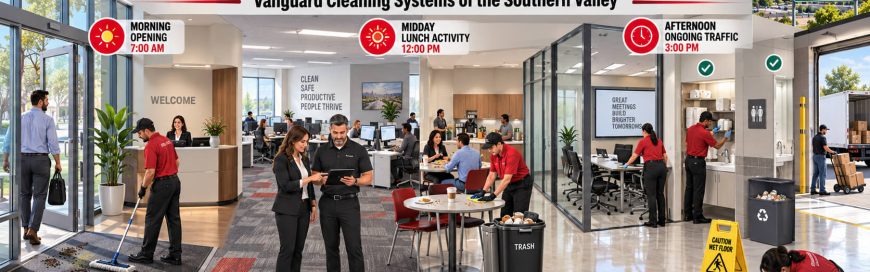
A facility may need daytime support when the conditions employees and visitors experience at noon look very different from the conditions at opening.
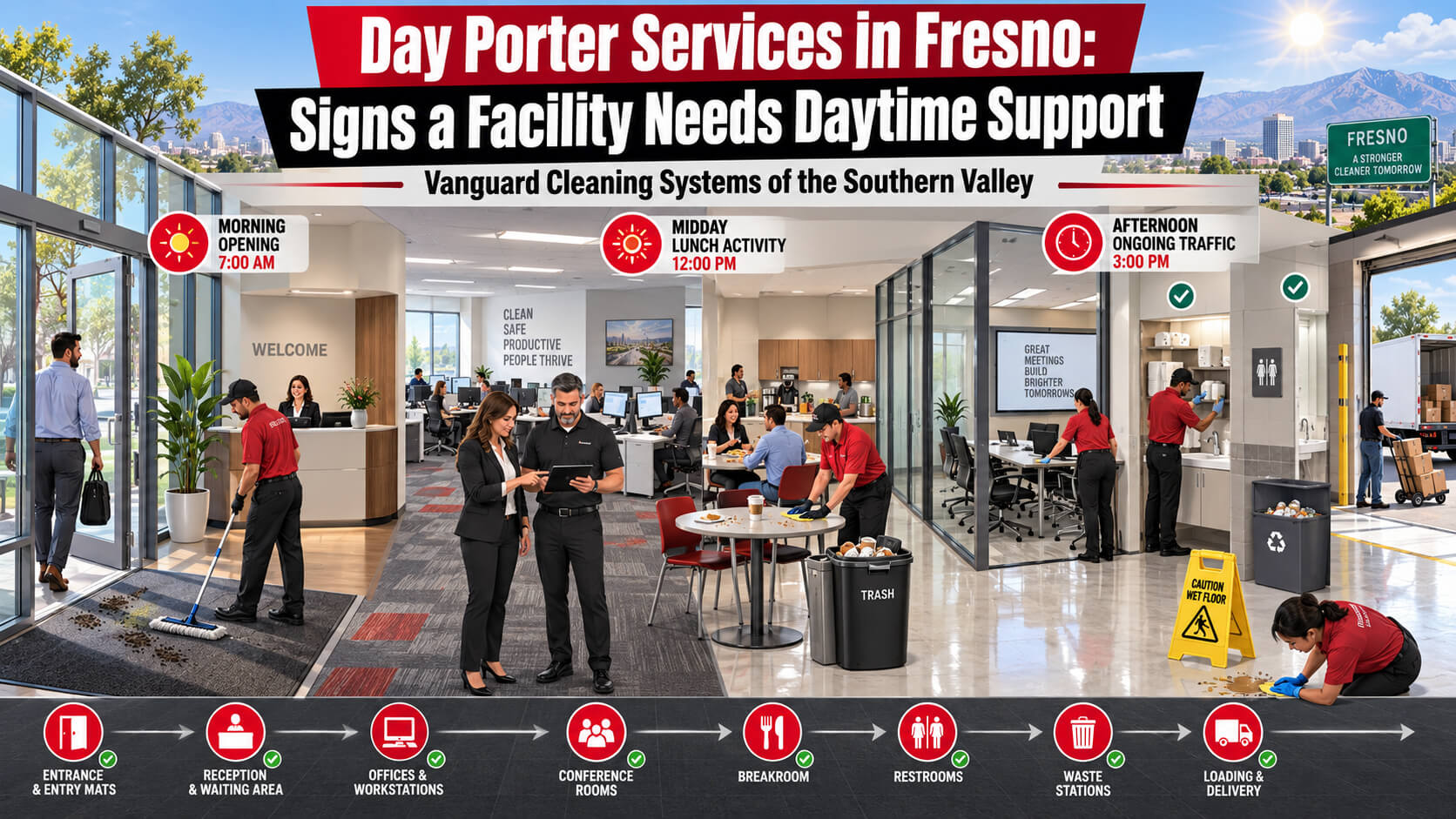
When the Building Changes Faster Than the Service Schedule
A commercial facility can open with clean entrances, stocked restrooms, empty waste containers, and ready-to-use shared spaces. Then the workday begins. Employees arrive, visitors move through the lobby, lunch adds food activity, and restrooms see repeated use. By midafternoon, a building with solid evening janitorial service may still have several areas that need attention.
Day porter service covers selected cleaning and light facility-support needs while the property is occupied. The work can be scheduled around peak periods, assigned for part of the day, or provided across operating hours. The right arrangement follows the building’s actual patterns.
Businesses reviewing janitorial services in Fresno can begin by walking the facility several times during a normal day. The rooms that change first provide useful evidence about where daytime coverage may help.
Quick Answer
A Fresno facility may need day porter service when entrances, restrooms, breakrooms, waste areas, or shared spaces regularly decline before evening service begins. Frequent spills, steady visitor traffic, lunch-period activity, low restroom supplies, and full waste containers are common signs.
Look for repeated conditions:
- Entry mats and floors collect visible soil after the morning rush.
- Restroom supplies run low before closing.
- Breakroom counters, tables, sinks, or floors need attention after lunch.
- Food-area or restroom waste reaches capacity during business hours.
- Spills remain until an employee steps away from regular work to handle them.
- Lobbies, conference rooms, waiting areas, or other shared spaces lose their ready appearance.
- Complaints appear at predictable times even though scheduled evening work is completed.
Record where each condition occurs, when it appears, how often it returns, and who handles it now. That information helps determine whether the facility needs a short peak-time visit, partial-day service, or broader daytime coverage.
What Is Day Porter Service?
Day porter service is scheduled cleaning and light facility support performed while a commercial building is active. The scope focuses on conditions that develop between the main recurring janitorial visits.
Common duties may include:
- Checking assigned restrooms
- Replenishing approved paper and soap supplies
- Removing waste from high-use areas
- Responding to reported spills
- Spot-cleaning entrance floors
- Removing visible marks from entry glass
- Refreshing breakrooms after busy periods
- Resetting assigned shared spaces
- Reporting leaks, damaged fixtures, or other maintenance concerns
- Answering service requests through an agreed communication process
The duties depend on the site. A short lunch-period assignment may fit one property. Another building may need repeated rounds because visitors, tenants, deliveries, and employees keep common areas active throughout the day.
The Bakersfield guide to what a commercial day porter does provides a broader overview of porter duties and schedule options. A Fresno scope should still be built from the rooms, traffic, operating hours, and conditions at the local property.
How Day Porter Service Works
A day porter follows a defined route, checklist, or set of service rounds during occupied hours. The route can change as the building moves through morning arrival, lunch, afternoon meetings, delivery periods, and closing activity.
A morning round may focus on entrances after employees arrive. Midday work may shift toward restrooms, breakrooms, and food-area waste. Afternoon attention may return to lobbies, conference rooms, supplies, and shared spaces.
The scope should state:
- Which areas are included
- Which tasks belong in each area
- How often rounds occur
- Which times receive priority
- How spills or service requests are reported
- Which supplies the porter may replenish
- How completed work and maintenance concerns are documented
- What happens when a room is occupied or access is restricted
Clear task ownership matters in an active building. The porter needs a safe way to work around employees and visitors, a process for placing warning signs, and a direct contact when a plumbing issue, damaged dispenser, or building repair falls outside the janitorial scope.
Daytime Support and Evening Janitorial Work Serve Different Windows
Evening service handles planned work when traffic is lower and more areas are accessible. Daytime coverage responds to conditions that appear while the building is in use. Many facilities use both within one service plan.
Evening tasks may include broad floor cleaning, office waste, scheduled restroom service, routine dusting, and planned detail work. Daytime tasks often center on short rounds, visible changes, supply checks, spill response, and high-use spaces.
The service windows should connect. Porter notes can alert the evening team to a recurring floor spot, a room that could not be entered, or a maintenance issue. Evening work can prepare the building for opening, while the porter helps selected areas hold their condition through the day.
When comparing commercial cleaning services, ask how daytime and after-hours tasks will be divided. A clear handoff reduces repeated work and keeps lower-priority tasks from crowding out urgent daytime needs.
Sign 1: Busy Entrances Lose Their Morning Condition
Entrances receive nearly every employee, visitor, vendor, and delivery person who enters the property. Shoes, carts, and foot traffic carry material across thresholds. Glass doors show hand marks. Mats collect soil and small debris.
Check the entrance after opening, around lunch, and during the late afternoon. Look at:
- Exterior approach areas included in the scope
- Thresholds
- Entry mats and their edges
- Hard-floor spots
- Carpet traffic lanes
- Door glass and sidelights
- Reception flooring
- Nearby waste containers
A predictable decline can support an entrance check after the main arrival period. The task may involve removing loose debris, checking the mat, addressing a fresh spot, or wiping visible marks from assigned glass.
Outdoor conditions can change the workload. Fresno’s dry climate, seasonal winds, nearby landscaping, construction, and parking-lot conditions can affect what reaches the door. Rain creates a different need through tracked moisture and damp mats. The route should respond to what appears in the building.
Sign 2: Restrooms Need Attention Before Closing
Restrooms can change faster than many other parts of a facility. Fixtures receive steady use. Supplies decrease. Water reaches counters or floors. Waste containers fill, and paper debris may appear.
Track the room at set times for one normal week. Record:
- Paper and soap supply levels
- Waste capacity
- Sink and counter condition
- Visible floor debris or water
- Mirror and fixture appearance
- Odor concerns
- Reported complaints
- Leaks or damaged dispensers
If the same condition appears at roughly the same time, add a check before that point. A busy restroom may need several quick inspections while a low-use room remains stable with the regular schedule.
The written scope should separate porter duties from maintenance. Replenishing supplies and addressing visible conditions can fall within ongoing restroom care. Plumbing leaks, drainage trouble, ventilation concerns, and broken fixtures should be reported to the party responsible for repairs.
Sign 3: Lunch Creates a Predictable Breakroom Reset
Breakrooms often change within one short period. Coffee, meals, shared appliances, sinks, tables, and food waste create a concentrated workload around lunch.
Walk the room shortly before the meal period and again after it. Check counters, tables, sink areas, appliance exteriors included in the scope, waste containers, and flooring. Note whether the same issues appear each day.
Common signs include:
- Coffee drips around the beverage station
- Crumbs beneath tables and chairs
- Water or residue near the sink
- Food marks on counters
- Full waste or recycling containers
- Visible spots on hard flooring
- Marks on assigned appliance surfaces
- Food debris around vending areas
A porter visit placed after lunch can address the room during the window when the need exists. Offices with several meal periods or multiple shifts may require a different route.
Responsibilities should be clear. Personal dishes, food storage, refrigerator rules, and employee spills may fall under workplace policy. The porter scope should list each included surface and task so expectations remain practical.
Sign 4: Waste Reaches Capacity During Business Hours
Waste volume varies by location and time. A breakroom container may fill soon after lunch. Shipping and receiving areas can generate packaging during delivery windows. Restroom and reception waste may rise with visitor traffic.
Inspect individual containers instead of treating the building as one waste zone. Record the fill level late in the day and note which containers receive food, liquids, bulky packaging, or steady public use.
Daytime waste service may involve:
- Removing bags from selected high-use containers
- Replacing liners
- Checking for leaks
- Removing debris beneath or around the container
- Wiping assigned exterior surfaces
- Moving collected material through the approved route
- Reporting damaged containers
A focused pickup can solve the problem when most office containers remain below capacity. Container size and placement also deserve review. A small container in the busiest food area may create a recurring issue that another location or capacity would address.
Sign 5: Visitor Traffic Keeps Public Areas in Motion
Steady visitor traffic affects lobbies, waiting rooms, conference spaces, public restrooms, elevators, and main corridors. These areas remain visible throughout the day and may have several periods of heavy use.
Review appointment patterns, tenant traffic, event calendars, and delivery times. A property may need added attention after a morning appointment rush or before afternoon meetings. Another may have continuous demand.
Watch for visible floor debris, full lobby waste, hand marks on glass, moved furniture, used conference rooms, or public restrooms that need another check. Record the time each condition becomes noticeable.
Facility type offers context. Actual foot traffic gives better scheduling data. A smaller public-facing office can create more daytime demand than a larger private building with limited visitors.
Sign 6: Spills Need a Defined Daytime Response
Spills can happen near coffee stations, sinks, entrances, water dispensers, meeting rooms, or employee work areas. A prompt response matters when liquid or debris affects a walking surface.
The facility should have a clear process for reporting the location and type of spill. The response plan should cover who receives the call, how the area is marked, which materials the porter may handle, and when another team is required.
A porter can provide a known point of contact for routine spill response within the agreed scope. Hazardous materials, bodily fluids, large leaks, damaged flooring, and regulated waste may require trained personnel or another procedure. The scope should define those boundaries before an incident occurs.
Review the spill log after several weeks. Repeated incidents in one location may point to a leaking fixture, unstable beverage station, poor container placement, or another condition that needs correction.
Sign 7: Shared Spaces Need Attention Between Uses
Conference rooms, training rooms, shared desks, huddle spaces, copy areas, lounges, and multi-tenant common areas can turn over several times during the day. Chairs move, waste appears, tables show marks, and floor debris collects near the places people gather.
Room reservations can help set the route. A conference room used once per week may fit the evening schedule. A training room with back-to-back sessions may need a reset between groups.
A shared-space check can include:
- Removing assigned waste
- Checking visible floor debris
- Addressing table surfaces within the scope
- Returning movable furniture to the agreed arrangement
- Checking nearby glass
- Reporting spills, damage, or supply needs
- Confirming the room is ready for its next scheduled use
Access rules matter in conference rooms and secure areas. The plan should explain how active meetings, locked doors, private documents, and sensitive equipment are handled.
Sign 8: Employees Keep Stepping Away to Handle Cleaning Tasks
Small cleaning tasks can disappear into the workday because employees handle them as they occur. Reception wipes the front door before a client arrives. Someone changes a full breakroom bag. A manager searches for paper supplies. Another employee responds to a spill.
Track these interruptions for a week. Record the task, area, time, and person or department that responded. Repeated employee involvement can reveal a daytime service need that complaint logs miss.
The review may show that only a few predictable tasks need coverage. A short porter route could address them without adding service in rooms that remain stable.
Sign 9: Complaints Cluster at the Same Time
Complaint timing can reveal more than the total number of complaints. Several concerns may come from different rooms but share the same window.
For each report, capture:
- Date
- Time
- Room
- Exact condition
- Current service timing
- How long the condition remained
- Who responded
- Whether the issue has happened before
A cluster after lunch may support a midday route. Reports tied to visitor events may call for event-based coverage. Late-afternoon supply concerns can support another restroom round before closing.
Environmental Factors That Affect Fresno Daytime Service
Fresno’s dry climate and outdoor setting can change what enters a building. Blowing dust can become an issue during windy periods, especially after a dry winter. Facility conditions still depend on the property, its grounds, nearby work, and the routes people use.
Dry Soil and Dust
Fine outdoor material may collect at thresholds, along mat edges, and across main traffic paths. Frequent door use can keep adding material after the morning service window.
Wind
Wind can move light debris around exterior doors and loading areas. Check entrances after gusty periods and landscaping work.
Hot Weather
Food waste and drink activity may draw more notice during warm periods. Watch breakrooms, kitchens, outdoor eating areas included in the scope, and internal waste routes.
Seasonal Rain
Rain can bring tracked moisture, damp mats, and visible floor spots. A wet-weather route may require more frequent entrance checks than the normal dry-day schedule.
Nearby Work
Construction, remodeling, grounds care, or delivery activity may create a short-term increase in soil and debris. Temporary porter hours can match that period without changing the year-round plan.
Workplace Relevance: Day Porter Service Follows Building Activity
The need for daytime support grows from activity within the property. Large offices can generate high restroom and breakroom demand. Multi-tenant buildings may have steady lobby, elevator, corridor, and shared-restroom traffic. Medical and professional offices often have changing waiting-room and appointment patterns.
Distribution and industrial properties can add shift changes, employee entrances, shipping activity, large break areas, and restrooms used across long operating hours. Educational or public-facing facilities may see waves of people moving through the same common spaces.
The same principle applies across building types. Observe the facility during use. Identify the rooms that change, the times they change, and the conditions that need attention before the next evening visit.
How Much Day Porter Coverage Does a Fresno Facility Need?
Coverage can be built around the length and timing of the service gap.
Peak-Time Coverage
A short visit can fit a property where needs are concentrated around morning arrival, lunch, a shift change, or a recurring visitor period. The porter completes a focused route and handles the tasks named in the scope.
Partial-Day Coverage
Several hours may fit a facility with more than one busy area or a longer high-use period. The schedule can include repeated restroom checks, waste, breakroom recovery, entrance attention, and service requests.
Full-Day Coverage
Properties with steady traffic, several active common areas, frequent requests, or many peak periods may need coverage across most operating hours. The route should still set priorities and define expected rounds.
Event-Based Coverage
Training days, conferences, open houses, recruiting events, or seasonal peaks can create temporary demand. Event-based service can support the affected rooms and time window.
The broader office schedule should be reviewed at the same time. The guide to setting a Fresno office cleaning schedule explains how occupancy, traffic, restrooms, floors, waste, and operating hours shape recurring frequency.
Build the Scope From a Five-Point Facility Walk
Walk the same route at five points during a normal day:
- Before opening: Establish the starting condition after scheduled service.
- After morning arrival: Check entrances, reception, restrooms, and main traffic paths.
- Before lunch: Review supplies, waste, shared spaces, and beverage areas.
- After lunch: Check breakrooms, restrooms, food-area waste, and nearby floors.
- Before closing: Note late-day visitor effects, supply levels, entrance conditions, and complaints.
Use the same checklist each time. Consistent observations make patterns easier to see.
For every issue, write down:
- Exact room and location
- Condition observed
- Time
- Likely source or activity
- Current response
- How soon attention is needed
- Whether the task belongs to janitorial work or building maintenance
After a week, group the issues by time and area. A clear porter route may emerge. Test the route, then inspect those areas again during the problem window.
What to Include in a Day Porter Scope
A useful scope turns observations into assigned work. Include the rooms, tasks, times, and reporting steps.
Review these details:
- Operating hours and access windows
- Porter start and end times
- Priority rooms
- Required service rounds
- Restroom supply responsibilities
- Waste locations and internal routes
- Spill-reporting process
- Entry-floor and glass tasks
- Breakroom duties
- Shared-room reset standards
- Communication contacts
- Maintenance-reporting steps
- Safety signs and equipment
- Quality checks and documentation
Define exclusions as well. The agreement should explain the response for hazardous materials, regulated waste, bodily fluids, large water events, pest activity, and repairs.
How to Compare Day Porter Service Options
People searching for a day porter service near me often begin with hours and price. The service scope deserves equal attention because the same number of labor hours can be used in different ways.
Ask each provider:
- How will the porter route follow peak traffic?
- Which restrooms and shared spaces are included?
- How are service requests sent and recorded?
- Who provides restroom and liner supplies?
- How are spills marked and handled?
- How are maintenance concerns reported?
- What happens when an assigned room is occupied?
- How will daytime work coordinate with evening service?
- How are schedule changes handled for events?
- How will service quality be reviewed?
Compare each answer with the observation log. A proposal fits better when its route and tasks address the conditions already documented in the facility.
People Also Ask
What does a day porter do in a commercial building?
A day porter handles assigned cleaning and light facility-support tasks during operating hours. Common work includes restroom checks, supply replenishment, waste removal, spill response, entrance attention, breakroom recovery, and shared-space checks.
When does a Fresno facility need day porter service?
Consider daytime support when busy entrances, restrooms, lunch areas, waste stations, or shared rooms repeatedly need attention before the next scheduled janitorial visit.
Can a day porter work only during lunch?
Yes. Peak-time coverage can focus on a short period when breakrooms, restrooms, waste, and shared areas experience their highest demand.
Does a day porter replace evening janitorial service?
Day porter and evening work can operate within the same plan. Daytime service handles changing conditions during occupied hours, while evening service completes the broader recurring scope.
Can a commercial day porter respond to spills?
Routine spill response can be included in the service agreement. The plan should define reporting, warning signs, response limits, and situations that require specialized help.
Are day porter services only for large facilities?
Facility activity matters more than size. A smaller building with steady visitors, busy restrooms, or heavy lunch use may have a clear need for daytime support.
How many hours of day porter service are needed?
Track conditions across the workday. The timing and length of repeated service gaps can point toward peak-time, partial-day, full-day, or event-based coverage.
What is the difference between a day porter and daytime janitorial service?
The terms can describe similar work. The written scope matters most because it defines the assigned rooms, tasks, schedule, response duties, and service standards.
Frequently Asked Questions
Can porter service include restroom supply checks?
Yes. The scope can assign supply checks and replenishment at set times. It should also state who purchases and stores the supplies.
Can a day porter clean entrance glass?
Spot-cleaning assigned entry glass is a common daytime task when hand marks return during operating hours.
Should every waste container receive daytime service?
Focus on containers that fill, leak, receive food, or serve high-use areas. Low-volume office containers may remain on the main scheduled route.
Can the porter schedule change by day?
Yes. Hybrid attendance, meetings, events, deliveries, and shift patterns can create different needs across the week.
How long should facility conditions be tracked?
One to two normal workweeks can show recurring patterns. Include busy days and common events that represent regular building use.
What if daytime problems come from a maintenance issue?
The porter can report the condition through the agreed process. Leaks, damaged fixtures, flooring defects, ventilation concerns, and repairs should be sent to the responsible maintenance party.
How should porter performance be reviewed?
Inspect the assigned areas during the times problems used to appear. Review completed rounds, service requests, supply issues, maintenance reports, and repeat complaints.
Find the Time and Place Where Conditions Change
Walk the facility after morning arrival, around lunch, during afternoon traffic, and near closing. Check entrances, restrooms, breakrooms, waste points, visitor areas, spill records, and shared rooms.
Write down what changed and when it happened. Note who handled the issue and whether it returned on other days. The pattern can show whether a short route, several hours of support, or full-day coverage fits the property.
Vanguard Cleaning Systems of the Southern Valley works with businesses to discuss janitorial needs and connect them with independently owned and operated Vanguard janitorial franchise businesses. Each Vanguard Cleaning Systems business is independently owned and operated.
If facility conditions regularly decline between morning opening and the end of the business day, use your notes to discuss daytime service needs.
References
Occupational Safety and Health Administration. (n.d.). General requirements: 29 C.F.R. § 1910.22. U.S. Department of Labor. https://www.osha.gov/laws-regs/regulations/standardnumber/1910/1910.22
Occupational Safety and Health Administration. (n.d.). Sanitation: 29 C.F.R. § 1910.141. U.S. Department of Labor. https://www.osha.gov/laws-regs/regulations/standardnumber/1910/1910.141
Stachelski, C., & Sanger, G. (2008). The climate of Fresno, California (NOAA Technical Memorandum NWS WR-280). National Weather Service. https://www.weather.gov/media/wrh/online_publications/TMs/TM-280.pdf
Szigeti, T., Dunster, C., Cattaneo, A., Cavallo, D., Spinazzè, A., Saraga, D. E., Sakellaris, I. A., de Kluizenaar, Y., Cornelissen, E. J. M., Hänninen, O., Peltonen, M., Calzolai, G., Lucarelli, F., Mandin, C., Bartzis, J. G., Záray, G., & Kelly, F. J. (2017). Spatial and temporal variation of particulate matter characteristics within office buildings: The OFFICAIR study. Science of the Total Environment, 587–588, 59–67. https://doi.org/10.1016/j.scitotenv.2017.01.013
U.S. Environmental Protection Agency. (2026, March 18). An office building occupant’s guide to indoor air quality. https://www.epa.gov/indoor-air-quality-iaq/office-building-occupants-guide-indoor-air-quality
