
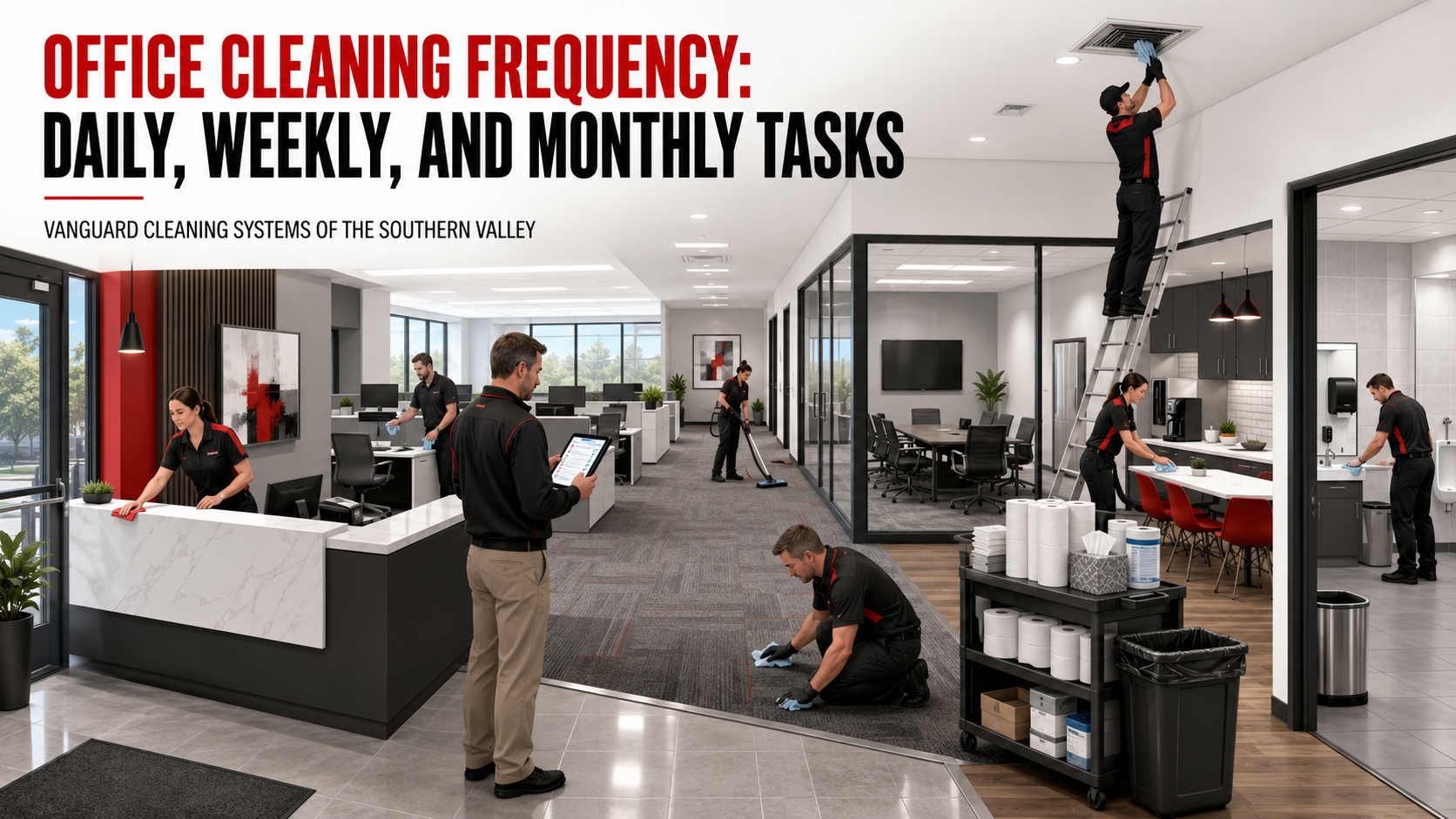
A practical office cleaning schedule matches the frequency of service to the way people actually use the building.
Why a Fixed Cleaning Schedule Often Falls Short
An office can look clean in the morning and feel neglected by the afternoon. Restrooms run low on supplies. Food debris collects around breakroom tables. Entry floors begin showing traffic patterns. Trash containers fill faster than expected.
These problems do not always mean the cleaning work is poor. They may mean the schedule no longer matches the building’s occupancy, traffic, or daily activity.
A small professional office with private workstations may not need the same service frequency as a busy call center, medical-adjacent office, coworking facility, or customer-facing business. Even two offices with similar square footage may have very different needs.
The most useful schedule combines daily upkeep, weekly detail work, monthly service, and seasonal adjustments.
Quick Answer: How Often Should an Office Be Cleaned?
Most offices need a layered schedule:
- Daily: Restrooms, breakrooms, trash, high-touch surfaces, entryways, and heavily used floors
- Weekly: Full dusting, detailed floor care, glass, partitions, furniture, and lower-traffic areas
- Monthly: High surfaces, vents, baseboards, appliance interiors, upholstery, and hard-to-reach areas
- Seasonally: Carpet extraction, floor refinishing, exterior window work, entry mat review, and cleaning adjustments based on weather
Some low-traffic offices may be adequately served two or three times per week. Larger or heavily occupied workplaces may need daily service, daytime attention, or multiple restroom checks each day.
The right frequency depends on use, not just square footage.
What Is an Office Cleaning Schedule?
An office cleaning schedule is a written plan that identifies:
- Which areas receive service
- Which tasks are completed
- How often each task is performed
- When work takes place
- Who reports problems
- How service quality is reviewed
The schedule may be included in a janitorial scope of work, quality-control plan, or facility maintenance program.
A useful schedule separates routine tasks from periodic work. Emptying trash and restocking a restroom may happen every day, while detailed blind cleaning or carpet extraction may take place monthly, quarterly, or as needed.
This prevents important tasks from being overlooked simply because they are not required during every visit.
For a broader list of recurring responsibilities, review this daily, weekly, and monthly janitorial services checklist.
How Office Cleaning Frequency Works
Cleaning frequency should reflect how quickly soil, waste, dust, moisture, fingerprints, and odors return after an area receives service.
High-use areas decline faster than low-use spaces. A restroom serving 75 employees needs attention more often than a restroom used by eight people. A breakroom with several lunch periods needs more frequent care than a small kitchenette used mainly for coffee.
Facility conditions can be grouped into three basic categories.
High-frequency areas
These areas may need service daily or several times throughout the day:
- Restrooms
- Breakrooms
- Reception areas
- Main entrances
- Shared workstations
- Conference rooms
- Elevators
- High-traffic hallways
Moderate-frequency areas
These areas often need routine daily or weekly care:
- Private offices
- Interior corridors
- Storage areas
- Copy rooms
- Low-use meeting rooms
- Employee training rooms
Periodic service areas
These areas may be addressed monthly, quarterly, seasonally, or as conditions require:
- High ledges
- Ceiling vents
- Window coverings
- Upholstered furniture
- Carpeted edges
- Walls
- Baseboards
- Areas behind heavy furniture
A building walkthrough can help identify where the current schedule is too light, excessive, or missing important tasks.
Daily Office Cleaning Tasks
Daily service controls the conditions that employees and visitors notice first.
It should focus on restrooms, food areas, waste, visible soil, shared surfaces, and heavily traveled floors.
Empty Trash and Recycling Containers
Trash removal is one of the most basic daily responsibilities, but frequency should depend on the type and amount of waste.
Breakroom containers may need more attention because food waste can cause odors and leakage. Reception, restroom, and customer-facing containers should be checked before they become full.
Daily trash work may include:
- Emptying liners
- Replacing damaged or soiled liners
- Removing waste from breakrooms and restrooms
- Wiping visible residue from container surfaces
- Checking for leaks
- Moving waste to the approved collection area
- Keeping waste storage areas orderly
A container should not have to overflow before it receives attention.
Service Restrooms
Restrooms are among the most closely judged areas in a commercial building. Supply shortages, odors, wet counters, floor debris, and visible residue can quickly lead to complaints.
Daily restroom tasks may include:
- Cleaning toilets and urinals
- Cleaning sinks, counters, and fixtures
- Wiping mirrors
- Restocking toilet paper
- Restocking hand soap
- Restocking paper towels
- Emptying waste containers
- Cleaning touchpoints
- Mopping floors
- Checking corners and floor edges
- Reporting plumbing or dispenser problems
Busy restrooms may need scheduled checks during business hours rather than one service at night.
Learn more about creating a suitable commercial restroom cleaning scope.
Clean Breakrooms and Shared Kitchens
Breakrooms combine food, moisture, waste, shared appliances, and frequent hand contact. These conditions can cause a clean space to decline quickly.
Daily breakroom tasks may include:
- Wiping tables and counters
- Cleaning sink areas
- Removing crumbs and food residue
- Wiping appliance handles and controls
- Cleaning coffee stations
- Emptying waste containers
- Spot-cleaning cabinet fronts
- Mopping hard floors
- Restocking approved supplies
- Reporting spills or appliance leaks
Appliance interiors may require a separate weekly or monthly task unless spills require immediate attention.
These breakroom and kitchen cleaning practices can help clarify which tasks should be assigned to the janitorial scope and which remain employee responsibilities.
Address Frequently Touched Surfaces
Shared surfaces may collect fingerprints, oils, dirt, and residue throughout the workday.
Common touchpoints include:
- Door handles
- Push plates
- Light switches
- Elevator buttons
- Shared phones
- Copier controls
- Refrigerator handles
- Microwave controls
- Coffee equipment
- Conference-room controls
- Shared touchscreens
- Breakroom cabinet pulls
- Restroom fixtures
The schedule should identify which surfaces are included, how frequently they receive attention, and whether special product or equipment restrictions apply.
Sensitive electronics should be handled according to manufacturer guidance and the facility’s approved procedures.
Vacuum High-Traffic Carpeted Areas
Entrances, reception areas, corridors, and shared spaces often show soil before private offices do.
Daily vacuuming may be needed in:
- Entryways
- Main hallways
- Reception spaces
- Breakrooms with carpet nearby
- Conference rooms used every day
- Areas around copier stations
- Customer waiting areas
Lower-traffic offices may only need full-area vacuuming several times per week, with daily spot vacuuming where visible debris appears.
Mop Hard Floors
Hard floors in restrooms, breakrooms, entrances, and corridors may need daily care.
The routine can include:
- Removing loose soil
- Spot-cleaning spills
- Damp mopping
- Cleaning floor edges
- Checking corners
- Placing appropriate warning signs during service
- Reporting damaged flooring or recurring moisture
Floor frequency may need to increase during rain, high winds, nearby construction, or periods of heavy visitor traffic.
Clean Entry Glass and Visible Fingerprints
Glass entrance doors can show fingerprints within hours. Because the entrance shapes the first impression of the building, visible marks should be removed frequently.
Daily glass work may include:
- Entry doors
- Interior lobby doors
- Glass partitions near reception
- Display cases
- Sidelights
- Frequently touched glass panels
A full window service may occur less often, but visible entry glass often needs daily attention.
Straighten Shared Spaces
Basic appearance work can help offices feel orderly.
Depending on the scope, this may include:
- Aligning chairs
- Straightening conference rooms
- Returning waste containers to position
- Wiping whiteboards when authorized
- Removing abandoned cups or approved waste
- Organizing approved restroom supplies
- Reporting personal property left in service areas
The scope should clearly separate janitorial responsibilities from employee desk organization and document handling.
Weekly Office Detail Cleaning Tasks
Weekly service covers dust, soil, smudges, and buildup that may not require daily attention but still affects the appearance and comfort of the workplace.
Complete Full-Surface Dusting
Dusting schedules should include more than the center of open desktops.
Weekly dusting may cover:
- Unoccupied horizontal surfaces
- Shelves
- Filing cabinets
- Window ledges
- Partition tops
- Picture frames
- Accessible furniture
- Low ledges
- Conference-room surfaces
- Reception furniture
Facilities with open windows, nearby construction, warehouse activity, heavy outdoor dust, or strong HVAC airflow may need more frequent dust control.
Personal papers, electronic equipment, and sensitive work areas should only be handled according to the facility’s instructions.
Vacuum Under Accessible Furniture
Visible walkways may receive daily attention while soil slowly collects under chairs, tables, desks, and movable furniture.
Weekly detail vacuuming can include:
- Under conference tables
- Beneath waiting-room seating
- Around desk edges
- Behind accessible chairs
- Along carpet edges
- Around floor-mounted outlets
- Near partition bases
Heavy furniture should not be moved unless the scope, safety procedures, and equipment allow it.
Damp Mop All Scheduled Hard Floors
Some lower-traffic hard floors may not require full mopping every day. A weekly full-floor service can address areas beyond daily traffic lanes.
This may include:
- Private-office flooring
- Low-use hallways
- Storage rooms
- Training rooms
- Interior stair landings
- Copy rooms
- Secondary entrances
The correct method depends on the flooring material, finish, soil level, and manufacturer instructions.
Detail Conference Rooms
Conference rooms collect fingerprints, beverage rings, crumbs, and dust, especially when they are used for meals or frequent meetings.
Weekly tasks may include:
- Cleaning tables
- Wiping chair frames
- Vacuuming under the table
- Cleaning accessible controls
- Removing fingerprints from doors
- Cleaning glass partitions
- Wiping ledges
- Emptying concealed waste containers
- Reporting damaged cables or equipment
Rooms used every day may need portions of this service daily.
Clean Interior Glass and Partitions
Glass walls and doors can collect fingerprints outside the main entry area.
Weekly glass work may cover:
- Conference-room walls
- Interior office doors
- Glass partitions
- Sidelights
- Display surfaces
- Lobby glass away from the main entrance
The service schedule should distinguish routine touch-up work from full interior and exterior window cleaning.
Wipe Cabinet and Door Fronts
Cabinet fronts, doors, frames, and handles collect soil slowly. They are easy to miss during routine surface cleaning.
Weekly care may include:
- Breakroom cabinets
- Restroom doors
- Copy-room storage
- Conference-room doors
- Push plates
- Shared storage handles
- Reception cabinetry
Areas near food preparation or waste may need more frequent care.
Clean Shared Office Equipment Exteriors
Shared equipment may include:
- Copiers
- Printers
- Postage machines
- Shared keyboards
- Conference-room remotes
- Touch panels
- Document stations
Only approved cleaning methods should be used. Liquid should not be applied directly to electronic components.
Monthly Deep-Detail Office Cleaning Tasks
Monthly work reaches areas that routine visits may not fully address.
“Monthly” does not always mean every item must be completed once each calendar month. A rotating schedule may divide periodic tasks across multiple visits.
High Dusting
High dusting targets areas above normal reach where dust can remain unnoticed.
Common locations include:
- High ledges
- Door frames
- Tops of cabinets
- Exposed pipes
- Ceiling corners
- Accessible vents
- Light fixtures
- Partition tops
- Wall-mounted equipment
The work may require extension tools or specialized access procedures.
Clean HVAC Grilles and Accessible Vents
Supply and return grilles can collect visible dust. Janitorial service may include exterior cleaning of accessible grilles, but mechanical maintenance and internal duct work should remain with qualified HVAC providers.
The scope should specify whether service includes:
- Exterior vent faces
- Return grilles
- Dust near vent openings
- Ceiling marks around vents
- Reporting loose or damaged covers
Cleaning should be coordinated with the facility’s HVAC maintenance plan rather than treated as a replacement for it.
Detail Baseboards and Floor Edges
Floor machines, vacuums, and mops may not fully reach edges and corners during routine service.
Monthly detail work can address:
- Baseboards
- Carpet edges
- Hard-floor corners
- Areas behind doors
- Floor transitions
- Edges near cabinets
- Stair edges
- Areas around fixed equipment
Heavy soil near edges may also indicate that the daily or weekly method needs adjustment.
Clean Behind Accessible Furniture
Dust, paper, crumbs, and other debris may collect behind furniture.
Periodic cleaning may include areas behind:
- Waiting-room chairs
- Breakroom tables
- Movable filing cabinets
- Conference-room furniture
- Lightweight storage units
- Lounge furniture
Furniture should only be moved when it can be handled safely and when the task is included in the service agreement.
Detail Breakroom Appliances
Routine wiping does not address all appliance buildup.
Periodic appliance work may include:
- Microwave interiors
- Refrigerator exterior surfaces
- Refrigerator door seals
- Drip trays
- Coffee-machine exteriors
- Toaster crumb trays
- Vending-machine exteriors
- Areas beneath movable countertop appliances
Refrigerator interior cleaning often requires coordination with employees so food can be removed, labeled, or discarded according to company policy.
Spot-Clean Upholstery
Office chairs and lobby furniture can collect dust, spills, oils, and food residue.
Monthly inspection may identify:
- Visible spots
- Dust along seams
- Crumbs beneath cushions
- Marks on chair arms
- Soil on fabric partitions
- Areas that need professional extraction
Spot treatment should be tested for material compatibility. Full upholstery cleaning may be scheduled quarterly, semiannually, or as needed.
Treat Carpet Spots
Spills become harder to remove when they are ignored.
A monthly carpet inspection should look for:
- Beverage spills
- Food stains
- Entryway soil
- Copier toner
- Chair-path wear
- Marks near waste containers
- Recurring spots caused by leaks
Recurring spots may require a change in entry mat placement, spill reporting, floor protection, or service frequency.
Machine Scrub Scheduled Hard Floors
Routine mopping removes surface soil but may not correct embedded grime, traffic patterns, or buildup.
Periodic machine work may include:
- Scrubbing textured tile
- Cleaning grout lines
- Burnishing finished floors
- Cleaning entry flooring
- Addressing traffic lanes
- Preparing floors for restorative work
The correct method depends on the floor type and condition.
Clean Blinds and Window Coverings
Blinds can collect dust while remaining outside the routine cleaning path.
Periodic work may include:
- Dusting slats
- Wiping accessible window coverings
- Vacuuming fabric shades with suitable equipment
- Cleaning window ledges
- Reporting damaged hardware
Frequency may increase near open windows or areas with heavy outdoor dust.
Seasonal Office Cleaning Adjustments
A yearly schedule should account for weather, occupancy changes, building activity, and outdoor conditions.
Winter Adjustments
Winter conditions may increase moisture, tracked-in soil, and time spent indoors.
Possible changes include:
- More frequent entry mat service
- Additional hard-floor checks
- Faster response to wet areas
- More attention to shared touchpoints
- Increased restroom supply checks
- Added carpet spot treatment
- Coordination with seasonal illness policies
Facilities should also review ventilation and indoor comfort concerns with the appropriate building professionals.
Spring Adjustments
Spring may bring pollen, wind, outdoor dust, and increased landscaping activity.
Possible changes include:
- More frequent entry cleaning
- Detailed ledge and sill cleaning
- Carpet extraction
- Vent-face cleaning
- High dusting
- Window cleaning
- Review of exterior-to-interior soil transfer
Buildings in dusty or windy areas may need schedule changes before visible buildup becomes a recurring complaint.
Summer Adjustments
Summer conditions can increase traffic, odors, moisture concerns, and demand on restrooms or breakrooms.
Possible changes include:
- More restroom checks
- Faster food-waste removal
- Increased breakroom floor care
- More frequent trash service
- Added odor-source inspections
- Entryway care during construction or landscaping
- Review of supply usage during changing occupancy
Hot weather does not affect every office the same way. Building use, cooling performance, humidity, and employee schedules all matter.
Fall Adjustments
Fall is a useful time to prepare for higher indoor occupancy and changing weather.
Possible tasks include:
- Carpet cleaning
- Entry mat replacement or rotation
- High dusting
- Vent-face cleaning
- Window and sill cleaning
- Supply inventory review
- Restroom schedule review
- Planning for holiday occupancy changes
Seasonal changes should be added to the written scope rather than left as informal expectations.
Environmental Factors That Affect Cleaning Frequency
Several conditions can cause one office to need more frequent care than another.
Occupancy
More people generally create:
- More restroom use
- More trash
- More floor traffic
- More food waste
- More fingerprints
- Faster supply use
- More wear on shared spaces
Occupancy should include employees, contractors, customers, delivery personnel, and other visitors.
Visitor Traffic
A small office with frequent customer traffic may need more service than a larger office with limited public access.
Visitor traffic often affects:
- Entrances
- Reception areas
- Public restrooms
- Waiting rooms
- Conference rooms
- Door glass
- Walk-off mats
Traffic patterns should be reviewed at different times of day.
Workspace Density
Open offices and shared workstations concentrate more activity within the same area.
Higher density can increase:
- Shared-surface use
- Waste accumulation
- Chair-path soil
- Conference-room demand
- Noise and comfort concerns
- Breakroom congestion
- Restroom traffic
The number of people per floor may be more useful than total building square footage.
Flooring Type
Different flooring materials require different schedules.
For example:
- Carpet needs vacuuming, spot treatment, and periodic extraction.
- Finished hard floors may need mopping, burnishing, scrubbing, and refinishing.
- Textured flooring can hold soil in recessed areas.
- Grouted tile may need periodic detail work.
- Entry flooring may require more frequent service than interior flooring.
A cleaning plan should identify floor type by area.
Building Location
Local conditions affect how much outdoor material enters the building.
Factors may include:
- Wind
- Dust
- Pollen
- Rain
- Nearby construction
- Landscaping
- Parking-lot conditions
- Industrial activity
- Agricultural activity
A building near an active construction site may need temporary service increases even when occupancy stays the same.
Food and Beverage Use
Offices with full kitchens, catered meetings, vending areas, or several meal periods need more breakroom and waste attention.
Food use can affect:
- Trash frequency
- Floor cleaning
- Sink care
- Counter cleaning
- Appliance cleaning
- Odor control
- Pest reporting
The scope should match actual breakroom use rather than treating every kitchenette the same.
Operating Hours
An office used for ten hours a day will usually need a different schedule from a facility operating around the clock.
Extended hours may require:
- Daytime restroom checks
- Separate service windows
- Multiple trash rounds
- Coordination with evening staff
- Cleaning around occupied work areas
- Added communication between shifts
A single nightly visit may not be enough for a building that never fully closes.
How Building Size and Use Affect Cleaning Frequency
Square footage helps estimate labor, but it does not tell the whole story.
Small Professional Offices
A small office with five to 20 employees may be adequately served two or three times per week when:
- Restroom traffic is low
- There is little visitor activity
- Employees manage personal waste appropriately
- Food preparation is limited
- Flooring does not show rapid soil buildup
However, restrooms, food waste, spills, and supply shortages may still require attention between scheduled visits.
Medium-Sized Offices
Offices with approximately 20 to 75 employees often benefit from daily weekday service.
A common plan may include:
- Daily restroom service
- Daily breakroom care
- Daily trash removal
- High-traffic floor care
- Weekly detail cleaning
- Rotating monthly tasks
Actual frequency should reflect shifts, visitors, and workspace density.
Large Offices
Large offices usually need daily service and may benefit from a daytime porter or scheduled touch-up rounds.
Needs may include:
- Several restroom checks
- Continuous supply monitoring
- Daytime spill response
- Conference-room resets
- Frequent waste removal
- Entryway maintenance
- Rotating floor care
- Documented quality reviews
The schedule may vary by floor, department, or occupancy zone.
Public-Facing Workplaces
Customer service centers, professional offices with waiting rooms, coworking facilities, and similar workplaces may need more frequent attention in visible areas.
Priority spaces may include:
- Reception
- Public restrooms
- Entry glass
- Waiting rooms
- Interview rooms
- Shared counters
- Beverage stations
Appearance standards often need to be maintained throughout operating hours, not only after closing.
Signs the Current Office Cleaning Schedule Is Not Enough
A cleaning schedule should be reviewed when the building repeatedly declines before the next service.
Restrooms Receive Frequent Complaints
Common warning signs include:
- Supplies run out
- Odors return quickly
- Counters remain wet
- Waste containers fill early
- Floors show soil during business hours
- Fixtures need attention before the next visit
This may indicate a need for added service, daytime inspections, or a clearer scope.
Breakrooms Look Neglected by Midday
Possible signs include:
- Full trash containers
- Food on floors
- Sticky counters
- Coffee spills
- Residue around the sink
- Appliance handles covered with marks
- Persistent odors
The solution may be a midday reset, larger waste containers, better employee policies, or a revised janitorial schedule.
Dust Returns Within a Few Days
Rapid dust buildup may be caused by:
- Outdoor dust
- Construction
- Open windows
- HVAC conditions
- Incomplete dusting methods
- High shelving
- Heavy paper use
- Warehouse or production activity nearby
Increasing frequency may help, but the source should also be identified.
Floors Show Traffic Patterns
Visible traffic lanes may mean:
- Vacuuming is too infrequent
- Entry mats are undersized
- Spot cleaning is delayed
- Mopping methods need adjustment
- Periodic floor care is overdue
- Outdoor soil is unusually heavy
A floor-care review may be more useful than simply adding another routine visit.
Trash Regularly Overflows
Overflowing waste suggests that:
- Service frequency is too low
- Containers are too small
- Waste volume has changed
- Food waste needs separate handling
- Employees are using the wrong collection point
- Daytime removal is needed
The pattern and timing of the overflow can help determine the right fix.
Employees Begin Handling Facility Cleaning Themselves
Employees may start wiping counters, replacing restroom supplies, emptying shared trash, or cleaning floors when the service schedule does not keep up.
Occasional spill response is normal. Routine dependence on office employees may indicate a gap in the janitorial plan.
The Same Issues Appear After Every Service
Repeated missed areas may point to:
- An unclear scope
- Inadequate service time
- Poor task rotation
- Communication gaps
- Access restrictions
- Quality-control problems
- A schedule that does not match building use
Recurring problems should be documented by location, time, and frequency.
Workplace Relevance: Matching the Scope to Actual Use
A useful cleaning plan is built around real workplace patterns.
That means reviewing:
- Employee count by shift
- Visitor volume
- Restroom fixture count
- Breakroom use
- Flooring type
- Operating hours
- Sensitive areas
- Security requirements
- Seasonal conditions
- Complaint history
- Supply usage
- Waste volume
The schedule should also explain how concerns are reported and resolved.
A facility may need a mix of services rather than one building-wide frequency. For example, restrooms and breakrooms may receive daily service while private offices are cleaned on alternating days. High-traffic floors may be vacuumed daily while low-use rooms are addressed weekly.
Customized commercial cleaning services can be structured around those differences.
Creating a Practical Office Cleaning Scope
A written scope should be specific enough that the facility and the janitorial business understand what is expected.
Include the following details:
- Areas included in service
- Days of service
- Service hours
- Daily tasks
- Weekly tasks
- Monthly or rotating tasks
- Floor-care schedule
- Restroom inspection frequency
- Breakroom responsibilities
- Supply responsibilities
- Restricted areas
- Approved products
- Security and access procedures
- Communication process
- Quality-review process
Avoid vague wording such as “clean as needed” without defining who decides when the task is needed.
Measurable language is more useful. For example:
- Check and restock restroom supplies during each scheduled visit.
- Empty breakroom waste each weekday.
- Vacuum main corridors daily.
- Dust accessible horizontal surfaces weekly.
- Detail baseboards on a rotating monthly schedule.
A clear scope makes it easier to review performance and adjust service when occupancy changes.
Local Office Cleaning Considerations
Workplaces throughout the Southern Valley face different combinations of dust, heat, wind, traffic, and seasonal activity.
Local service planning may include commercial facilities in:
A local office may need schedule changes during windy periods, wet weather, landscaping projects, construction, seasonal staffing changes, or periods of high customer traffic.
Service frequency should be reviewed whenever building use changes.
People Also Ask
How many times per week should an office be cleaned?
A low-traffic office may need service two or three times per week. Most medium and large offices benefit from daily weekday service, especially when they have shared restrooms, breakrooms, or frequent visitors.
What office areas should be cleaned every day?
Restrooms, breakrooms, waste containers, shared touchpoints, entrances, and heavily traveled floors usually need daily attention. Visible spills and safety concerns should be handled when they occur.
Should office restrooms be cleaned more than once per day?
High-use restrooms may need several checks or service visits each day. Fixture count, occupancy, visitor traffic, supply use, and complaint patterns should determine frequency.
How often should office carpets be vacuumed?
High-traffic carpet should generally be vacuumed daily. Lower-traffic offices and meeting rooms may be vacuumed several times per week. Edges, corners, and areas under furniture can be placed on a weekly detail schedule.
How often should office carpets receive extraction cleaning?
The interval depends on traffic, carpet type, color, entry mat performance, spills, and manufacturer guidance. Many offices use a quarterly, semiannual, or annual schedule, with high-traffic areas receiving service more often.
How often should an office breakroom be cleaned?
Frequently used breakrooms should receive daily service. High-volume food areas may also need a midday reset, especially when waste, spills, or several lunch periods cause conditions to decline quickly.
How often should office windows be cleaned?
Entry glass may need daily fingerprint removal. Full interior or exterior window cleaning may be scheduled monthly, quarterly, semiannually, or according to building conditions.
Is nightly office cleaning necessary?
Not every office needs nightly service. Nightly cleaning is often appropriate when the building has daily employee attendance, shared food areas, public traffic, several restrooms, or high waste volume.
What is included in monthly office cleaning?
Monthly tasks may include high dusting, baseboards, vents, appliance interiors, blinds, floor edges, areas behind furniture, upholstery inspection, carpet spot treatment, and detailed floor work.
How do I know whether my office needs more cleaning?
Look for recurring restroom complaints, full trash containers, odors, visible dust, floor traffic patterns, supply shortages, breakroom residue, and areas that become noticeably dirty before the next visit.
Frequently Asked Questions
Can every office use the same cleaning checklist?
No. A checklist should be adjusted for occupancy, floor type, operating hours, visitor traffic, food use, security requirements, and building conditions.
Does a larger office always need more frequent cleaning?
Not always. A smaller, densely occupied office may need more frequent service than a larger building with private offices and limited traffic.
Who should decide how often an office is cleaned?
Facility leadership and the janitorial provider should review building use together. Employees may also provide useful feedback about when and where conditions decline.
Should weekly and monthly tasks be completed on the same day?
They can be, but rotating periodic tasks often works better. A rotation helps distribute labor and makes it easier to confirm that every detail task is completed.
Can office cleaning frequency change during the year?
Yes. Weather, occupancy, construction, illness trends, events, staffing, and operating hours can all justify temporary or permanent changes.
What should be reviewed during a cleaning assessment?
The assessment should consider traffic patterns, restrooms, breakrooms, waste, floors, touchpoints, restricted spaces, supply use, complaints, and the time it takes for areas to decline after service.
Build an Office Cleaning Schedule Around Real Use
Daily, weekly, and monthly cleaning categories provide a useful starting point. But the final schedule should reflect how the workplace functions.
A building with heavy restroom use may need daytime checks. An office with limited public traffic may need less frequent entry service. A workplace with several meal periods may need more breakroom attention. Seasonal dust and weather may also affect floors, ledges, glass, and entrances.
The goal is not to complete every possible task as often as possible. It is to apply the right work at the right frequency so the facility stays orderly, comfortable, and ready for daily use.
Vanguard Cleaning Systems of the Southern Valley can help connect businesses with independently owned janitorial franchise businesses that provide customized commercial cleaning services.
Request information about commercial cleaning options based on your facility’s occupancy, traffic patterns, and service needs.
References
Anderson, L. M., Salo, S., Alen, M., & Salminen, S. (2015). Outcomes of a pilot hand hygiene randomized cluster trial to reduce communicable infections among U.S. office-based employees. Journal of Occupational and Environmental Medicine, 57(4), 475–481. https://doi.org/10.1097/JOM.0000000000000375
Centers for Disease Control and Prevention. (2024). When and how to clean and disinfect a facility. https://www.cdc.gov/hygiene/about/when-and-how-to-clean-and-disinfect-a-facility.html
Jungbauer, F. H. W., van der Harst, J. J., Schuttelaar, M. L. A., Groothoff, J. W., & Coenraads, P. J. (2004). Characteristics of wet work in the cleaning industry. Contact Dermatitis, 51(3), 131–134. https://doi.org/10.1111/j.0105-1873.2004.00421.x
Mendell, M. J. (1993). Non-specific symptoms in office workers: A review and summary of the epidemiologic literature. Indoor Air, 3(4), 227–236. https://doi.org/10.1111/j.1600-0668.1993.00003.x
Mendell, M. J., Eliseeva, E. A., Spears, M., Chan, W. R., Cohn, S., Sullivan, D. P., & Fisk, W. J. (2015). A longitudinal study of ventilation rates in California office buildings and self-reported occupant outcomes including respiratory illness absence. Building and Environment, 89, 289–296. https://doi.org/10.1016/j.buildenv.2015.05.002
Pesonen-Leinonen, E., Tenitz, S., & Sjöberg, A. M. (2004). Surface dust contamination and perceived indoor environment in office buildings. Indoor Air, 14(4), 281–285. https://doi.org/10.1111/j.1600-0668.2004.00249.x
Skulberg, K. R., Skyberg, K., Kruse, K., Eduard, W., Djupesland, P., & Levy, F. (2003). Symptoms prevalence among office employees and associations to building characteristics. Indoor Air, 13(3), 246–252. https://doi.org/10.1034/j.1600-0668.2003.00190.x
