

Cold weather creates ideal indoor conditions for viruses to survive longer on surfaces and spread faster between employees.
How Winter Conditions Strengthen Germ Survival Indoors
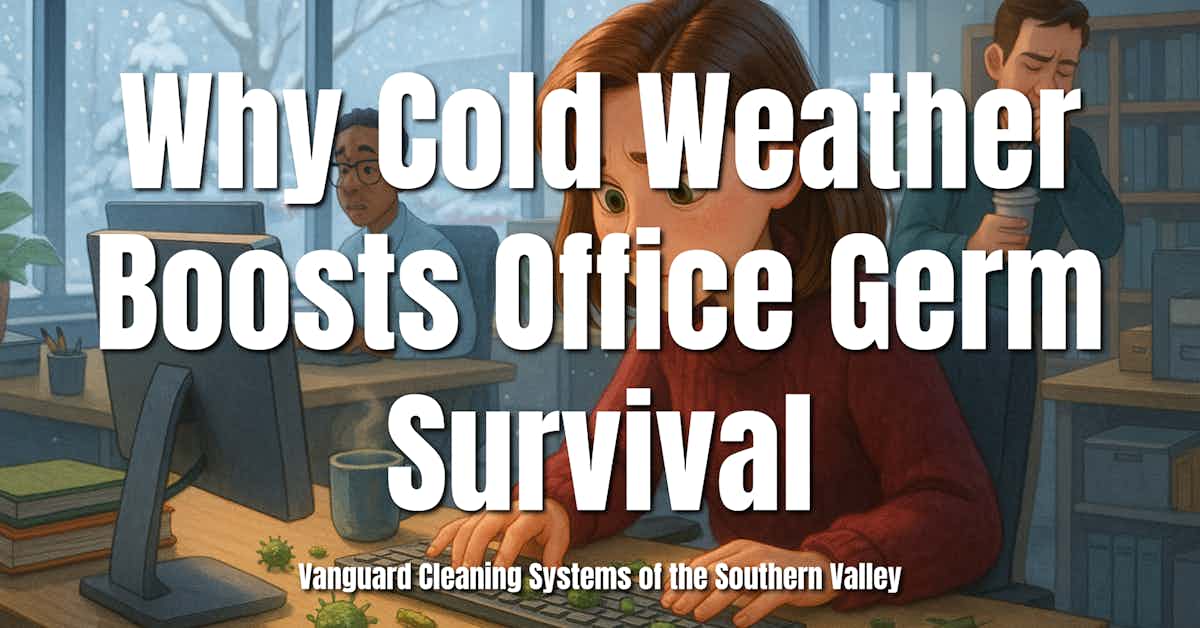
As temperatures drop, the indoor environment changes in ways most employees never notice. Heating systems reduce indoor humidity, cold air stabilizes viral particles, and airflow becomes more limited. These subtle environmental shifts create ideal conditions for germs to last longer on desks, keyboards, phones, and breakroom surfaces. Because employees spend more time indoors during the winter months, exposure to these surfaces increases dramatically. Understanding how cold weather influences germ survival helps organizations adjust their cleaning routines and protect employee health during peak illness season.
Why Germs Survive Longer in Cold Weather
Low Humidity Increases Viral Stability
Humidity plays a major role in how long viruses remain active on surfaces. During the winter, indoor humidity can drop significantly due to heating systems and dry outdoor air. Low humidity allows respiratory droplets to evaporate quickly, leaving behind lightweight particles that settle on surfaces and stay active for extended periods. These dried particles rehydrate when touched, creating an efficient pathway to infection.
Cooler Temperatures Slow Viral Breakdown
Cold air helps viral particles remain structurally intact. Many flu viruses remain active longer on cool surfaces made of plastic, metal, and glass—materials commonly found on desks, door handles, keyboards, and elevator buttons. In warmer conditions, these particles break down more quickly. Winter’s lower temperatures slow that process, giving viruses more time to spread between employees.
More Time Indoors Increases Exposure
Winter confines employees to indoor spaces for longer periods each day. Breakrooms, conference rooms, and reception areas see higher occupancy, increasing the frequency of touchpoints and contact events. With more people in smaller spaces, viral particles deposit onto surfaces faster.
Reduced Ventilation Supports Germ Accumulation
Many buildings reduce outdoor airflow during cold months to maintain temperature stability. Lower airflow allows particles to linger in the air and settle on surfaces instead of being carried outside. Over time, these particles accumulate on high-touch objects, raising the risk of surface-to-hand transfer.
Dry Air Weakens Natural Defenses
Low humidity not only helps viruses survive—it also affects the human body. Dry air reduces moisture in nasal passages and airways, weakening their natural barrier function. When the body’s defenses are compromised, even small amounts of viral exposure become more likely to cause infection.
Where Germs Survive Longest During Winter
Cold-weather conditions affect every part of the office differently. Some areas accumulate viral particles more quickly due to heavy use, shared contact, and reduced ventilation.
1. Breakrooms
Breakrooms combine food preparation, social interaction, and constant touching of surfaces such as:
- Coffee pot handles
- Refrigerator doors
- Microwave buttons
- Sink levers
- Countertops
- Drawer and cabinet handles
Winter humidity levels help viral particles remain stable here longer. Employees are also more likely to touch their face after eating, increasing the likelihood of exposure.
2. Keyboards and Shared Devices
Plastic keys and touch surfaces retain viral particles for extended periods in cold, dry conditions. Shared keyboards, touchscreens, and phone headsets see a high volume of contact, making them top contributors to winter illness spread.
3. Door Handles and Entry Points
Cool metal surfaces help viruses stay active longer. Entry points, stair rails, and restroom handles experience hundreds of touches per day. During the winter months, these surfaces often contain elevated microbial loads.
4. Conference Rooms
Conference rooms concentrate people with minimal airflow. Particles released during meetings settle on:
- Tables
- Chairs
- Remote controls
- Presentation tools
- Touch panels
Lower humidity slows the breakdown of these particles, increasing surface longevity.
5. Elevators
Elevators combine three risk factors:
- Low ventilation
- High contact frequency
- Metal buttons that support longer viral survival
During peak flu season, buttons and rails in elevators should receive special attention.
How Cold Weather Changes Indoor Microbiology
Winter changes the microbial landscape in ways that are not visible but significantly affect workplace health.
Particle Drying Creates Smaller, More Stable Droplets
As respiratory droplets evaporate in low humidity, they become smaller, lighter, and more stable. These particles travel farther through the air and settle on surfaces throughout the office, where they remain active.
Hard Surfaces Preserve Viral Structure
Plastic, stainless steel, and glass slow the breakdown of viral particles in cooler temperatures. These materials dominate modern office environments, from conference tables to entry rails.
Biological Material Accumulates More Quickly
Winter brings heavier use of indoor spaces. With doors closed, windows sealed, and people staying inside, particles accumulate faster on every shared surface.
How Extended Germ Survival Impacts Employee Health
Higher Surface-to-Hand Exposure
Because viral particles survive longer, employees encounter more active germs when touching office equipment, breakroom appliances, and shared devices.
More Opportunities for Transmission
Longer survival times increase the window in which viruses can move from one employee to another, even with minor lapses in cleaning frequency.
Increased Absenteeism
Cold and flu season already challenges attendance. When surfaces retain viral particles for longer periods, sick days rise due to increased workplace transmission.
More Presenteeism-Driven Spread
Employees who come to work sick contribute to the cycle by depositing fresh viral particles onto winter-friendly surfaces. These particles then remain active longer due to the cold-weather environment.
Why Winter Cleaning Strategies Must Change
Standard cleaning routines often fall short during the winter months because the environment becomes more supportive of viral longevity. Cold-weather cleaning strategies need to adjust for:
- Faster surface contamination
- Longer viral survival
- Higher contact frequency
- Reduced ventilation
- Increased indoor density
To reduce illness spread, workplaces must address these seasonal changes with more frequent and targeted cleaning.
Actionable Steps to Reduce Winter Germ Survival
1. Increase High-Touch Cleaning Frequency
Because viral particles last longer during winter, high-touch surfaces should be cleaned multiple times per day, especially:
- Breakroom appliances
- Conference room tables
- Keyboards and phones
- Elevator buttons
- Door handles
Increased frequency offsets longer viral survival times.
2. Provide Accessible Cleaning Supplies for Employees
Employees should have access to cleaning materials for personal workstations. When staff can quickly clean their desk, keyboard, and phone, it reduces the overall viral load in shared spaces.
3. Improve Indoor Humidity
Maintaining moderate indoor humidity helps reduce viral stability. Humidification systems or portable units can help achieve optimal moisture levels, supporting healthier airways and reducing surface contamination.
4. Enhance Airflow and Ventilation
Improving indoor airflow lowers particle concentration and reduces the amount that settles on surfaces. Practical steps include:
- Increasing fresh air intake
- Using portable purifiers with HEPA filters
- Keeping vents unblocked
- Running HVAC fans continuously during peak season
5. Focus on Breakroom and Conference Room Care
These two spaces experience the most consistent winter buildup. Focused cleaning routines help reduce viral hotspots before they spread to the rest of the office.
6. Encourage Better Hand Hygiene
Hand cleaning remains one of the most effective ways to interrupt surface-to-hand transfer. Visible reminders and well-placed stations support consistent habits.
7. Adjust Cleaning Protocols for Seasonal Needs
Winter requires adjustments to cleaning intensity and frequency. Nightly cleaning alone is rarely enough during peak illness periods.
How Understanding Winter Germ Survival Improves Workplace Health
Awareness is the first step in preventing winter sickness. When employers understand how cold air, low humidity, and indoor crowding influence viral survival, they can adopt cleaning routines that directly counter these risks.
Cleaner winter workplaces support:
- Lower absenteeism
- Higher employee morale
- Better indoor conditions
- Stronger overall wellness
- Fewer seasonal outbreaks
Awareness leads to better decisions, and better decisions build healthier organizations.
Skimmable Summary
Why Germs Survive Longer in Winter
- Low indoor humidity increases viral stability
- Cold surfaces preserve viral structure
- Reduced ventilation increases particle accumulation
- Employees spend more time indoors
- Dry air weakens natural respiratory defenses
Where Germs Last the Longest
- Breakrooms
- Shared keyboards and phones
- Door handles
- Conference rooms
- Elevators
How to Reduce Germ Survival
- Clean high-touch surfaces frequently
- Improve airflow and humidity
- Support personal workstation cleaning
- Focus on breakroom and conference-room care
- Encourage consistent hand hygiene
Frequently Asked Questions
Why do viruses survive longer in cold weather?
Cold air stabilizes viral particles and slows their breakdown, allowing them to remain active on surfaces for longer periods.
Does humidity affect virus longevity?
Yes. Low humidity dries out respiratory droplets quickly, helping viral particles remain stable and increasing their survival time on surfaces.
Why are offices riskier during the winter months?
Reduced ventilation, increased indoor time, and longer viral survival create an environment where germs accumulate quickly.
Which surfaces hold viruses the longest?
Hard, nonporous surfaces—such as metal, plastic, and glass—support extended viral survival, especially in cold, dry conditions.
People Also Ask (PAA)
How does cold weather help viruses survive indoors?
Cold temperatures and low humidity slow viral decay and allow particles to stay active longer on indoor surfaces.
Do office surfaces hold germs longer in winter?
Yes. Viral particles remain active for extended periods on surfaces due to cool, dry indoor conditions.
Why does low humidity support virus spread?
Low humidity dries airborne droplets into smaller particles that remain stable and settle on surfaces easily.
How can offices reduce germ survival in winter?
By increasing cleaning frequency, improving airflow, and maintaining healthier indoor humidity levels.
References
- Lowen, A. C., & Steel, J. (2014). Roles of humidity and temperature in shaping influenza seasonality. Journal of Virology, 88(14), 7692–7695. https://doi.org/10.1128/JVI.03544-13
- Yang, W., Elankumaran, S., & Marr, L. C. (2012). Relationship between humidity and influenza A viability in droplets and aerosols. PLoS ONE, 7(10), e46789. https://doi.org/10.1371/journal.pone.0046789
- van Doremalen, N., Bushmaker, T., & Munster, V. (2013). Stability of influenza virus under environmental conditions. Applied and Environmental Microbiology, 79(14), 4524–4531. https://doi.org/10.1128/AEM.03850-12
- Kudo, E., et al. (2019). Low ambient humidity impairs barrier function and innate resistance. PNAS, 116(22), 10905–10910. https://doi.org/10.1073/pnas.1902840116
- Tellier, R. (2019). Review of aerosol transmission of influenza. Journal of the Royal Society Interface, 16(150), 20190292. https://doi.org/10.1098/rsif.2019.0292
- Prussin, A. J., et al. (2018). Survival of enveloped virus Phi6 in droplets under humidity variation. Applied and Environmental Microbiology, 84(12). https://doi.org/10.1128/AEM.00551-18
