

Cold weather changes how buildings breathe, how moisture behaves, and how respiratory infections spread—forcing shared offices to rely on tighter environmental control.
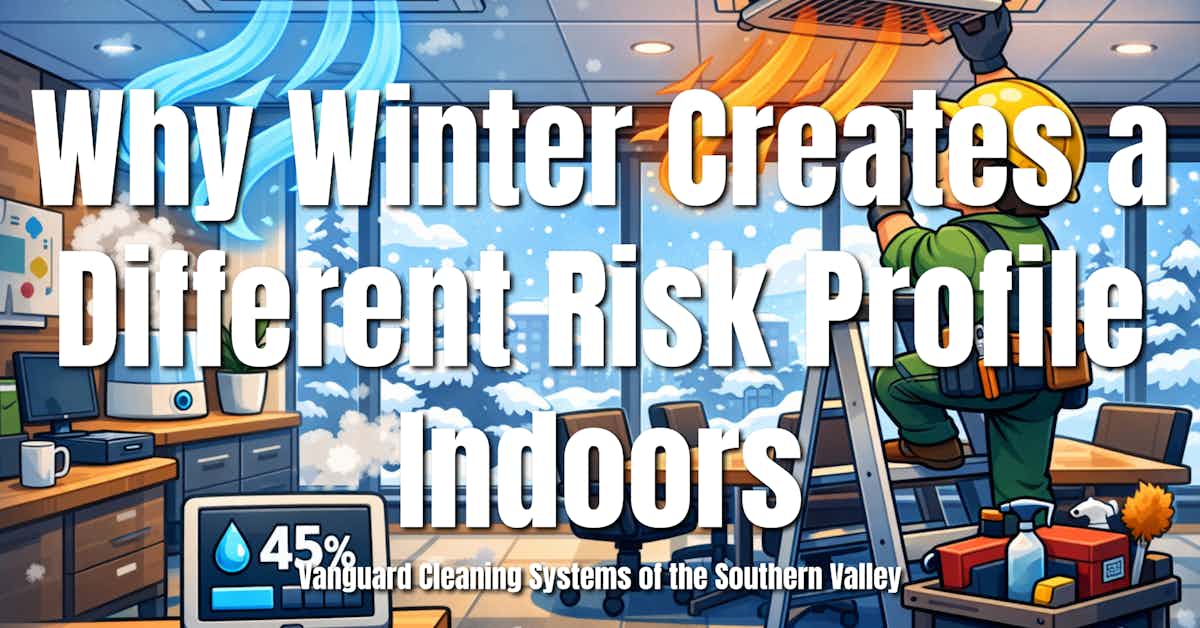
Winter Indoor Air Quality in Shared Office Buildings: Humidity, Ventilation, and Cleaning Strategies That Reduce Risk
Shared office buildings operate under different environmental pressures during winter. Heating systems lower indoor humidity. Windows remain closed for longer periods. Occupants spend more time indoors in closer proximity. Moisture from snow, rain, and clothing is tracked inside and evaporates unevenly. These combined factors shift the balance of air quality, surface contamination, and infection risk.
Research across office buildings, schools, shared residential spaces, and nonmedical facilities shows that winter indoor environments tend to experience:
- Lower relative humidity
- Reduced natural ventilation
- Higher occupant density indoors
- Greater reliance on mechanical HVAC systems
- Increased respiratory illness transmission
- Elevated moisture loads near entrances and high-traffic areas
Managing winter cleaning in shared buildings therefore requires more than surface attention. It requires integration of humidity control, ventilation maintenance, HVAC hygiene, and targeted cleaning protocols.
Low Indoor Humidity: Dry Air and Reported Symptoms
Winter heating frequently reduces indoor relative humidity below 40%. Office-based research has linked low humidity levels to increased reports of throat irritation, dry skin, eye discomfort, and respiratory symptoms. These dryness-related symptoms are consistently reported in mechanically heated office environments.
When indoor humidity drops:
- Mucous membranes dry more quickly
- Perceived air quality declines
- Comfort complaints increase
- Occupants may increase thermostat settings
- Static electricity becomes more common
Humidity management is not simple, however. Systematic reviews evaluating humidification interventions in educational and workplace settings show mixed evidence regarding reductions in upper respiratory infections. Some improvements in dryness symptoms are reported, but excessive humidification may increase perceptions of stuffiness and discomfort.
The operational challenge is balance.
Practical target range:
- Maintain relative humidity between 40% and 60% where feasible
- Avoid exceeding 60% to reduce mold growth risk
- Monitor with calibrated sensors rather than relying on thermostat displays
Humidity that is too low increases dryness complaints. Humidity that is too high increases microbial growth risk. Winter building management requires precision.
Ventilation Constraints During Cold Weather
Cold outdoor temperatures reduce natural ventilation. Windows remain closed. Outdoor air intake may be reduced to conserve energy. These adjustments can increase the concentration of indoor-generated contaminants, including:
- Respiratory aerosols
- Carbon dioxide
- Volatile organic compounds
- Bioaerosols from occupants
- Resuspended dust particles
Research examining ventilation use during respiratory outbreaks emphasizes that airborne transmission becomes a dominant pathway in enclosed indoor environments. Mechanical ventilation performance therefore becomes central to winter risk reduction.
Facilities management reviews identify ventilation optimization as a core intervention strategy for reducing respiratory infection transmission in existing buildings.
Winter ventilation best practices include:
- Verifying outdoor air intake meets code requirements
- Increasing air exchange rates where system capacity allows
- Using MERV-rated filters appropriate for the system design
- Inspecting dampers and economizers for proper function
- Monitoring CO₂ as a proxy for ventilation adequacy
When ventilation declines, surface cleaning alone cannot compensate for airborne exposure risk. Integrated environmental controls are required.
Moisture Management and Microbial Growth
Winter does not eliminate moisture risk. It redistributes it.
Snow, wet shoes, umbrellas, and condensation from temperature differentials introduce localized moisture in:
- Entryways
- Carpeted corridors
- HVAC drip pans
- Window frames
- Ceiling cavities
Systematic reviews of indoor bacterial and fungal exposure across residences, schools, and offices show that moisture is one of the strongest predictors of microbial proliferation. Buildings with reported indoor air quality complaints often demonstrate elevated dampness or mold indicators.
Moisture combined with inadequate ventilation creates conditions favorable to:
- Fungal growth
- Bacterial amplification
- Musty odors
- Increased particulate matter
- Occupant symptom reporting
HVAC hygiene plays a critical role. Reviews of air-conditioning system maintenance obligations emphasize that poorly maintained systems may accumulate contaminants in filters, coils, and ductwork. Engineering literature examining HVAC mitigation strategies highlights filtration upgrades, proper maintenance, and in some cases desiccant-based or air-scrubbing approaches.
Operational controls include:
- Routine inspection of drip pans and condensate lines
- Filter replacement schedules aligned with winter load
- Inspection for visible mold or debris accumulation
- Prompt drying of wet carpet and entry matting
- Limiting moisture accumulation near exterior doors
Moisture control is preventive maintenance. It is not cosmetic.
Surface Contamination and Winter Illness Peaks
Shared offices experience increased respiratory illness activity during winter months. Enhanced cleaning protocols have been shown to reduce surface biocontamination levels in classroom environments, with corresponding improvements in health-related absenteeism indicators.
Indoor microbial contamination originates from:
- Occupants
- Outdoor air
- Dust reservoirs
- Shared equipment
- Improperly maintained ventilation systems
High-touch surfaces in shared offices include:
- Door handles
- Elevator buttons
- Conference tables
- Shared keyboards
- Breakroom appliances
- Restroom fixtures
Winter cleaning protocols should prioritize frequency and targeting rather than relying solely on nightly whole-space cleaning.
Targeted winter adjustments:
- Increase high-touch surface cleaning frequency
- Pay special attention to shared devices
- Ensure proper dwell time for products used
- Train crews on winter-specific risk areas
- Monitor compliance through documented checklists
Cleaning must align with occupancy patterns and illness seasonality.
Behavioral Factors in Cold Seasons
Cold weather changes occupant behavior. Shared spaces are used more heavily. Breakrooms become gathering areas. Windows are rarely opened. Personal heaters may alter airflow patterns.
Studies examining shared interiors during pandemic conditions observed reduced natural ventilation and elevated indoor pollutant concentrations when occupants avoided window opening during colder periods.
Behavioral adaptation influences environmental performance. Cleaning and facilities teams must account for how occupants actually use the building in winter—not how it was designed to operate in mild weather.
Integrated Winter Risk Management Framework
Winter environmental control requires a systems approach combining humidity, ventilation, cleaning, and monitoring.
1. Humidity Monitoring
- Install calibrated humidity sensors
- Track trends weekly
- Avoid overcorrection above 60%
2. Ventilation Verification
- Measure CO₂ levels in high-density areas
- Inspect filters and outdoor air dampers
- Confirm air changes per hour align with building design
3. HVAC Hygiene
- Inspect coils and drain pans
- Replace filters based on load, not just calendar intervals
- Document maintenance actions
4. Moisture Control
- Use absorbent matting at entrances
- Dry wet surfaces promptly
- Inspect hidden moisture zones monthly
5. Targeted Surface Cleaning
- Increase frequency for shared touchpoints
- Adjust schedules during illness surges
- Validate through random quality audits
No single intervention resolves winter air quality risk. Performance depends on coordination.
People Also Ask
Why is indoor air worse in winter?
Indoor air quality often declines in winter because ventilation decreases, humidity drops, and occupants spend more time indoors, increasing contaminant concentration.
What humidity level is best for offices in winter?
Maintaining relative humidity between 40% and 60% balances comfort and reduces excessive dryness while limiting mold growth risk.
Does ventilation reduce respiratory infections?
Improved ventilation reduces the concentration of airborne contaminants and is considered a core strategy in reducing indoor respiratory infection transmission risk.
Why do buildings smell musty in winter?
Localized moisture accumulation, inadequate airflow, and hidden dampness can allow microbial growth, producing odor compounds.
FAQ
Is humidification always recommended during winter?
Humidification may reduce dryness symptoms, but evidence regarding infection prevention is mixed. Over-humidification can introduce moisture-related risks.
Can cleaning alone control winter illness spread?
No. Cleaning reduces surface contamination, but airborne transmission requires adequate ventilation and air management.
How often should HVAC systems be inspected in winter?
Inspection frequency should reflect building size and occupancy, but critical components such as filters and condensate systems should be evaluated regularly during peak heating season.
What is the biggest winter indoor air mistake?
Reducing ventilation to save energy without monitoring indoor air indicators can increase contaminant concentration and health complaints.
Conclusion
Winter shifts indoor environmental risk from open-air dilution to mechanical dependence. Low humidity increases discomfort. Reduced ventilation elevates contaminant concentration. Moisture from outdoor conditions creates hidden microbial growth risks. Surface contamination rises during respiratory illness peaks.
Effective winter cleaning in shared office buildings requires environmental control, not just appearance management. Humidity balance, ventilation verification, HVAC hygiene, moisture control, and targeted surface cleaning must operate together. Buildings that integrate these elements experience fewer complaints, lower illness-related disruptions, and more stable indoor air conditions during cold months.
References
Andrup, L., Krogfelt, K., Stephansen, L., Hansen, K., Graversen, B., Wolkoff, P., & Madsen, A. (2024). Reduction of acute respiratory infections in day-care by non-pharmaceutical interventions: A narrative review. Frontiers in Public Health, 12. https://doi.org/10.3389/fpubh.2024.1332078
Aslanoğlu, R., Ulusoy, B., & Kazak, J. (2024). Air quality of private interiors during the COVID-19 pandemic: A case study of dormitory interiors as shared spaces. Sustainability. https://doi.org/10.3390/su16020886
Byber, K., Radtke, T., Norbäck, D., Hitzke, C., Imo, D., Schwenkglenks, M., Puhan, M., Dressel, H., & Mutsch, M. (2021). Humidification of indoor air for preventing or reducing dryness symptoms or upper respiratory infections in educational settings and at the workplace. Cochrane Database of Systematic Reviews, 12, CD012219. https://doi.org/10.1002/14651858.cd012219.pub2
Burridge, H., Bhagat, R., Stettler, M., Kumar, P., De Mel, I., Demis, P., ... Linden, P. (2021). The ventilation of buildings and other mitigating measures for COVID-19: A focus on wintertime. Proceedings of the Royal Society A, 477. https://doi.org/10.1098/rspa.2020.0855
Chawla, H., Anand, P., Garg, K., Bhagat, N., Varmani, S., Bansal, T., McBain, A., & Marwah, R. (2023). A comprehensive review of microbial contamination in the indoor environment: Sources, sampling, health risks, and mitigation strategies. Frontiers in Public Health, 11. https://doi.org/10.3389/fpubh.2023.1285393
Giampieri, A., Ling-Chin, J., Roskilly, A., & Smallbone, A. (2021). An overview of solutions for airborne viral transmission reduction related to HVAC systems including liquid desiccant air-scrubbing. Energy, 244, 122709. https://doi.org/10.1016/j.energy.2021.122709
Guo, K., Qian, H., Zhao, D., Ye, J., Zhang, Y., Kan, H., ... Zheng, X. (2020). Indoor exposure levels of bacteria and fungi in residences, schools, and offices in China: A systematic review. Indoor Air. https://doi.org/10.1111/ina.12734
Jones, E., Laurent, J., Young, A., Coull, B., Spengler, J., & Allen, J. (2021). Indoor humidity levels and associations with reported symptoms in office buildings. Indoor Air. https://doi.org/10.1111/ina.12961
Nembhard, M., Burton, D., & Cohen, J. (2020). Ventilation use in nonmedical settings during COVID-19: Cleaning protocol, maintenance, and recommendations. Toxicology and Industrial Health, 36, 644–653. https://doi.org/10.1177/0748233720967528
Shaughnessy, R., Hernandez, M., & Haverinen-Shaughnessy, U. (2022). Effects of classroom cleaning on student health: A longitudinal study. Journal of Exposure Science & Environmental Epidemiology, 32, 767–773. https://doi.org/10.1038/s41370-022-00427-8
Zhang, Y., Hui, F., Duffield, C., & Saeed, A. (2022). A review of facilities management interventions to mitigate respiratory infections in existing buildings. Building and Environment, 221, 109347. https://doi.org/10.1016/j.buildenv.2022.109347
