
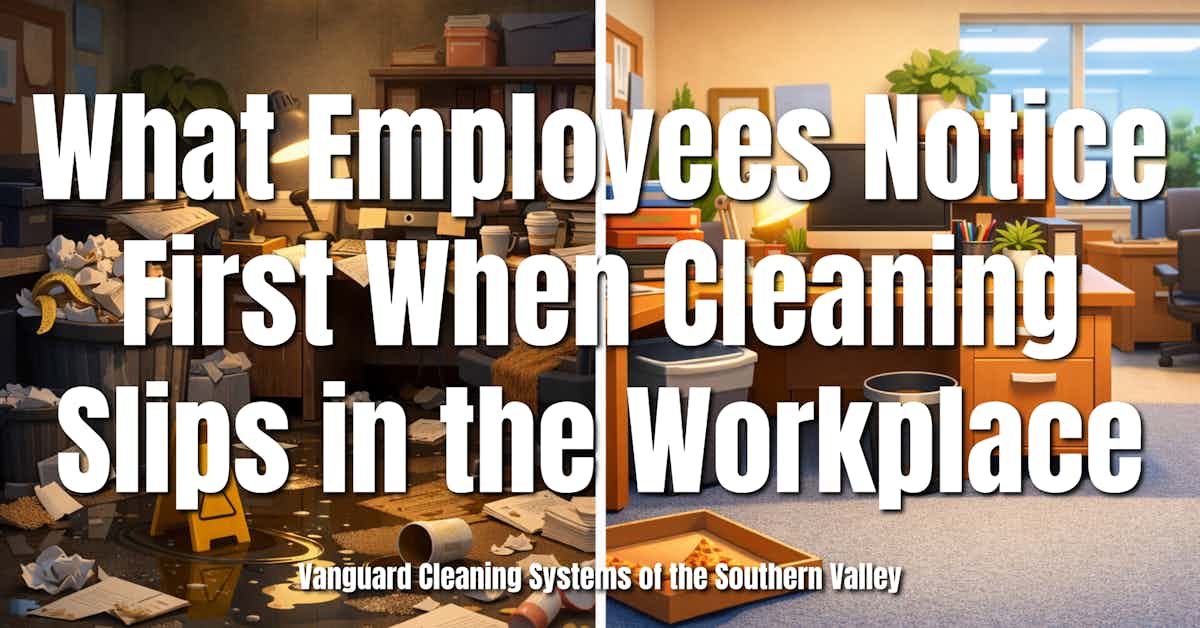
A workplace does not have to be dirty to feel neglected—employees notice subtle changes in order, safety, and sensory cues almost immediately.
Why First Impressions of Cleanliness Shape Workplace Perception
Employees form quick judgments about a workspace the moment they enter it. These judgments are rarely based on technical cleaning metrics or behind-the-scenes processes. Instead, they rely on visible order, obvious hazards, and environmental cues such as scent.
When cleaning standards begin to slip, the first signs are rarely hidden in laboratory testing or compliance reports. They are seen in cluttered walkways, streaked glass, neglected restrooms, overflowing trash bins, damp flooring, and stale air. Research across occupational safety, environmental psychology, and workplace health consistently shows that these visible and sensory signals influence how people perceive safety, care, and organizational standards.
Cleaning quality is not evaluated only on sanitation outcomes. It is evaluated on what people can see, smell, and experience.
Below is a research-backed breakdown of what employees tend to notice first—and why those signals matter.
1. Visible Clutter and Disorder
Why Clutter Stands Out Immediately
Clutter is one of the fastest and most obvious indicators that cleaning or housekeeping standards have declined. Papers on occupational safety repeatedly show that poor housekeeping increases slips, trips, and falls. Employees instinctively recognize clutter as a hazard before management metrics reflect a problem.
Research examining housekeeping practices demonstrates that removing clutter and maintaining organized workspaces significantly reduces accident risk. When materials are left in walkways, when cables cross traffic areas, or when storage areas spill into work zones, the visual signal is immediate: something is not being managed well.
Employees notice:
- Boxes stored in hallways
- Paper buildup on desks
- Supplies stacked in shared areas
- Trash accumulating outside bins
- Items stored on floors rather than shelves
These cues are processed as both safety and management issues.
The Link Between Visual Order and Safety Perception
Studies on 5S and 6S workplace systems show that structured organization improves not only efficiency but also worker perception of safety. When environments are orderly:
- Tools are stored consistently
- Surfaces are clear
- Walkways are defined
- Visual controls are present
Employees interpret these signs as intentional care.
When these systems break down, the opposite signal is sent. Disorder suggests neglect. Even minor disorganization creates doubt about whether other standards are slipping.
2. Wet Floors and Slip Hazards
Immediate Risk Recognition
Few things command attention faster than a wet floor without clear signage. Occupational slip-and-fall research identifies surface conditions as primary risk factors. Employees are conditioned—through experience and safety training—to look down and scan walking paths.
They notice:
- Damp entryways during dry weather
- Recently mopped areas without caution signs
- Sticky or uneven flooring
- Debris in stairwells
- Poor lighting that hides surface changes
Even if no injury occurs, visible slip hazards reduce trust in environmental oversight.
Maintenance Signals Matter
Reviews of occupational environments, including municipal cleaning and industrial settings, show that workers are highly aware of surface conditions. Poor maintenance—cracked tiles, loose mats, worn flooring—creates an impression of unmanaged risk.
When these issues appear unresolved over time, they become symbols of deferred care.
Employees rarely articulate this formally, but they register it.
3. Overall Organization and Flow
What Structured Systems Reveal
Structured workplace systems such as 5S (Sort, Set in Order, Shine, Standardize, Sustain) and 6S (which adds Safety) significantly improve visible order and worker confidence. Research shows that implementing these systems improves perceived productivity and environmental control.
Employees quickly notice:
- Clearly labeled storage
- Defined zones for supplies
- Consistent desk cleanliness
- Organized breakrooms
- Orderly maintenance closets
These visual systems signal predictability.
When cleaning slips, the first breakdown often appears in shared spaces: breakrooms, conference rooms, restrooms, and copy areas. These are high-traffic environments where disorder accumulates quickly.
If chairs remain misaligned, spills are not addressed promptly, or trash lingers, employees interpret this as a decline in standards.
4. Scent as a Cleanliness Cue
The Psychology of Smell
Scent is one of the strongest non-visual signals of cleanliness. Research on ambient scent demonstrates that clean fragrances improve attitudes toward shared environments—even when visual conditions remain unchanged.
Employees often associate neutral or fresh scents with care and sanitation. Conversely:
- Musty air
- Persistent restroom odors
- Food smells lingering overnight
- Trash odors in hallways
These signals trigger concern.
Importantly, scent does not need to be strong to be effective. Research suggests that subtle clean cues influence perception more positively than overpowering fragrances.
Why Scent Influences Trust
Smell operates quickly and emotionally. It bypasses rational evaluation and directly influences comfort levels. If an environment smells stale or unpleasant, employees may question whether surfaces are being maintained—even if they look acceptable.
This is why HVAC maintenance, trash removal frequency, and restroom ventilation are often among the first complaints when cleaning standards slip.
5. Restroom Conditions
Restrooms function as a benchmark for overall facility care.
Employees notice:
- Empty soap dispensers
- Paper towel shortages
- Water spots on mirrors
- Overflowing waste bins
- Unpleasant odors
- Stained fixtures
Visible hygiene practices increase employee confidence in workplace care. Research on workplace hygiene programs shows that active, visible hygiene measures improve perceptions that the organization prioritizes employee well-being.
Restrooms provide a concentrated testing ground for this perception.
If restrooms are maintained consistently:
- Employees assume standards extend elsewhere
- Confidence in overall cleanliness increases
If restrooms decline:
- Doubt spreads quickly
6. Trash and Waste Management
Overflowing trash bins are among the most visible signs of cleaning frequency breakdown.
Employees notice:
- Trash above the rim of receptacles
- Food waste in shared areas
- Unemptied recycling
- Liners hanging loosely
- Sticky residue around bins
Waste accumulation suggests that cleaning schedules are inconsistent.
Unlike deep cleaning tasks, trash removal is expected daily or more frequently in high-traffic areas. When it fails, the signal is immediate.
7. High-Touch Surfaces
While microbial contamination is invisible, residue and smudging are not.
Employees often evaluate:
- Fingerprints on glass doors
- Smears on elevator buttons
- Dust on conference tables
- Handprints on walls
- Sticky breakroom counters
Visible hygiene practices—such as wiping shared surfaces or maintaining stocked sanitation stations—improve confidence in environmental care.
Even if employees cannot verify microbial removal, they use visual cleanliness as a proxy for safety.
8. Entryways and First Zones
The building entrance creates a strong impression.
Employees notice:
- Dirty floor mats
- Water pooling near doors
- Dust buildup on reception desks
- Fingerprints on glass
- Poorly maintained landscaping
Entry areas accumulate soil quickly. If these spaces are neglected, employees assume similar standards apply throughout the facility.
Conversely, clean, dry, organized entryways create confidence before deeper evaluation begins.
9. Breakrooms and Shared Kitchens
Shared eating spaces are highly sensitive perception zones.
Employees look for:
- Clean countertops
- Empty sinks
- Organized refrigerators
- Sanitized tables
- Proper trash disposal
Because food preparation areas involve health considerations, even small lapses—crumb buildup, spills, or odors—trigger heightened awareness.
Breakrooms often reveal whether cleaning is reactive or scheduled.
10. Lighting and Air Quality
Cleaning perception extends beyond visible dirt.
Employees notice:
- Burned-out light bulbs
- Dust on vents
- Poor airflow
- Stuffy conference rooms
While these may fall under maintenance rather than cleaning, employees group them together under environmental care.
Environmental neglect in one area reduces confidence across others.
11. Visible Cleaning Activity
Active cleaning behaviors are powerful signals.
Research on workplace hygiene programs indicates that visible hygiene measures increase employee perception of organizational care.
Employees notice:
- Cleaning carts present during the day
- Staff addressing spills promptly
- Supplies being replenished
- Hand hygiene stations stocked
Visibility communicates accountability.
When cleaning happens exclusively after hours and issues persist into the next workday, employees assume responsiveness is low.
12. Small Details That Accumulate
Minor issues compound perception:
- Dust along baseboards
- Cobwebs in corners
- Smudges on light switches
- Sticky door handles
- Unaligned furniture
Each issue alone may seem minor. Together, they create a pattern.
Employees evaluate patterns more than isolated incidents.
Why These Cues Matter
Employees interpret visible cleanliness as a reflection of management standards.
When cleaning slips, the impact includes:
- Reduced confidence in safety
- Lower perception of organizational care
- Increased complaints
- Heightened awareness of risk
- Declining morale
Research consistently connects environmental order to perceived safety and productivity.
Cleaning is not only about health metrics. It is about signals.
Practical Ways to Prevent Negative First Impressions
To prevent early warning signs:
- Implement structured organization systems (5S or similar)
- Prioritize high-traffic zones
- Maintain consistent trash removal schedules
- Monitor restrooms multiple times per day
- Address slip hazards immediately
- Maintain neutral, clean ambient scent
- Ensure visible supply replenishment
- Conduct daily visual inspections
Focus on what employees see first—not only what inspection reports measure.
Final Takeaway
Employees evaluate workplace cleaning through immediate visual and sensory cues. They notice clutter, wet surfaces, odors, disorganization, and neglected shared spaces long before reviewing policies or documentation.
Visible order, safe surfaces, and subtle scent cues signal care.
When these signals decline, perception shifts quickly.
Cleanliness is not judged solely by sanitation outcomes. It is judged by what stands out first.
FAQ
What is the first thing employees notice when cleaning declines?
Employees typically notice visible clutter, wet or unsafe surfaces, overflowing trash, and unpleasant odors first. These cues signal safety risks and management oversight.
Why does scent influence perception of cleanliness?
Scent directly affects emotional response. Clean ambient scents increase positive attitudes toward shared spaces, while stale or unpleasant odors create doubt about hygiene standards.
Do employees notice cleaning frequency?
Yes. Overflowing trash, supply shortages, and residue buildup suggest inconsistent cleaning schedules. These patterns are quickly recognized.
How does organization affect safety perception?
Structured systems like 5S improve visible order and reduce hazards. Employees interpret organization as a sign of safety and operational control.
Why are restrooms so important in workplace cleaning evaluation?
Restrooms concentrate hygiene indicators—odor, supply availability, and visible cleanliness—into one area. Employees use restroom condition as a benchmark for overall facility standards.
People Also Ask (PAA)
What do employees notice first when evaluating workplace cleaning?
Employees most often notice visible clutter, slip hazards such as wet floors, restroom conditions, trash overflow, surface residue, and environmental cues like odor. These signals immediately influence perceptions of safety, hygiene, and organizational care.
References
Agwu, M., & Ajayi, S. (2014). Good housekeeping - A panacea for slips, trips & falls accident in the NLNG project, Bonny. International Journal of Business Administration, 5(4), 12–20. https://doi.org/10.5430/ijba.v5n4p12
Arbogast, J., Moore-Schiltz, L., Jarvis, W., Harpster-Hagen, A., Hughes, J., & Parker, A. (2016). Impact of a comprehensive workplace hand hygiene program on employer health care insurance claims and costs, absenteeism, and employee perceptions and practices. Journal of Occupational and Environmental Medicine, 58, e231–e240. https://doi.org/10.1097/JOM.0000000000000738
Ardelet, C., Fleck, N., & Grobert, J. (2022). When a clean scent soothes the soul: Developing a positive attitude toward sharing service space with strangers. Journal of Retailing and Consumer Services. https://doi.org/10.1016/j.jretconser.2022.103051
Chang, W., Leclercq, S., Lockhart, T., & Haslam, R. (2016). State of science: Occupational slips, trips and falls on the same level. Ergonomics, 59, 861–883. https://doi.org/10.1080/00140139.2016.1157214
Sravanthi, P., Koppala, R., Mitra, S., & Pera, N. (2025). 6S management project to improve workplace productivity in primary health centre in India. BMC Health Services Research, 25. https://doi.org/10.1186/s12913-025-13379-0
Van Kampen, V., Hoffmeyer, F., Seifert, C., Brüning, T., & Bünger, J. (2020). Occupational health hazards of street cleaners: A literature review considering prevention practices at the workplace. International Journal of Occupational Medicine and Environmental Health. https://doi.org/10.13075/ijomeh.1896.01576
Wiguna, W., Susanto, B., & Tukiran, M. (2022). Application of 5S in the mobile shop work area as an effort to increase work productivity. International Journal of Economy, Education and Entrepreneurship (IJE3). https://doi.org/10.53067/ije3.v2i3.112
