

Winning on the mat starts long before the whistle — consistent cleaning and hygiene habits are the best defense against skin infections.
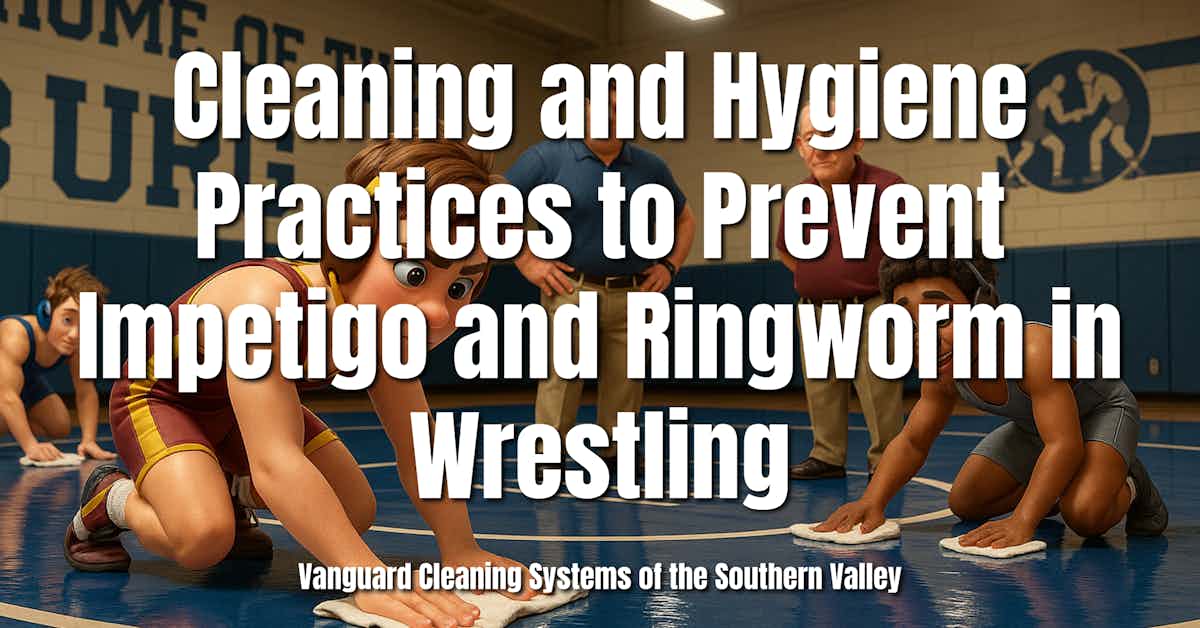
Introduction: Clean Mats Win Matches
Wrestling is one of the most physically demanding high school sports—and also one of the riskiest for skin infections. Every day, wrestlers make hundreds of skin-to-skin contacts on shared mats. Minor abrasions, sweat, and friction make the skin more vulnerable to infection. When hygiene lapses occur, bacteria and fungi find ideal conditions to spread.
Studies have consistently shown that wrestling teams maintaining strict cleaning and hygiene protocols have far fewer outbreaks of impetigo and ringworm. As one researcher stated, “Infection control in wrestling depends entirely on routine hygiene—both environmental and personal.”
Clean environments and clean athletes go hand in hand. This article summarizes the most current, evidence-based strategies for preventing impetigo and ringworm (tinea gladiatorum) in wrestling programs.
Daily Cleaning Prevents Outbreaks Before They Start
Research from collegiate athletic programs found that cleaning mats, locker rooms, and shared equipment before and after every practice virtually eliminates Staphylococcus aureus and dermatophytes—the primary causes of bacterial and fungal infections.
In one study, “custodial staff trained in CDC-level cleaning protocols achieved complete clearance of S. aureus from wrestling mats after consistent cleaning practices were adopted.” When coaches and facility managers oversee daily cleaning, outbreaks become extremely rare.
Actionable Steps for Coaches and Custodial Teams:
- Clean all mats with a 70% alcohol-based cleaner or 1:100 chlorine solution before and after each session.
- Wipe down benches, wall pads, and shared training gear.
- Keep ventilation systems active during cleaning to allow mats to dry completely.
- Record each cleaning session in a visible log to ensure accountability.
Clean surfaces are the first—and strongest—barrier against transmission.
Wrestlers Carry High Bacterial Loads After Practice
The human skin naturally carries bacteria, but wrestlers have significantly higher microbial counts after training sessions. A microbiome analysis revealed increased levels of Staphylococcus aureus, S. epidermidis, and Bacillus cereus on athletes’ skin immediately following practice.
The study concluded, “Alcohol-based antiseptics demonstrated the strongest inhibitory effect on bacterial colonies and are recommended after each training session.”
Actionable Habits for Athletes:
- Use alcohol-based antiseptic wipes (70% isopropyl) on exposed skin after every practice.
- Avoid sitting on mats or benches without a shirt.
- Never share towels, soap, or personal hygiene items.
- Shower within 30 minutes after leaving the mat.
A short delay in post-practice cleaning allows microbes to multiply quickly. Making hygiene part of the daily cool-down is one of the most effective prevention methods.
Hygiene Is the Primary Defense Against Infection
Wrestling hygiene is about consistency, not complexity. Studies show that showering, daily laundering, and equipment cleaning drastically reduce skin infections across all contact sports.
As one review summarized, “Regular personal hygiene is the single most important determinant in preventing bacterial and fungal transmission among athletes.”
Core Daily Hygiene Practices:
- Shower after every practice or match with an antimicrobial soap such as chlorhexidine.
- Launder uniforms and towels daily.
- Avoid sharing personal gear, razors, or protective equipment.
- Cover cuts and abrasions with breathable bandages before practice.
A well-implemented hygiene policy reduces impetigo, ringworm, and MRSA infections more effectively than any post-outbreak intervention.
Screening and Early Treatment Stop Ringworm (Tinea Gladiatorum)
Tinea gladiatorum, caused primarily by Trichophyton tonsurans, is the most common fungal infection among wrestlers. Over 90% of reported cases trace back to this species. It spreads quickly through direct contact and contaminated mats.
“Regular athlete screening and immediate treatment of infected individuals prevent outbreaks that can sideline entire teams,” wrote Zalewski and colleagues.
Actionable Steps for Coaches and Athletic Trainers:
- Conduct mandatory skin checks before every match or tournament.
- Isolate and refer infected athletes for treatment immediately.
- Begin topical antifungal therapy (e.g., clotrimazole) or oral treatment (e.g., fluconazole) as prescribed.
- Do not allow athletes with active lesions to return until cleared by a healthcare provider.
Prompt identification prevents spread and protects both individual health and team performance.
Impetigo Control Starts with Clean Skin and Wound Care
Impetigo, caused by Staphylococcus aureus or Streptococcus pyogenes, thrives in environments with poor hygiene and unprotected abrasions. In youth populations, the most common contributing factor is infrequent bathing or inadequate cleansing of skin breaks.
One cross-sectional study found that “improved hygiene behaviors, including daily washing and care of minor wounds, reduced impetigo incidence by more than half.”
Actionable Steps for Coaches and Parents:
- Encourage athletes to report skin sores immediately.
- Treat small cuts and scrapes with topical antiseptics such as povidone-iodine.
- Apply antibacterial ointments like mupirocin to suspected impetigo lesions.
- Reinforce no-contact rules for athletes with open or crusted sores.
Minor wounds are small openings for bacteria but major causes of team-wide infection when ignored.
Team-Wide Prevention Requires Education and Accountability
Preventing outbreaks is not just a custodial or medical task—it’s a cultural one. Teams that prioritize hygiene education maintain healthier rosters and avoid practice interruptions.
During a wrestling outbreak in Arizona, public health officials reported that “infection control improved only after athletes, coaches, and custodians received coordinated training in cleaning and reporting protocols.”
Actionable Steps for Program Directors:
- Conduct preseason hygiene workshops for athletes and staff.
- Post visual reminders in locker rooms: “Shower, Wash, Report.”
- Maintain a written infection control plan aligned with CDC recommendations.
- Document each cleaning and skin-check event to verify compliance.
When hygiene becomes part of the program identity, prevention becomes effortless.
Weekly and Seasonal Maintenance
Even with daily cleaning, deeper maintenance is essential. Fungal spores and bacterial biofilms can persist in hard-to-reach areas without periodic disinfection.
Weekly Protocols:
- Deep-clean locker rooms, mats, and training equipment.
- Wash headgear straps and padding thoroughly.
- Inspect showers and drains for residue or mold.
- Review athlete hygiene logs and skin-check results.
Seasonal Practices:
- Schedule professional cleaning services before and after the wrestling season.
- Reevaluate all cleaning products for safety and effectiveness.
- Replace worn-out mats or surfaces that no longer clean easily.
A consistent maintenance schedule supports daily habits and ensures the longevity of infection control results.
Hygiene Protocol Summary for Athletic Directors
Daily Routine (Before and After Practice):
- Clean mats with 70% alcohol or diluted chlorine solution.
- Wipe benches, training gear, and locker room surfaces.
After Every Practice:
- Require showers using antimicrobial soap.
- Mandate clean clothing and towels.
- Apply antiseptic wipes to exposed skin areas.
Weekly:
- Perform locker room deep clean.
- Launder headgear and inspect mats for wear.
Ongoing:
- Conduct skin checks and isolate infected athletes.
- Continue hygiene education and regular team discussions.
Consistency is the difference between prevention and outbreak management.
Conclusion: Clean Habits Win Seasons
Preventing impetigo and ringworm isn’t complicated—it’s about routine. Clean mats, clean gear, and clean skin are the simplest, most effective measures a wrestling program can take to protect its athletes.
As one study concluded, “Every outbreak of impetigo or tinea gladiatorum represents a failure of routine hygiene—one that could have been prevented through education and consistency.”
For athletic directors and coaches, these evidence-based habits protect both athletes and the integrity of the sport. The cleanest programs are not just safer—they’re the ones still competing at the end of the season.
If you would like more information regarding the effectiveness of high-performance infection prevention and control measures, or if you would like to schedule a free, no-obligation on-site assessment of your facility's custodial needs, contact us today for a free quote!
In Bakersfield, CA, call (661) 437-3253
In Fresno, CA, call (559) 206-1059
In Valencia, CA, or Santa Clarita, CA, call (661) 437-3253
In Palmdale, CA, or Lancaster, CA, call (661) 371-4756
References
Aleid, A., Nukaly, H., Almunahi, L., Albwah, A., Al-Balawi, R., AlRashdi, M., Alkhars, O., Alrasheeday, A., Alshammari, B., Alabbasi, Y., & Mutair, A. (2024). Prevalence and socio-demographic and hygiene factors influencing impetigo in Saudi Arabian children: A cross-sectional investigation. Clinical, Cosmetic and Investigational Dermatology, 17, 2635–2648. https://doi.org/10.2147/ccid.s472228
Bassiri-Jahromi, S., & Khaksar, A. (2008). Outbreak of tinea gladiatorum in wrestlers in Tehran (Iran). Indian Journal of Dermatology, 53, 132–136. https://doi.org/10.4103/0019-5154.43219
Davletova, N., Zemlenukhin, I., Martykanova, D., Mugallimov, S., & Akhatov, A. (2016). Hygienic assessment of risk factors for skin infections in athletes–wrestlers. Health Risk Analysis, 53–60. https://doi.org/10.21668/health.risk/2016.3.06.eng
Martykanova, D., Davletova, N., Zemlenuhin, I., Volchkova, V., Mugallimov, S., Ahatov, A., Laikov, A., Markelova, M., Boulygina, E., Lopukhov, L., & Grigoryeva, T. (2019). Skin microbiota in contact sports athletes and selection of antiseptics for professional hygiene. BioMed Research International, 2019. https://doi.org/10.1155/2019/9843781
Nowicka, D., Bagłaj-Oleszczuk, M., & Maj, J. (2020). Infectious diseases of the skin in contact sports. Advances in Clinical and Experimental Medicine, 29(12), 1491–1495. https://doi.org/10.17219/acem/129022
Oller, A., Province, L., & Curless, B. (2010). Staphylococcus aureus recovery from environmental and human locations in 2 collegiate athletic teams. Journal of Athletic Training, 45(3), 222–229. https://doi.org/10.4085/1062-6050-45.3.222
Williams, C., Wells, J., Klein, R., Sylvester, T., Sunenshine, R., & Centers for Disease Control and Prevention. (2015). Outbreak of skin lesions among high school wrestlers—Arizona, 2014. MMWR Morbidity and Mortality Weekly Report, 64(20), 559–560.
Zalewski, A., Goldust, M., & Szepietowski, J. (2022). Tinea gladiatorum: Epidemiology, clinical aspects, and management. Journal of Clinical Medicine, 11(14), 4066. https://doi.org/10.3390/jcm11144066
FAQ
Q1: What causes most skin infections in wrestling?
Bacteria like Staphylococcus aureus and fungi such as Trichophyton tonsurans spread through direct contact, contaminated mats, and shared gear.
Q2: How often should mats be cleaned?
Before and after every practice and competition using EPA-approved cleaners like 70% alcohol or 1:100 bleach solutions.
Q3: How can wrestlers avoid impetigo?
By showering after each practice, keeping wounds covered, wearing clean uniforms daily, and never sharing towels or razors.
Q4: How do coaches stop ringworm outbreaks?
Through daily mat cleaning, athlete screening, isolation of infected individuals, and early antifungal treatment.
Q5: Why is team hygiene education essential?
Because most outbreaks stem from preventable behaviors, not lack of resources—education ensures long-term compliance.
People Also Ask (PAA)
1. What’s the best mat cleaner for wrestling programs?
Alcohol- or chlorine-based cleaners eliminate bacteria and fungi most effectively when applied before and after every use.
2. Can ringworm spread even after cleaning mats?
Yes—if athletes skip showers, share towels, or ignore early symptoms. Both cleaning and personal hygiene are needed to prevent spread.
3. How do you identify impetigo on athletes?
Impetigo appears as honey-colored crusts or blisters, usually around the mouth or nose. Athletes should be isolated and treated immediately.
4. What happens if infections are ignored?
Neglecting treatment can cause widespread team outbreaks, temporary closures, and lost competition eligibility.
5. What are the top three hygiene rules for wrestling teams?
Clean mats daily, shower after every session, and report any skin changes right away.
