
A cleaner workplace isn’t just about appearances—it’s a proven strategy for keeping employees healthier, reducing absenteeism, and boosting performance.
The Strategic Role of Janitorial Services in Reducing Workplace Absenteeism
Employee absenteeism imposes substantial and recurring costs on organizations, reducing productivity, straining resources, and undermining operational stability. In many sectors, millions of workdays are lost annually due to sickness absence, with associated expenses reaching into the billions. Even small percentage reductions in absenteeism can yield measurable savings and performance gains. Ill health consistently emerges as the primary cause, and a significant portion of sickness absence is linked directly to workplace environmental conditions, such as poor hygiene, inadequate air quality, and unsafe surfaces. This connection positions workplace cleanliness as a critical factor in prevention.
Research shows that improvements in the work environment directly reduce absence rates, while poorly designed or inconsistently applied attendance policies can undermine these gains. Organizations that systematically monitor absence, implement structured return-to-work procedures, and maintain high environmental standards typically outperform those with irregular practices. Within this framework, professional janitorial services are more than a cosmetic expense—they are an essential part of workplace health strategy. By reducing exposure to pathogens, allergens, and physical hazards, they help prevent health-related absences before they occur.
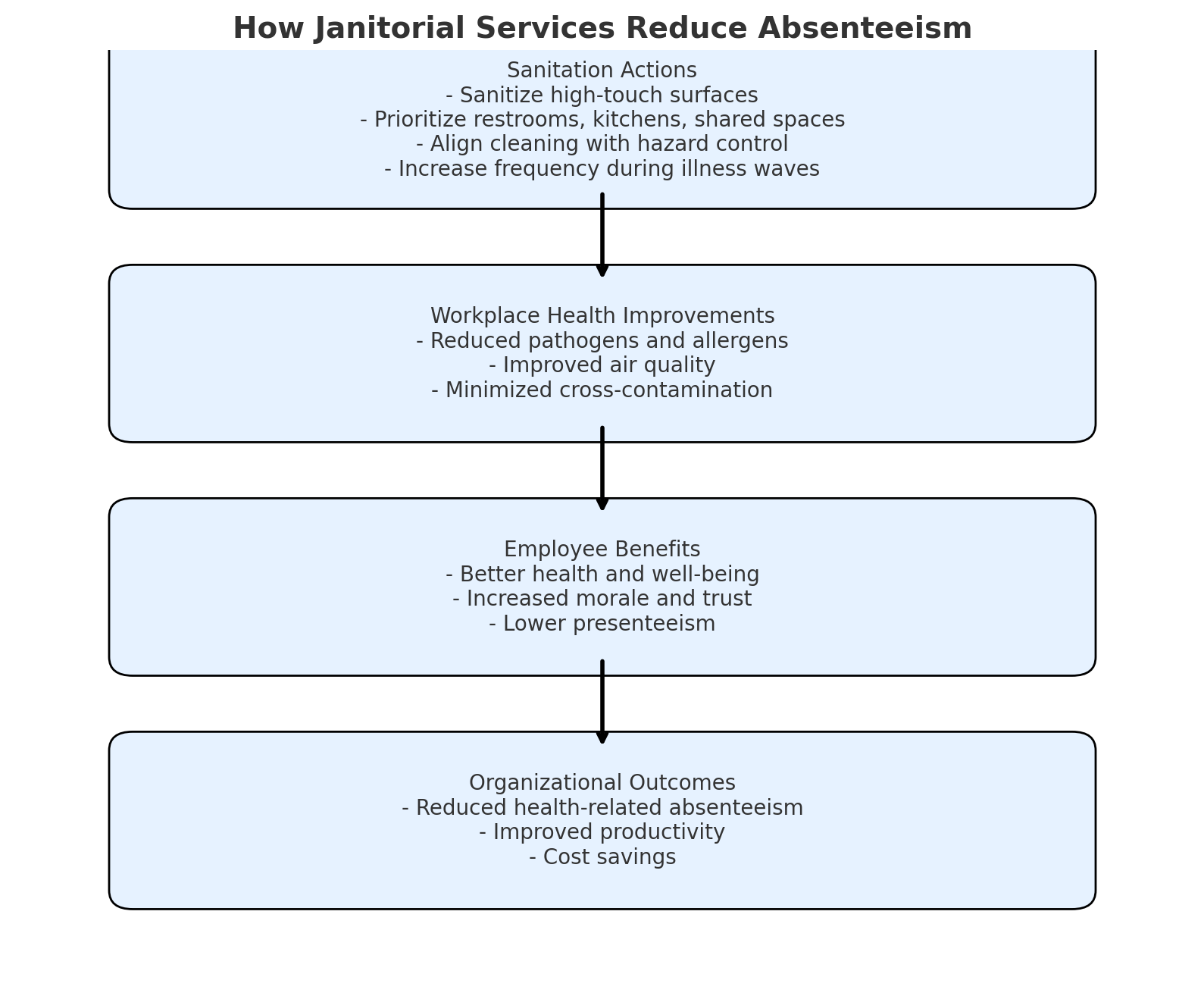
Immediate actions that align janitorial practice with absenteeism reduction include:
- Sanitizing high-touch surfaces such as door handles, elevator controls, and shared devices on a set schedule, adjusted for occupancy levels and seasonal risks.
- Prioritizing restrooms, kitchens, and shared meeting spaces with targeted cleaning protocols to prevent cross-contamination.
- Coordinating cleaning efforts with hazard control measures, including spill response, walkway clearance, and ventilation maintenance.
- Increasing cleaning frequency during periods of heightened illness transmission and communicating these efforts to employees to build trust and confidence in workplace safety.
Measuring the impact of these efforts is equally important. Tracking absenteeism metrics—such as severity (lost-time rate), frequency (spells per employee), and duration (days per spell)—alongside cleaning quality scores allows organizations to identify trends and adjust protocols proactively. By integrating professional janitorial services into a broader attendance and health management strategy, employers can create cleaner, safer environments that foster well-being, enhance morale, and significantly reduce avoidable absenteeism.
The Link Between Workplace Cleanliness and Health
- Unsanitary workplaces contribute to illness through the spread of bacteria, viruses, and allergens.
- Poor air quality from dust, mold, or chemical residue increases respiratory symptoms and can lead to long-term health issues.
- Pathogens thrive on high-touch surfaces, especially in areas like restrooms, breakrooms, and shared workstations.
- Employees exposed to these hazards are more likely to take sick leave, directly impacting attendance and productivity.
Actionable Steps
- Implement a surface sanitation schedule for all high-touch points, documenting dates, times, and products used.
- Address air quality with regular filter changes, dust control, and humidity management.
- Train janitorial teams to recognize high-risk contamination zones and adjust cleaning intensity accordingly.
Preventing Health-Related Absences
- Regular sanitation eliminates harmful microorganisms before they can spread.
- Kitchens, restrooms, and shared meeting spaces often act as hotspots for illness transmission.
- Public health trends, such as seasonal flu waves, can be countered with heightened sanitation protocols.
- Shared devices and workstations are a common but overlooked source of pathogen transfer.
Actionable Steps
- Use color-coded cleaning tools to avoid cross-contamination between high-risk and low-risk areas.
- Increase sanitation frequency during peak illness seasons.
- Sanitize shared office equipment daily, especially in open-plan layouts.
- Include sanitation checks in daily janitorial logs.
Supporting Occupational Health Programs
- Janitorial services strengthen health initiatives by controlling environmental hazards.
- Integration with occupational health programs ensures a unified approach to employee wellness.
- Cleaner work environments complement ergonomic and safety measures to provide a holistic health strategy.
Actionable Steps
- Align janitorial checklists with occupational health program priorities.
- Conduct joint inspections with health and safety officers to identify hygiene-related risks.
- Integrate sanitation reports into overall workplace wellness data dashboards.
Boosting Employee Morale and Engagement
- Clean, orderly spaces communicate care and respect for employees.
- Workers are more likely to feel valued when they see consistent investment in workplace conditions.
- Reduced illness rates translate to fewer disruptions, improving morale and team cohesion.
Actionable Steps
- Publicly post cleaning and sanitation schedules in common areas.
- Gather employee feedback on perceived cleanliness and act on suggestions.
- Celebrate milestones, such as reduced absence rates, to reinforce the value of sanitation efforts.
Reducing the Spread of Contagion in Shared Spaces
- Breakrooms, restrooms, and meeting rooms have high traffic and frequent shared contact points.
- Without regular sanitation, these areas become hubs for pathogen spread.
- Cross-contamination risk increases with shared items like coffee machines, printers, and vending machines.
Actionable Steps
- Schedule sanitation for shared spaces multiple times per day.
- Provide sanitizing wipes and hand hygiene stations in all high-traffic areas.
- Rotate deep cleaning of shared appliances and equipment weekly.
Contributing to a Culture of Attendance
- Consistent sanitation sends a visible signal that attendance is supported by a healthy environment.
- Employees are less likely to stay home for fear of illness when they trust the workplace’s hygiene standards.
- A clean workplace complements attendance policies and health communication strategies.
Actionable Steps
- Incorporate sanitation updates into attendance-related internal communications.
- Make sanitation a visible part of the workday without disrupting operations.
- Involve employees in identifying hygiene priorities for their specific work areas.
Economic Benefits of Reduced Absenteeism
- Lower sick leave usage reduces the need for overtime and temporary hires.
- Fewer disruptions lead to higher productivity and quality output.
- Reduced health-related turnover improves recruitment and retention efficiency.
Actionable Steps
- Calculate cost savings from absence reduction and reinvest in enhanced sanitation programs.
- Use absence and sanitation data to justify budget allocation for cleaning services.
- Share financial and operational benefits with stakeholders to sustain long-term commitment.
Frequently Asked Questions
How do janitorial services reduce absenteeism?
By sanitizing high-touch areas, improving air quality, and preventing cross-contamination, janitorial services lower the risk of illness and create a healthier work environment, reducing the need for sick leave.
Are sanitation measures effective during flu season or outbreaks?
Yes. Increasing sanitation frequency and targeting shared spaces during peak illness periods helps limit the spread of viruses and keeps more employees at work.
What areas should be prioritized for workplace sanitation?
Restrooms, kitchens, breakrooms, shared workstations, and meeting rooms should be top priorities due to high traffic and frequent contact points.
Can better workplace sanitation improve employee morale?
Absolutely. A clean, well-maintained workplace signals that management values staff health and comfort, which builds trust and increases engagement.
How can companies measure the impact of sanitation on absenteeism?
Track absenteeism metrics—such as frequency, severity, and duration—alongside cleaning quality scores to see correlations and adjust protocols as needed.
Is sanitation cost-effective for absenteeism reduction?
Yes. Reducing illness-related absences cuts overtime, temporary staffing, and productivity losses, resulting in significant cost savings over time.
References
- Vuuren, C., & Gründemann, R. (1999). Preventing absenteeism at the workplace in Europe. http://www.re-integrate.eu/resources/preventing-absenteeism-at-the-workplace.pdf.
- Moyles, M. (1997). Absenteeism: Management Control and True Causes.. https://norma.ncirl.ie/311/.
- Karimbil, M. (2019). A Study on Employee Absenteeism in Today’s Workplace. , 21, 273-279. https://www.researchgate.net/publication/353572092_A_Study_on_Employee_Absenteeism_in_Today%27s_Workplace_XXX-X-XXXX-XXXX-XXXXX00_C20XX_IEEE
- Farrell, T. (2005). Absenteeism and the Effectiveness of Absence Management Strategies - A Study within Bausch and Lomb.. https://norma.ncirl.ie/679/.
- Hassink, W. (2018). How to reduce workplace absenteeism. The IZA World of Labor, 447, 447-447. https://doi.org/10.15185/IZAWOL.447.
Sanitation as a Core Driver of Attendance and Organizational Performance
Janitorial services are a strategic investment in workplace health, not just a maintenance expense. By systematically sanitizing high-touch areas, controlling environmental hazards, and integrating with broader health initiatives, they directly reduce illness-related absenteeism. This approach delivers measurable benefits—healthier employees, improved morale, consistent staffing, and significant cost savings—making sanitation a central pillar in any comprehensive attendance management strategy.
If you would like more information regarding the effectiveness of high-performance infection prevention and control measures, or if you would like to schedule a free, no-obligation on-site assessment of your facility's custodial needs, contact us today for a free quote!
In Bakersfield, CA, call (661) 437-3253
In Fresno, CA, call (559) 206-1059
In Valencia, CA, or Santa Clarita, CA, call (661) 437-3253
In Palmdale, CA, or Lancaster, CA, call (661) 371-4756

You must be logged in to post a comment.