
Green cleaning can protect health and the planet—but only if your products and practices are truly effective.
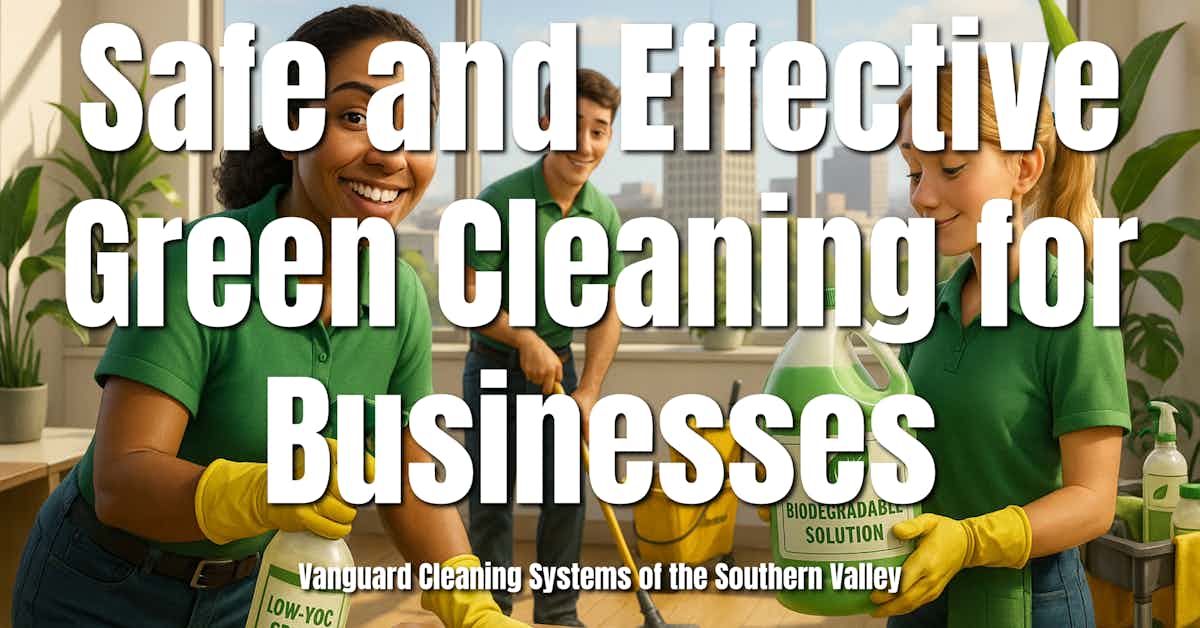
Safe and Effective Green Cleaning for Businesses: How to Protect People and the Planet
Green cleaning has moved from trend to expectation. Businesses are under growing pressure to maintain safe workplaces while demonstrating environmental responsibility. For facilities managers and building operators, this means finding cleaning solutions that minimize chemical exposure, reduce environmental impact, and perform as effectively as traditional products.
Yet, misconceptions persist. Not all “green” products are equal. Some formulations lack antimicrobial efficacy, while others emit volatile organic compounds (VOCs) similar to conventional cleaners. Without due diligence, well-intentioned sustainability efforts can inadvertently compromise indoor air quality (IAQ) or worker safety.
Across regions like California’s Central Valley—home to Bakersfield, Fresno, and numerous logistics and manufacturing hubs—the stakes are especially high. This area faces some of the nation’s most persistent air-quality challenges, making the selection of low-emission cleaning products not just a sustainability choice, but a public health priority.
This article translates scientific findings into practical strategies for facilities professionals seeking a balanced approach—one that protects building occupants, cleaning staff, and the environment without sacrificing effectiveness or cost control.
Understanding Green Cleaning in Context
What “Green Cleaning” Really Means
Green cleaning refers to the use of products and methods designed to protect health and the environment. These products are typically formulated with biodegradable ingredients, lower toxicity levels, and reduced VOC content. However, “green” is not synonymous with “safe” or “effective.”
To qualify as genuinely sustainable, a cleaning system must achieve three simultaneous goals:
- Protect human health: Reduce exposure to harmful chemicals and allergens.
- Protect the environment: Limit emissions, waste, and ecological toxicity.
- Maintain or improve performance: Match the cleaning efficacy of conventional alternatives.
The Drivers Behind Adoption
- Regulatory compliance: State agencies, including California’s Department of Industrial Relations, encourage the use of low-VOC, environmentally responsible products.
- Corporate sustainability mandates: Many organizations include green cleaning in their Environmental, Social, and Governance (ESG) frameworks.
- Occupant demand: Employees increasingly expect healthier indoor environments and transparent sustainability efforts.
- Operational cost savings: Concentrated green products often reduce long-term costs through lower dilution rates and waste.
Evidence-Based Insights on Green Cleaning Efficacy and Safety
Research over the last two decades offers a nuanced picture. While green cleaning products are generally safer, their performance, emissions, and long-term health effects vary substantially by formulation.
1. Effectiveness vs. Antimicrobial Action
A 2009 study by Light evaluated “green” cleaning products against respiratory viruses and mold growth. Among 27 Green Seal–certified surface cleaners, only one was registered as antimicrobial. The majority lacked proven efficacy against common viruses or molds. This underscores that green cleaning does not automatically equal disinfection, and facilities managers should choose products based on intended use and required hygiene standards.
2. Indoor Air Quality (IAQ) and VOC Emissions
Calderon et al. (2022) found that while green products generally emit fewer harmful VOCs than traditional cleaners, emissions can still occur, particularly from fragrance additives. Some green products released terpenes and other organic compounds that contribute to secondary pollutants such as formaldehyde.
In regions like the Central Valley—where ambient particulate pollution already ranks among the highest nationally—selecting products with verified low-VOC content is critical to preventing compounding exposure indoors.
3. Cost and Economic Viability
A broad institutional pricing survey by Espinoza et al. (2010) demonstrated that green products are often cost-competitive. When purchased as concentrates, many green cleaners were less expensive per diluted gallon than conventional products. Moreover, switching to reusable microfiber systems and closed-loop dilution controls further reduced chemical waste and labor costs.
The conclusion: sustainability and fiscal responsibility can align, provided procurement teams focus on product lifecycle value rather than upfront unit price.
4. Safety Concerns with Green Ingredients
“Green” labeling does not guarantee safety. Schulte et al. (2010) reported that certain bio-based solvents, such as 1-bromopropane, can cause neurotoxicity and reproductive harm. This finding emphasizes the need for worker-centered evaluation—products should undergo occupational health review in addition to environmental certification.
5. Documented Benefits in Educational and Healthcare Facilities
Empirical data from Malaysia’s Ramli et al. (2019) and Sri Lanka’s Rathnasiri & Shridharran (2019) studies show measurable health and performance benefits from green cleaning adoption in schools and healthcare facilities. Both environments saw reduced absenteeism, improved IAQ, and lower surface allergen levels. The key takeaway: consistent green cleaning practices improve occupant health outcomes, particularly in sensitive populations.
6. Life Cycle and Environmental Impacts
A Life Cycle Assessment (LCA) by Van Lieshout et al. (2015) found that ingredient formulation accounts for the majority of a product’s environmental footprint. Factors such as raw material extraction, packaging, and disposal significantly influence sustainability. Manufacturers that disclose ingredient sourcing and pursue cradle-to-grave analysis demonstrate higher transparency and accountability.
7. VOC Emission Contradictions
Harding-Smith et al. (2024) challenged the assumption that all green cleaners are low-emission. Some products emitted higher levels of monoterpenes, contributing to secondary VOC reactions. This highlights the importance of independent verification over marketing claims—a lesson critical for businesses aiming to align with genuine environmental standards.
The Business Case for Green Cleaning
1. Employee Health and Productivity
Cleaner indoor air reduces irritation, fatigue, and allergic responses. Workers in offices maintained with low-VOC green products report improved comfort and focus, which correlates with measurable productivity gains.
2. Brand and Compliance Benefits
Sustainability credentials enhance brand image and may contribute to LEED certification or WELL Building Standard compliance. Green cleaning is also aligned with Cal/OSHA guidance emphasizing reduced exposure to hazardous substances.
3. Operational Efficiency
Green cleaning systems often feature closed dilution dispensers that minimize waste and training errors. Concentrated formulas reduce storage space, transportation emissions, and container disposal frequency.
4. Environmental Stewardship
Transitioning to green products directly reduces waterborne toxicity, persistent chemical residues, and packaging waste. This aligns with California’s waste-reduction goals and supports statewide emissions targets.
How to Build a Safe and Effective Green Cleaning Program
Step 1: Audit Current Practices
Conduct a chemical inventory of all products used on-site. Record manufacturer, usage rate, dilution method, and Safety Data Sheet (SDS) details. Identify redundant or high-VOC products for phase-out.
Step 2: Verify Third-Party Certifications
Look for recognized certifications such as:
- Green Seal (GS-37) – General-purpose, bathroom, and glass cleaners.
- EcoLogo (UL 2759) – Institutional cleaning products.
- EPA Safer Choice – Verifies chemical safety and environmental criteria.
- Cradle to Cradle Certified™ – Evaluates lifecycle sustainability.
Avoid self-declared “eco-friendly” labels without supporting evidence.
Step 3: Assess Indoor Air Quality Impacts
Use VOC monitors or coordinate with your IAQ consultant to track emissions before and after switching products. Select unscented or fragrance-free options whenever possible.
In Central Valley offices, this step is essential due to regional background pollution levels and limited natural ventilation during summer heat events.
Step 4: Train Custodial Staff
Staff competency determines program success. Provide training on:
- Correct dilution and dwell time
- Proper use of microfiber systems
- Chemical storage and spill protocols
- Identification of fragrance-sensitive occupants
- PPE and ventilation awareness
Reinforce that “green” does not mean hazard-free—proper handling remains essential.
Step 5: Optimize Product Usage
Implement dilution control systems to eliminate overuse and ensure consistency. Over-concentration increases cost and exposure risk.
Use color-coded microfiber cloths and sealed containers to reduce cross-contamination and prevent spills.
Step 6: Engage Stakeholders
Communicate program goals to employees and tenants. Post signage highlighting environmental benefits, VOC reductions, and air-quality commitments. Transparency strengthens participation and brand credibility.
Step 7: Monitor, Measure, and Adjust
Establish metrics such as:
- Product consumption per month
- IAQ readings (VOCs, PM2.5)
- Employee comfort survey scores
- Waste and packaging reductions
Review data quarterly to adjust products, techniques, or suppliers.
Common Myths About Green Cleaning
- “Green cleaners are weaker.”
Modern formulations perform comparably when applied correctly. Many use surfactants and organic acids that clean as effectively as synthetic chemicals. - “Green products are always safe.”
Some green-labeled compounds still cause irritation or emit VOCs. Always cross-check SDS sheets for hazard ratings. - “Green cleaning costs more.”
Long-term operational savings often outweigh any initial expense through concentrate use and reduced waste. - “Scented means clean.”
Fragrance-free products are often healthier. Odor should not define effectiveness.
Regional Relevance: Central Valley Business Considerations
In Bakersfield, Fresno, and surrounding Central Valley cities, businesses face elevated PM2.5 and ozone concentrations due to geography and agricultural activity. When indoor VOC emissions compound outdoor particulate infiltration, employees experience higher risks of respiratory irritation and fatigue.
For these regions:
- Prioritize fragrance-free, low-VOC cleaners to minimize combined pollutant exposure.
- Use high-efficiency particulate filters (MERV 13+) to capture residual pollutants from both indoor and outdoor sources.
- Schedule cleaning during low-occupancy periods to prevent odor accumulation.
- Audit ventilation annually to ensure that air exchange rates meet current ASHRAE standards.
These steps align with California Air Resources Board (CARB) recommendations for maintaining healthy indoor environments in high-smog regions.
People Also Ask (PAA)
What defines a “green” cleaning product?
A green cleaning product minimizes human and environmental toxicity while maintaining effective performance. Certification by third-party organizations like Green Seal or EPA Safer Choice verifies compliance.
Are green cleaners antimicrobial?
Most are not. Green cleaning focuses on soil and residue removal, not germicidal action. Facilities requiring microbial control should use certified products appropriate for their sanitation needs.
Do green cleaners improve indoor air quality?
Yes, typically. Green cleaners emit fewer harmful VOCs than conventional ones, although some still release fragrance compounds that can impact sensitive individuals.
Is green cleaning more expensive?
Not necessarily. Concentrated green products can reduce costs through lower dilution ratios, reduced packaging, and less waste.
How do I know a product is truly green?
Look for recognized third-party certifications and transparent ingredient disclosure. Avoid vague marketing terms such as “eco-safe” or “natural” without supporting documentation.
Frequently Asked Questions (FAQ)
1. Can green cleaning replace all traditional products?
In most office environments, yes. However, specialty areas such as laboratories or food preparation zones may still require targeted chemical agents.
2. Are essential oils safer than synthetic fragrances?
Not always. Natural fragrances can still emit terpenes and cause allergic reactions. Choose unscented products when possible.
3. How can I evaluate VOC emissions from cleaners?
Request product emission data or certificates of compliance with CARB’s low-VOC limits. Independent testing or IAQ monitoring can verify results.
4. What if employees react to new green products?
Reassess the product’s ingredients. Remove any formulation containing sensitizing agents like limonene or linalool and provide fragrance-free alternatives.
5. How can small businesses implement green cleaning affordably?
Start with three high-impact changes: switch to concentrated all-purpose cleaners, introduce microfiber cloths, and select one low-VOC glass cleaner. Gradually expand to specialty products.
6. Does green cleaning eliminate chemical hazards for custodians?
It reduces but does not eliminate risk. Proper PPE, training, and ventilation remain required for all chemical handling.
7. How do lifecycle assessments help in product selection?
LCA data provide insight into environmental impact across production, use, and disposal stages. Products with verified LCA results offer a more holistic sustainability profile.
8. What metrics prove a green cleaning program works?
Track reductions in VOC readings, chemical purchases, packaging waste, and employee health complaints. Consistent quarterly metrics validate success.
9. Are all “biodegradable” products safe for drains?
No. Some biodegradable agents still generate byproducts that affect water quality. Always confirm local wastewater compliance before disposal.
10. Should businesses publicize green cleaning efforts?
Yes, if claims are factual and verified. Transparency enhances corporate credibility and fosters accountability.
Takeaway
Green cleaning represents the intersection of health, environmental responsibility, and operational efficiency. Businesses that transition thoughtfully—from product selection to staff training—can achieve meaningful sustainability outcomes without sacrificing cleanliness or safety.
In pollution-sensitive regions like California’s Central Valley, the choice of cleaning products carries added significance. Selecting low-VOC, fragrance-free, and independently certified products protects workers, improves indoor air quality, and demonstrates leadership in corporate responsibility.
For facilities managers, the path to safe and effective green cleaning begins with knowledge, transparency, and measurable results.
If you would like more information regarding the effectiveness of high-performance infection prevention and control measures, or if you would like to schedule a free, no-obligation on-site assessment of your facility's custodial needs, contact us today for a free quote!
In Bakersfield, CA, call (661) 437-3253
In Fresno, CA, call (559) 206-1059
In Valencia, CA, or Santa Clarita, CA, call (661) 437-3253
In Palmdale, CA, or Lancaster, CA, call (661) 371-4756
References
Calderon, L., Maddalena, R., Russell, M., Chen, S., Nolan, J., Bradman, A., & Harley, K. (2022). Air concentrations of volatile organic compounds associated with conventional and “green” cleaning products in real-world and laboratory settings. Indoor Air, 32(11), e13162. https://doi.org/10.1111/ina.13162
Espinoza, T., Geiger, C., & Everson, I. (2010). The Real Costs of Institutional “Green” Cleaning. https://www.researchgate.net/publication/228810874
Harding-Smith, E., Shaw, D., Shaw, M., Dillon, T., & Carslaw, N. (2024). Does green mean clean? Volatile organic emissions from regular versus green cleaning products. Environmental Science: Processes & Impacts. https://doi.org/10.1039/d3em00439b
Light, E. (2009). Efficacy of “green” cleaning products with respect to common respiratory viruses and mold growth. Journal of Environmental Health, 71(9), 24–27.
Ramli, N., Zawawi, E., Ariff, N., Kadir, S., & Zainol, N. (2019). Green cleaning: A study on benefits for Malaysian school buildings. MATEC Web of Conferences, 266, 01008. https://doi.org/10.1051/matecconf/201926601008
Rathnasiri, A., & Shridharran, P. (2019). Green cleaning for the Sri Lankan healthcare sector: Critical support factors and barriers. Cities People Places: An International Journal on Urban Environments, 4(1), 41. https://doi.org/10.4038/cpp.v4i1.41
Schulte, P., Heidel, D., Okun, A., & Branche, C. (2010). Making green jobs safe. Industrial Health, 48(4), 377–379. https://doi.org/10.2486/INDHEALTH.MS4804ED
Van Lieshout, K., Bayley, C., Akinlabi, S., Von Rabenau, L., & Dornfeld, D. (2015). Leveraging life cycle assessment to evaluate environmental impacts of green cleaning products. Procedia CIRP, 29, 372–377. https://doi.org/10.1016/j.procir.2015.02.063
